Flavour First
What kind of brand is Hoxton from a bartender’s point of view?
In the spirits world, the more polished the marketing, the more likely people are to question the liquid behind it.
A famous name, an eye-catching bottle, colourful flavours and Instagram-ready photographs of parties: all of these can be powerful tools for reaching a wider audience. To bartenders, however, they may suggest a brand that sells image over substance, or a spirit designed more for casual drinkers than for professionals behind the bar.
It would therefore be understandable if some bartenders initially assumed that Hoxton was not intended for serious use in cocktails.
But the more you hear about Hoxton, the more completely that assumption is overturned. Behind the vibrant marketing lies an approach to product development that is strikingly practical—and unmistakably shaped by a bartender’s point of view.
Serious About the Liquid, Quiet About the Details
Many spirits brands tell stories about where their ingredients come from, how their products are made and what inspired their founders. They explain what goes into each bottle, how long it takes to produce and what sets it apart. It is a natural way to help people understand the value of what they have created.
Hoxton, however, does not lead with those details.
There is no shortage of stories behind the brand: the founder’s vision, carefully selected ingredients and production methods that require considerable time and effort. Hoxton could say a great deal about all of them. So why choose not to?
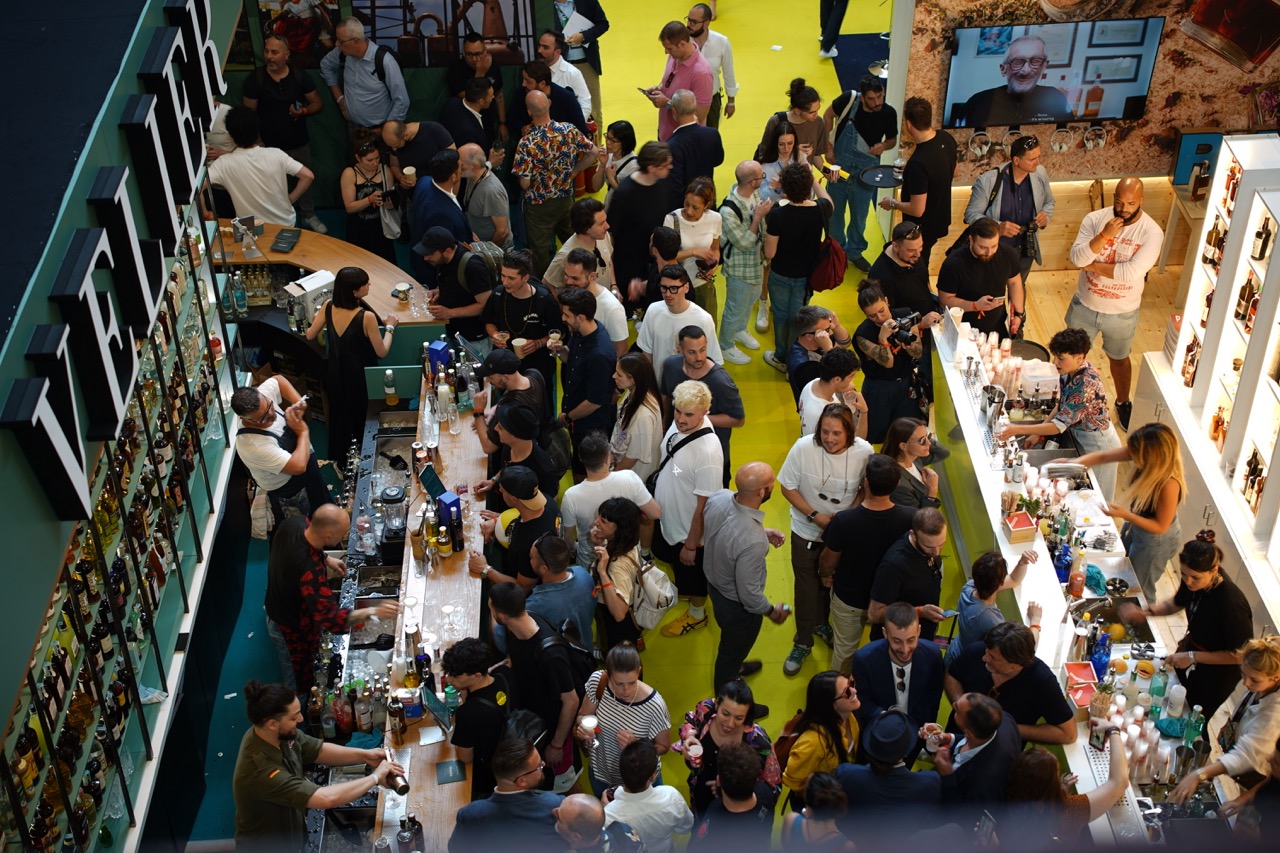
Instead, the brand shows people, music, cocktails and parties. It presents a world built around enjoying the drink rather than analysing it.
Hoxton founder Gerry Calabrese explains:
“I could talk in scientific detail about what is inside the bottle, but that is not the essence of the brand. People do not want to feel that they are being sold to. But if they enjoy a drink as part of a great experience and remember that moment, perhaps one day they will choose to pick up the bottle themselves.”
When I heard this, it sounded strangely familiar.
Where had I heard something like it before? After a moment, I realised: it closely resembled something I had heard many times while interviewing bartenders in Italy.
When I ask them about their cocktails, they often say:
“If someone asks, I will explain how the drink was made. But first, I want them not to overthink it and simply enjoy the moment.”
An enormous amount of work takes place before a cocktail reaches the guest. Bartenders prepare multiple ingredients, sometimes fermenting or distilling them, and may spend days getting everything ready. Yet they do not expect guests to understand every step.
The aim is to make a drink that can be enjoyed without specialist knowledge or any sense of intimidation. Guests should be able to appreciate both the cocktail in front of them and the time they spend in the bar. Not making the drinker carry the weight of all the work behind the glass is, in itself, a form of hospitality.
As I listened to Gerry, I realised how closely Hoxton’s philosophy resembled that of a bartender.
But he was not talking about a single cocktail. He was describing how an entire brand chooses to bring its products to people. It was the first time I had heard a spirits brand express this kind of thinking.
What Gerry Calabrese Learnt Behind the Bar
It is no coincidence that Hoxton thinks like a bartender. Its founder, Gerry Calabrese, spent many years working behind the bar himself.
The son of Salvatore Calabrese, widely known as “The Maestro”, Gerry has more than 20 years of experience across London’s bars, hotels, restaurants and nightclubs.
Hoxton did not begin with market research or a passing trend. It grew out of Gerry’s experience of watching guests respond to drinks night after night.
“My background is in cocktail bars and hospitality, so I spent years watching what people ordered, what excited them and what got left on the shelf. I realised consumers were looking for something different—real flavours that were memorable.”
London is a city where new ideas constantly emerge, but it is also a market that demands exceptionally high standards.
“London is one of the most exciting and demanding bar scenes in the world. You have to keep evolving because your customers expect creativity, quality and memorable experiences every time they walk through the door.”
In 2008, Gerry opened his own bar, The Hoxton Pony, in East London. It offered one of the widest selections of gin in the UK.
Yet even while working with such an extensive range, he could still see a gap in the market.
“I realised there was still a gap in the market for a premium spirit that appealed to a younger, more adventurous drinker. That was the inspiration behind Hoxton.”

Flavour First, Category Second
When people think of a spirits brand, they usually begin with a category: gin, whisky or rum.
Product development often follows the same order. A producer first decides to make a gin or a rum, then constructs the flavour within the conventions of that category.
Hoxton reverses that sequence.
The first question is not which category to make, but which flavour to create. Only then does the team choose the spirit that will express it best.
Gerry explains how the development process begins:
“Every flavour starts with an idea or an experience rather than a category. I don’t sit down and think, ‘We need another gin.’ I think about combinations that people wouldn’t necessarily expect but that work brilliantly together.”
The purpose, however, is not simply to pair unexpected ingredients. Once an idea has taken shape, the balance is refined until the individual flavours come together naturally in the glass.
“Once we’ve got that concept, we spend a lot of time refining it until the balance is right. It’s not about creating something unusual for the sake of it—every flavour has to have a purpose and be something people genuinely enjoy drinking, whether that’s neat, with a mixer or in a cocktail.”
The result must be surprising while still working as a coherent drink. Whether it is served neat, in a simple highball or in a cocktail developed by a bartender, the product must retain its identity. The ingredients and extraction methods are adjusted until that standard is met.
For Hoxton, flavour is not decoration added to a finished spirit. It comes before the category itself, determining the ingredients, the production methods and even how the final drink might be served.
Five Days for Fresh Banana, Five Weeks for Dried
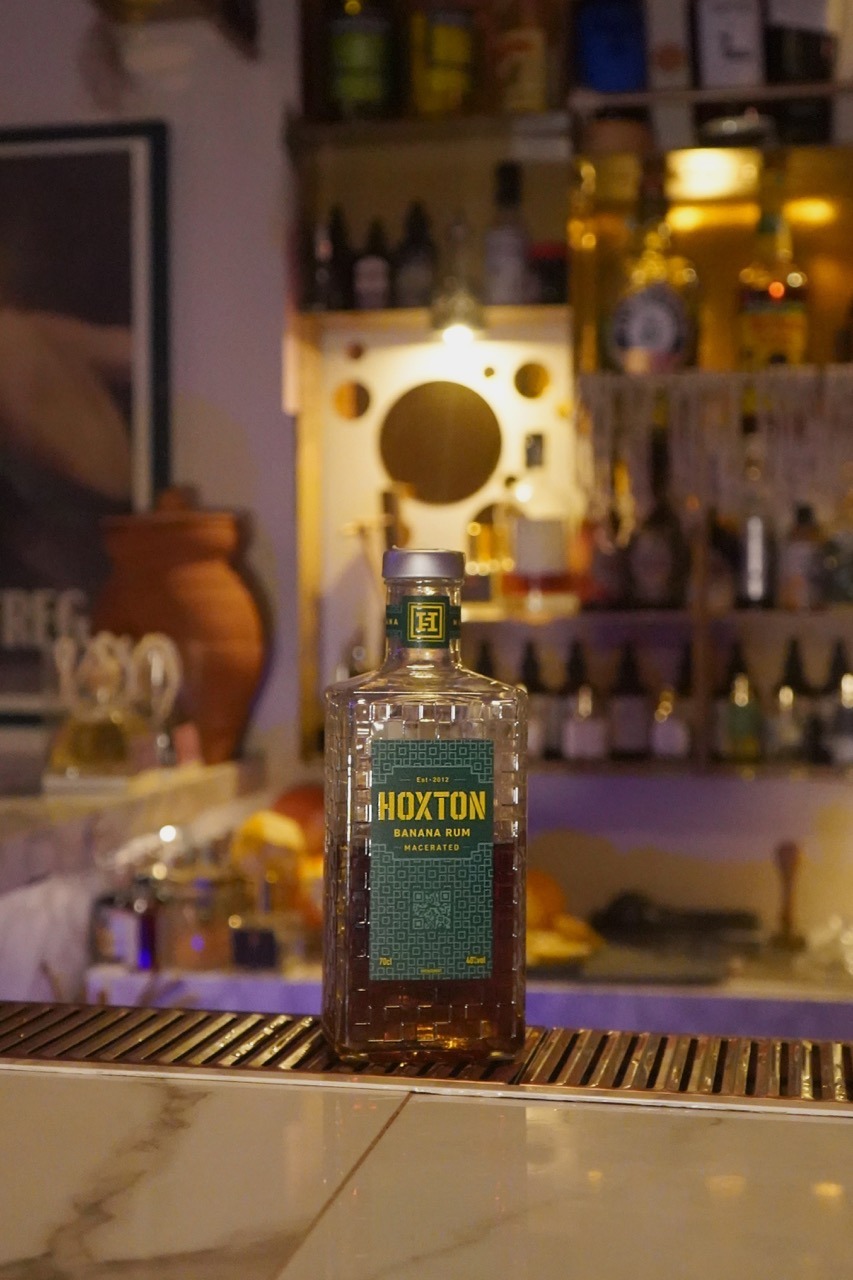
During the development of Banana Rum, Gerry spent a long time experimenting with fresh bananas. They provided natural sweetness and aroma, but the flavour of banana on the palate was never quite strong enough.
Just as he was close to abandoning the project, he spotted a packet of banana chips in a shop on his way to a house party in Hackney Wick. He took them to the party with some rum and tried infusing them on the spot.
“It turned into a terrible-looking yellow liquid. But it finally gave me the banana flavour I had not been able to achieve before.”
That discovery led to the method used today: fresh bananas are infused for five days, dried bananas for five weeks, and the two resulting liquids are blended in equal proportions.
“My philosophy has always been that flavour should come from real ingredients. It takes more time and effort, but I believe people can taste the difference.”
Finding those banana chips may have been a matter of chance, but the belief in drawing flavour from real ingredients did not begin there.
At The Hoxton Pony, which Gerry opened in 2008, seasonal ingredients had featured prominently on the cocktail menu from the beginning. In April, around 90 per cent of the cocktails on the menu might feature rhubarb. Today, it is not unusual for bars to emphasise seasonality, but at the time, pursuing it so thoroughly was far from easy.
“Using real ingredients in season has always been a central part of my drinks philosophy, and Hoxton is a natural continuation of that journey.”
Add One Ingredient and You Have a Cocktail
Hoxton does not compromise on quality, but neither does it ask drinkers to bring specialist knowledge or technique to the bottle. That balance defines the brand’s style.
“You do not have to be a mixologist to make my products taste good. Add one ingredient and it can taste like a cocktail. Starting with the final serve is, I think, an unusual way to build a spirits brand. I do not want people to overthink it. I simply want them to enjoy it.”
Each Hoxton bottle already contains a clear flavour profile and a carefully considered balance. At home, adding tonic or soda is enough to create something that drinks like a cocktail. For a bartender, however, that is not necessarily the finished serve. The character already present in the bottle can become a starting point for taking the flavour further.
In other words, Hoxton can be enjoyed simply or developed into something more complex. There is no single correct approach.
“If you want to mix Tropical Gin with Coke or Sprite and you think it tastes good, do it. We are not here to tell people how they should drink it.”
With that much freedom, I became curious about how Gerry himself would serve each bottle, so I asked him for a few easy suggestions to try at home.
Hoxton Tropical Gin makes a brilliant gin and tonic, although Gerry warns that “if you’re a traditionalist looking for a classic gin and tonic, this probably isn’t the one for you”.
Hoxton Dry Gin is served with ice, cream soda and a slice of lemon. Gerry describes it as “boozy nostalgia in a glass”.
Hoxton Pink Gin becomes a Pink Lemonade with soda and lemon, a serve inspired by the Path of the Lemons on the Amalfi Coast.
For Banana Rum, there is the Banana Rum Daiquiri. The spices in Spiced Whisky bring extra depth to a classic Whisky Sour. And London Spritz becomes, true to its name, a London Spritz.
There are no complicated rules. The point is not to search for the correct answer, but to enjoy the combination that tastes right to you.
Gerry believes that younger drinkers today are becoming less attached to individual spirits categories. Instead of choosing according to whether something is gin or whisky, they are increasingly guided by the flavour they want at that particular moment. He describes this tendency as being “category agnostic”.
Hoxton’s decision to begin with flavour rather than category reflects this shift in how people drink.
“I develop what is inside the bottle with the end drinker in mind. I do not look at the liquid in isolation. From the very beginning, I think about the entire experience the guest will have and how the product will be used, both at home and in a bar.
So what happens when Hoxton is placed in the hands of a bartender?
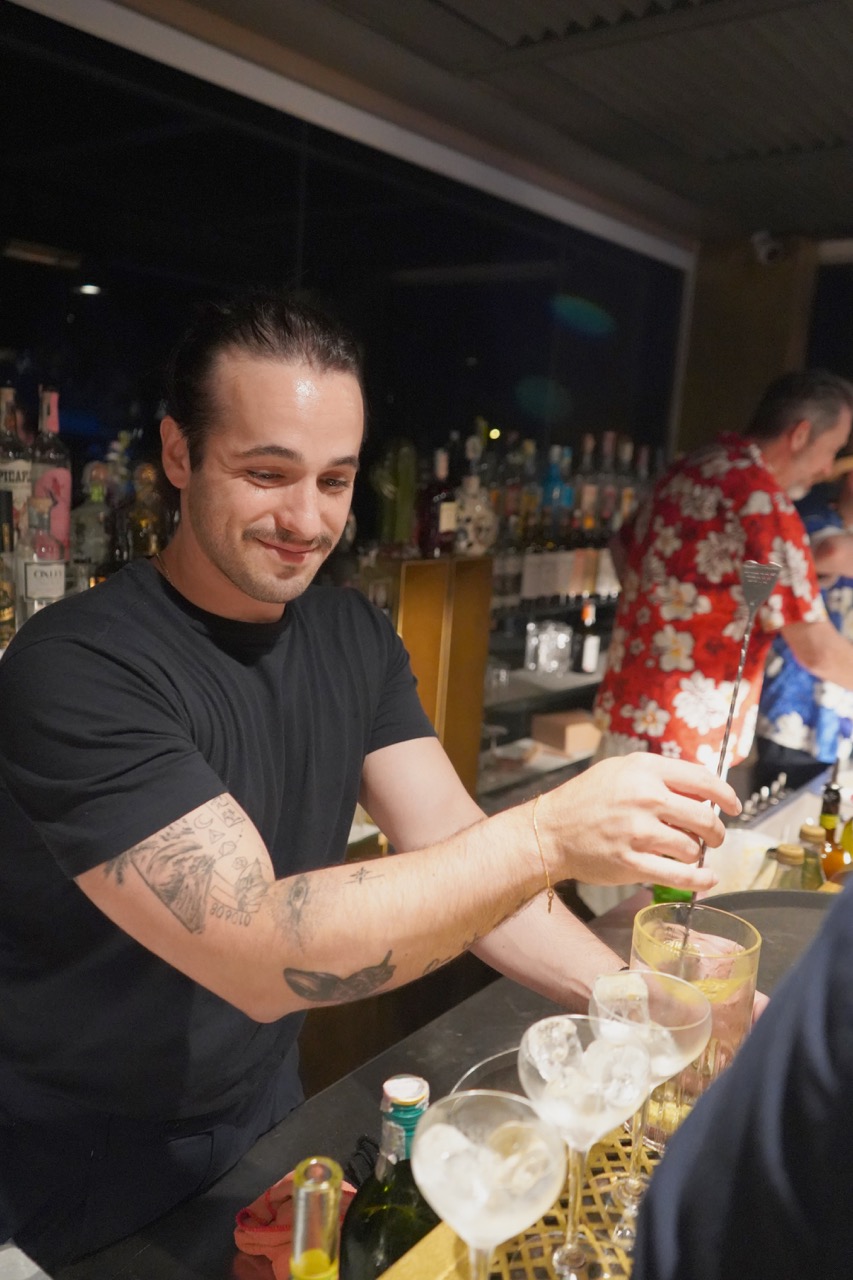
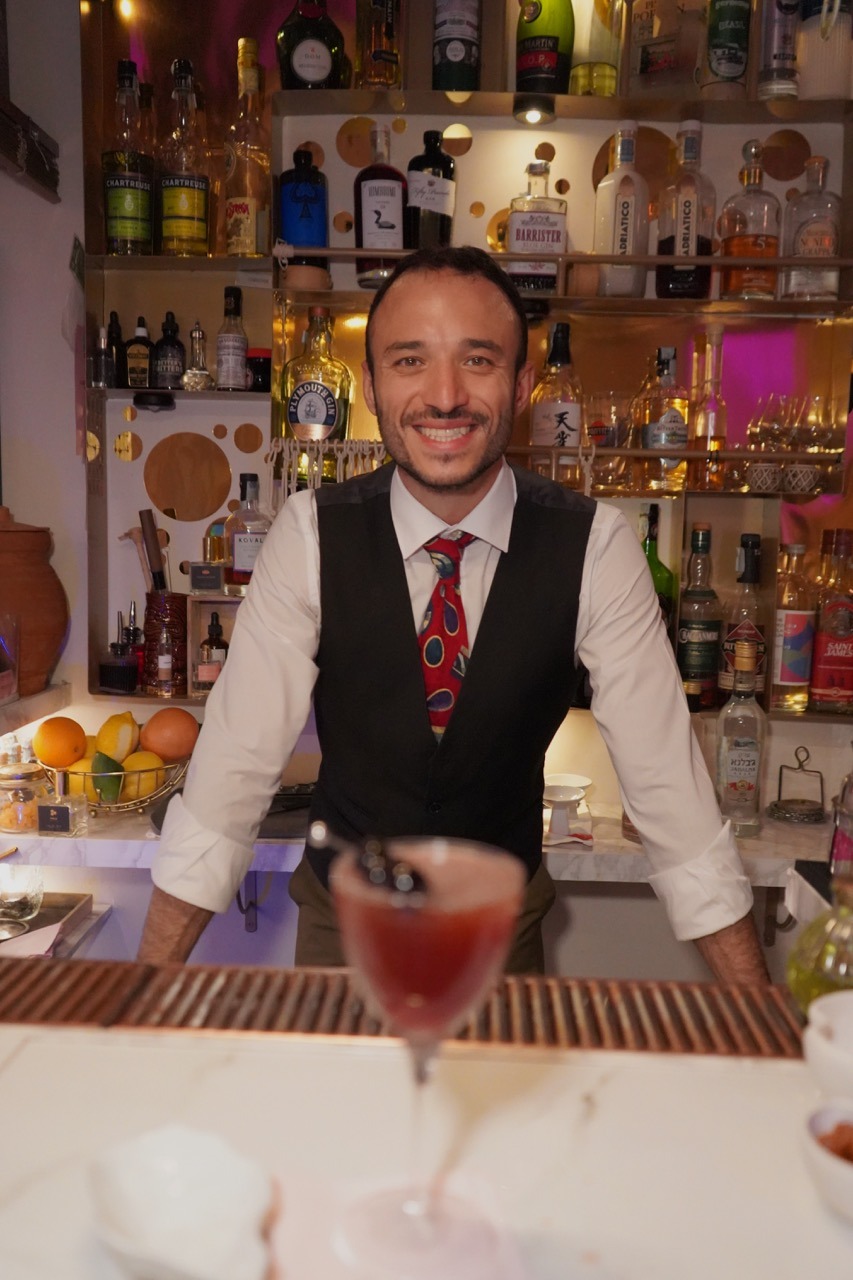
For this article, I asked Riccardo Pompei of Lonely Avenue to create a series of cocktails. The intimate Rome bar has earned a loyal following among bartenders and knowledgeable cocktail drinkers.
Drawing on his knowledge of more than 400 classics, Riccardo works without a menu, listening to each guest before creating a drink specifically for them.
I wanted to see how he would translate Hoxton’s distinctive flavours into the structure of classic cocktails—and what ideas and techniques he would bring to the process.
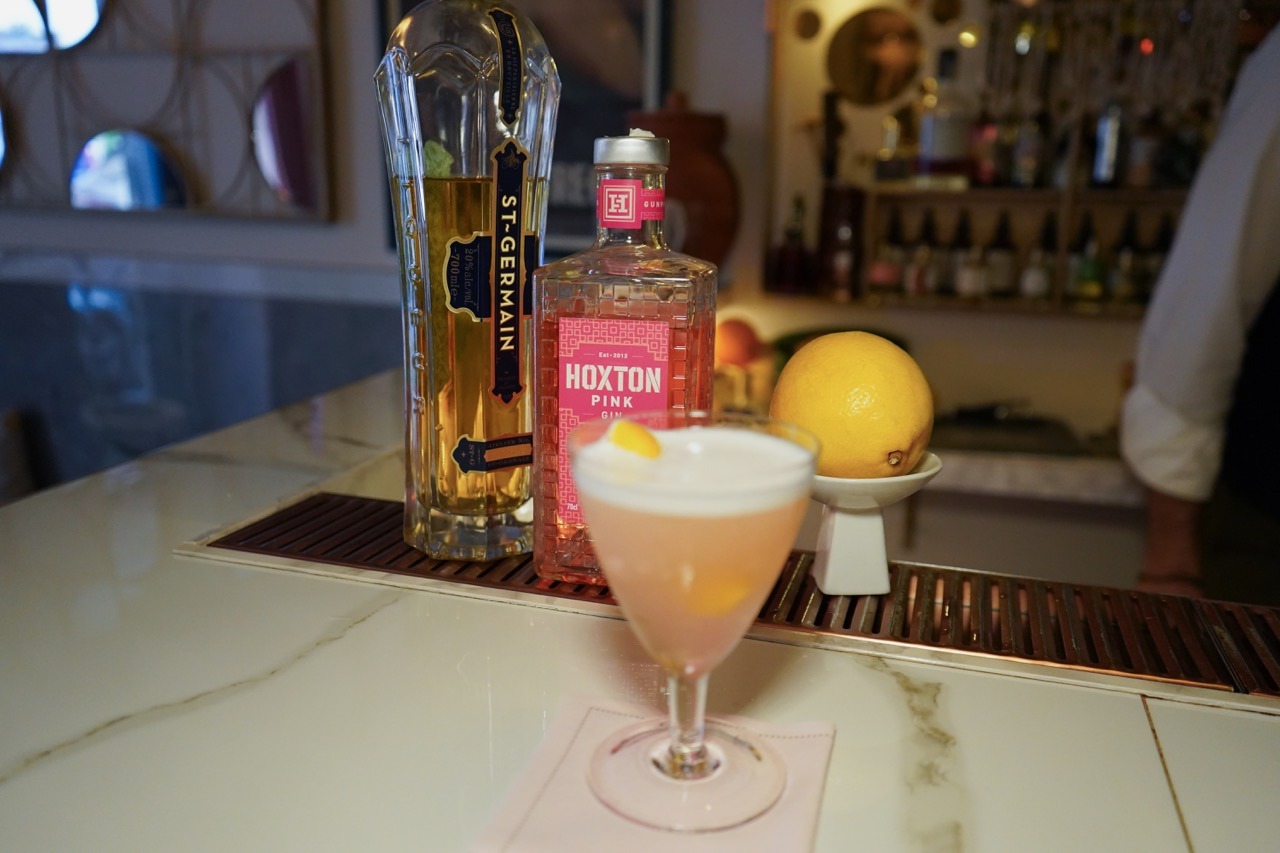
Sharp Flowers
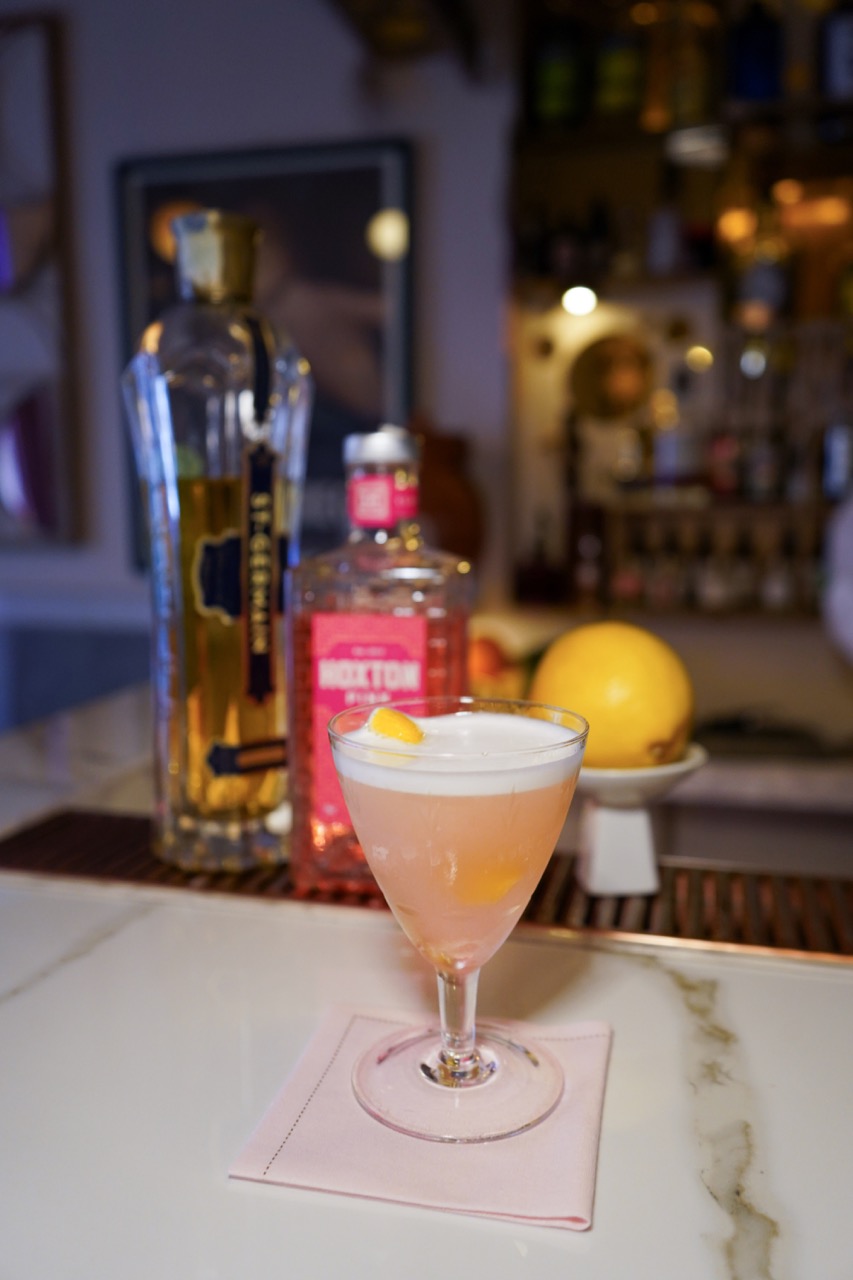
45 ml Hoxton Pink Gin
20 ml St-Germain
20 ml Lemon juice
A vibrant, floral reimagining of the 2011 modern classic, the French Blonde. The delicate sweetness of elderflower and pink gin is perfectly cut by a sharp, refreshing citrus finish.
The first cocktail served was built around Hoxton Pink Gin. Aromas of rose, chamomile and elderflower emerge one after another, like flowers gradually opening in a bouquet. Yet the drink never becomes overwhelmingly floral. Fresh green bitterness, a subtle smokiness and gentle sweetness soften the lemon’s acidity while bringing the gin’s many botanicals into harmony.
A delicate layer of foam gives the cocktail a creamy texture. Although it contains no Champagne, it has the elegance and celebratory lift of a French 75. It is a drink that fully reveals the character of Hoxton Pink Gin—and might even change the mind of someone who would not normally choose a floral cocktail.
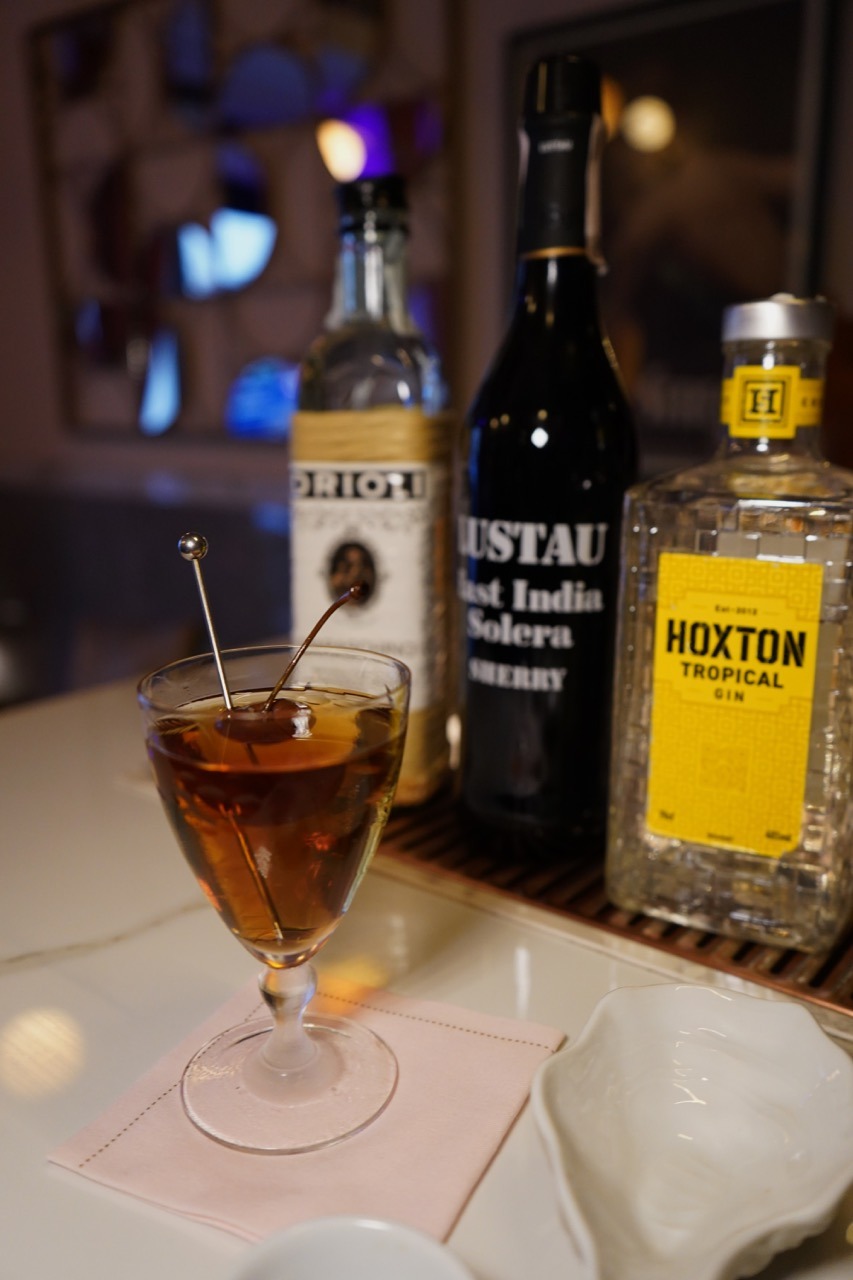
Sherrynez
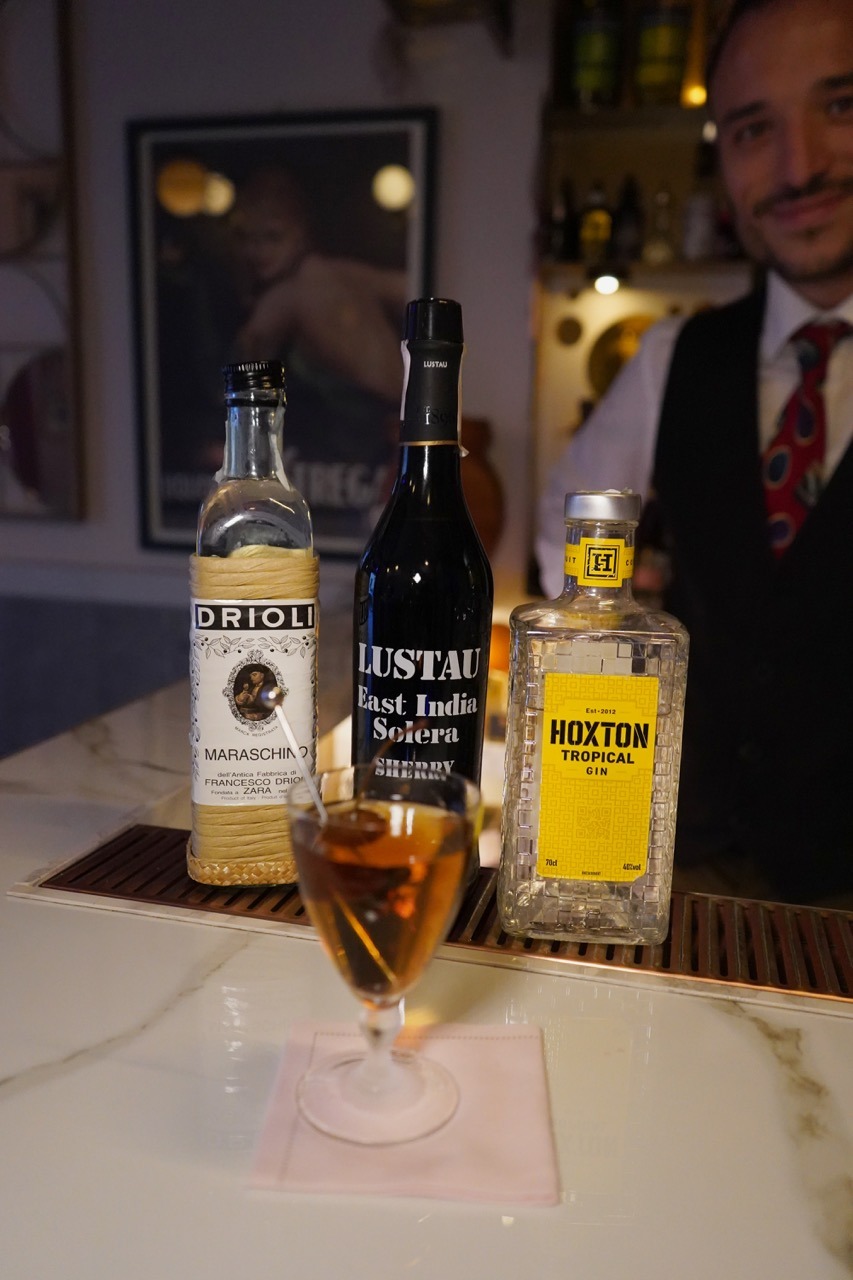
45 ml Hoxton Tropical Gin
20 ml Lustau East India Solera
5 ml Maraschino Drioli
House-made cherry
A tropical reimagining of the historic Martinez, first documented in 1884, with a rich sherry finish.
Built around Hoxton Tropical Gin, this cocktail uses sherry to give the gin’s coconut character greater depth and restraint. The sherry’s slightly oxidative, aged-wood notes, savoury quality and subtle salinity prevent the coconut from leaping immediately to the foreground. Instead, it emerges gradually, enveloped in the aromas of sherry ageing.
Beneath the flavours of ripe fruit and nuts, the dry, distinctive character of maraschino adds another layer of complexity. This subtle edge gives the cocktail definition, ensuring that it never becomes merely sweet.
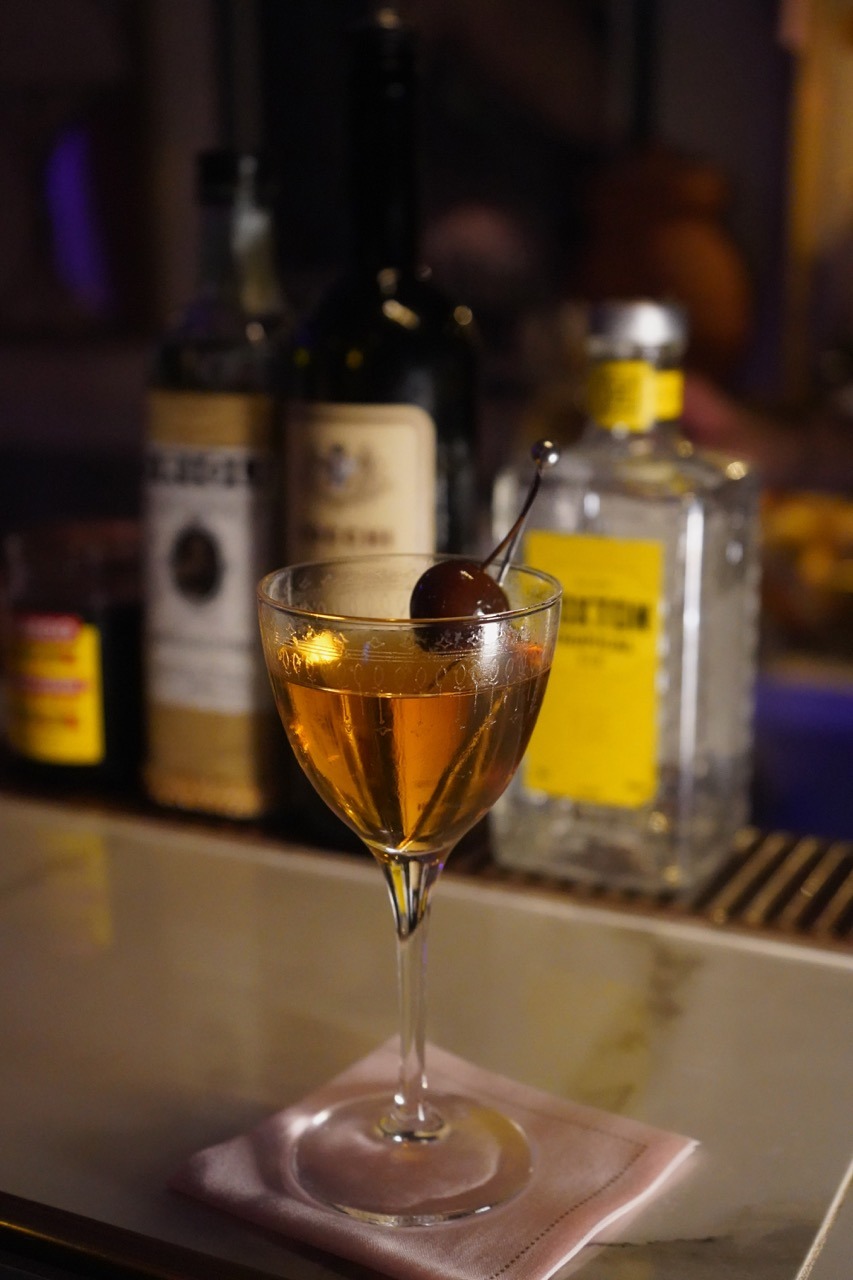
Tropinez
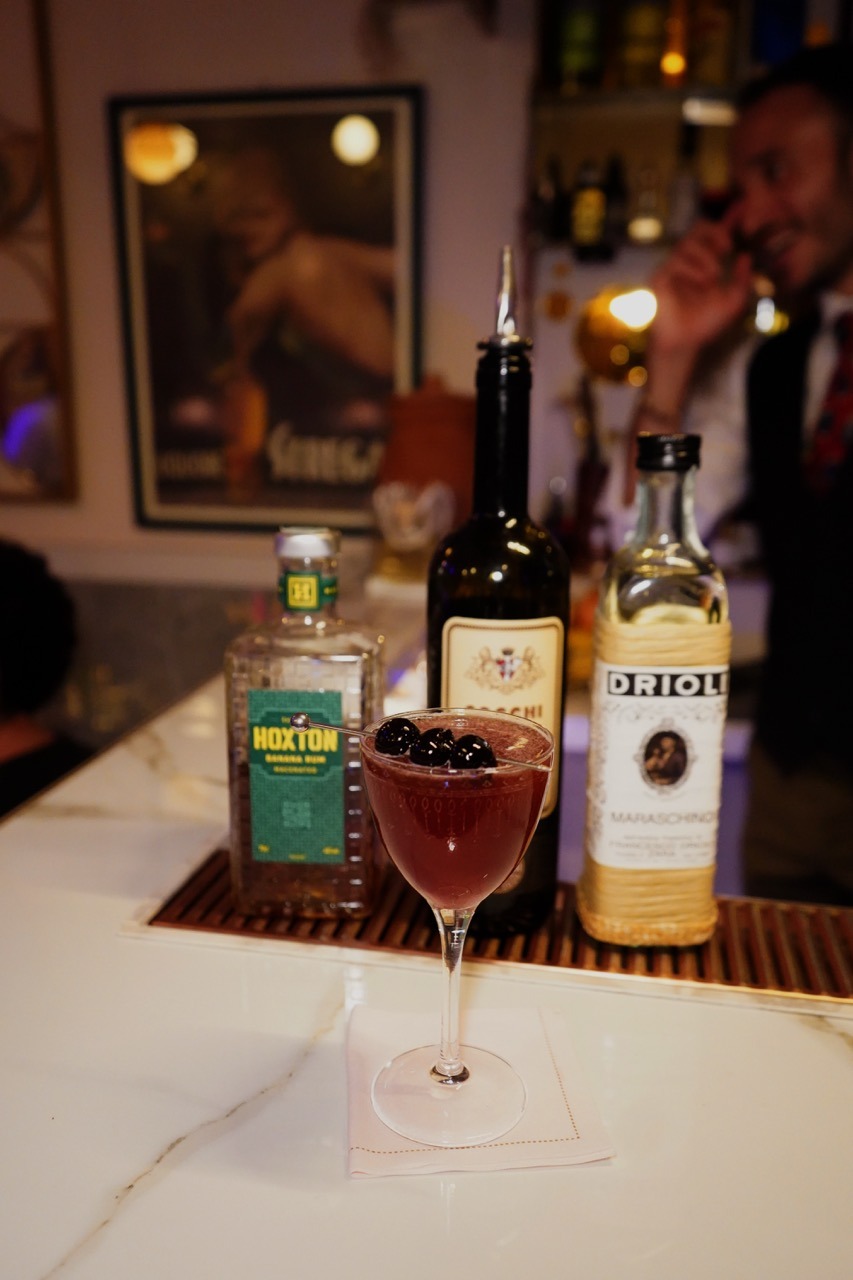
45 ml Hoxton Tropical Gin
20 ml Cocchi Vermouth
5 ml Maraschino
House-made cherry
A classic dating back to 1884, the Martinez is reborn with a tropical soul, balancing exotic botanicals and historic Italian vermouth with the rich flavour of house-made cherry.
The Martinez might be described as a Manhattan with gin in place of whiskey: a sweet, richly flavoured classic with much of the Manhattan’s weight and depth. Coconut, by contrast, usually evokes tropical drinks such as the Piña Colada or tiki cocktails. It is easy to imagine how naturally it would work in that familiar setting. What makes the Tropinez intriguing is that it avoids the obvious route, instead introducing coconut into the structure of a 19th-century classic.
A subtle thread of dry maraschino pulls the drink back towards the world of classic cocktails. The result feels as though it has opened up an entirely new category in which coconut can thrive. It also offers a convincing expression of Hoxton’s invitation to those who want to explore new flavours.
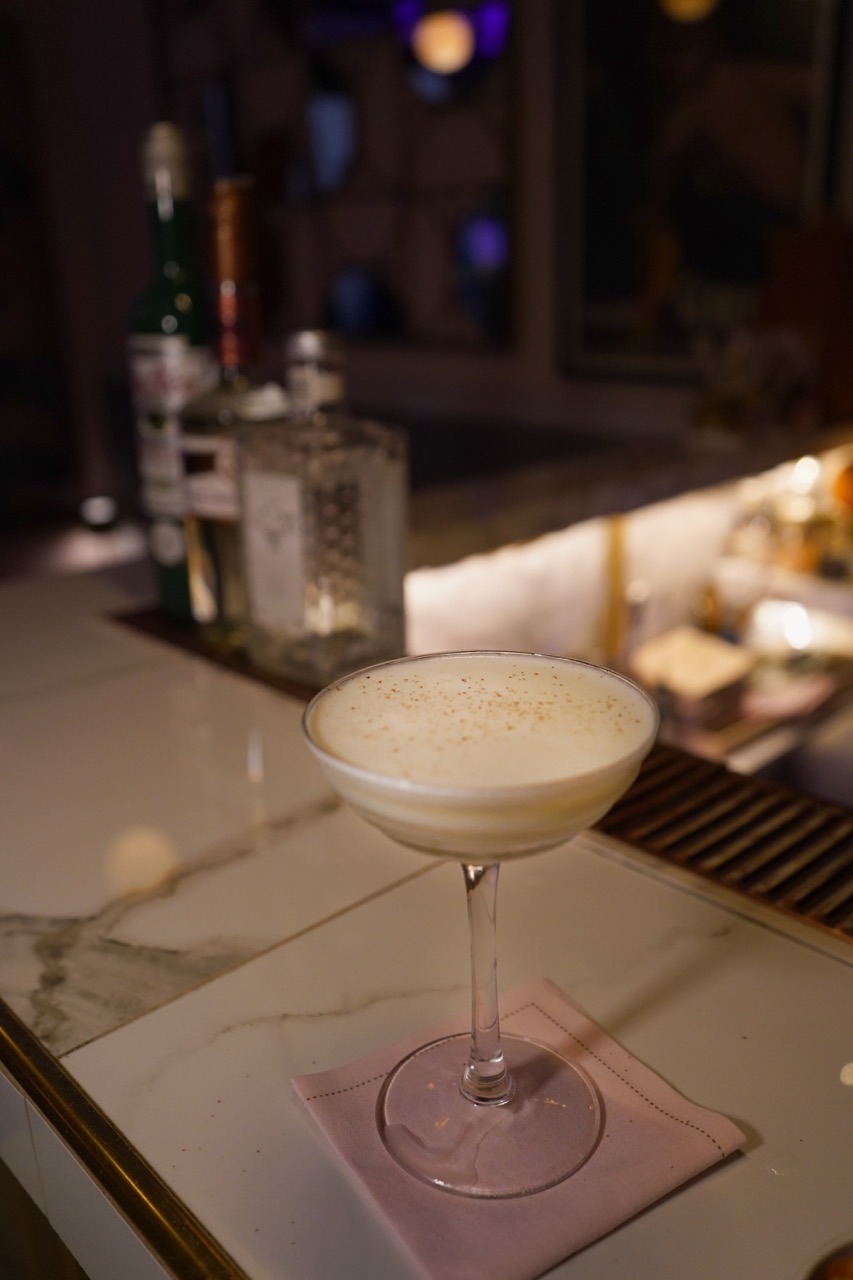
The Green Cloud
30 ml Hoxton Dry Gin
15 ml Crème de cacao
15 ml Absinthe
15 ml Cream
Freshly grated nutmeg
A bold twist on the Golden Cadillac, a 1950s California classic. Botanical gin and aromatic absinthe are wrapped in a velvety cloud of cacao and cream, then finished with freshly grated nutmeg.
Its starting point appears to be an early Gin Alexander. The addition of absinthe, however, evokes the green, herbal creaminess of a Grasshopper while taking the drink in an entirely different direction.
At the heart of the idea is tarragon, one of the botanicals used in Hoxton Dry Gin. Beneath its fresh green character, the herb carries a sweet, bittersweet aroma reminiscent of anise and liquorice. These notes are drawn out by the anise and wormwood in the absinthe, allowing layers of herbal flavour to unfold through the softness of the cream.
Developed by working backwards from the distinctive character of Hoxton Dry Gin, this is a new kind of dessert cocktail for adults: sweet and creamy, yet fresh, green and herbaceous.
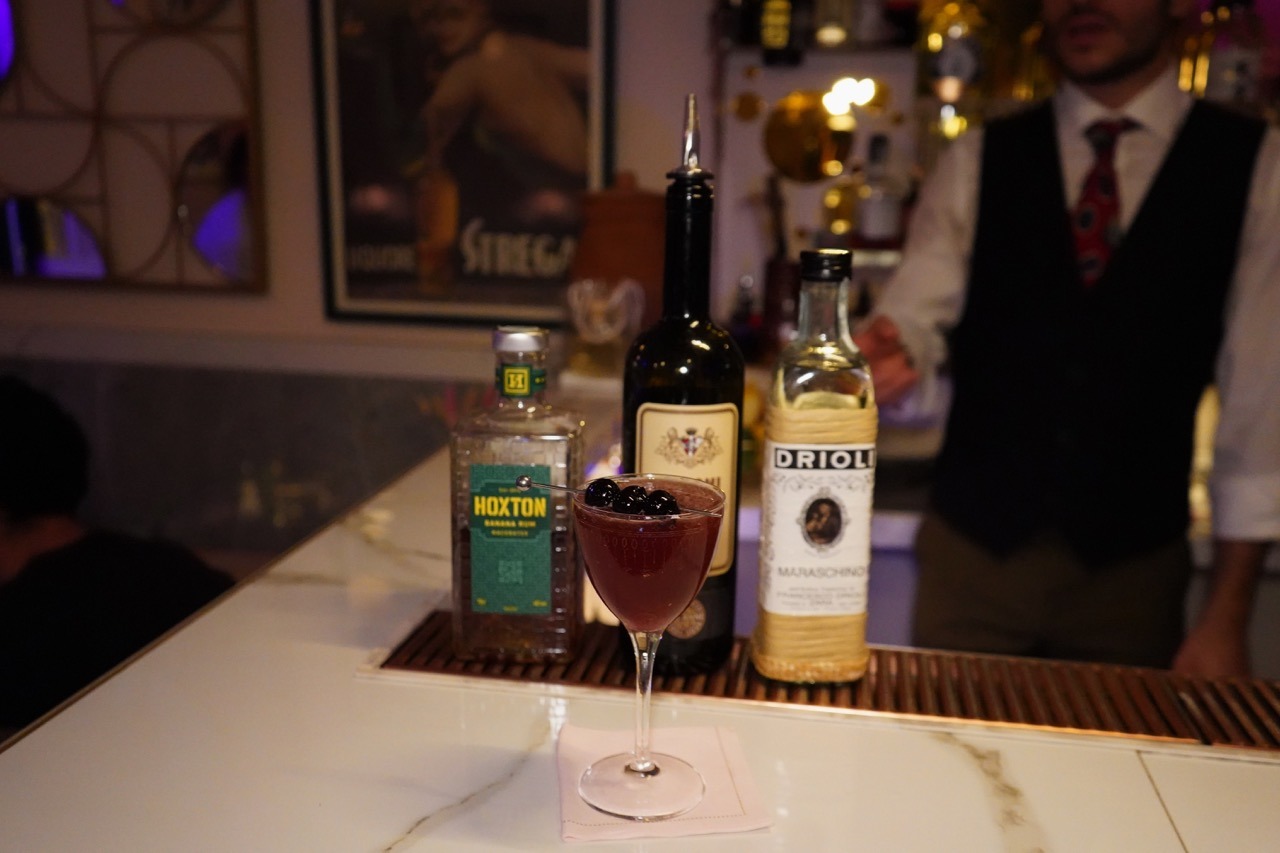
Banana Sand
30 ml Hoxton Banana Rum
22.5 ml Cocchi Vermouth
10 ml Drioli Maraschino
15 ml Orange juice
15 ml Lemon juice
10 ml Maraschino cherry syrup
A tropical reimagining of the Blood and Sand, named after the 1922 film and first published in The Savoy Cocktail Book in 1930. Exotic banana rum and bright, fresh citrus are beautifully balanced by rich Italian vermouth and dark maraschino cherry.
The bittersweet character and complex spice aromas of the sweet vermouth bring out the full appeal of the banana rum. The rich sweetness of ripe banana is layered with flavours reminiscent of bitter orange, cacao, nutmeg and caramelised sugar. Bitterness from wormwood, cinchona and rhubarb adds depth, alongside balsamic notes evocative of wood and resin.
The restrained use of maraschino is particularly skilful, acting almost like a secret seasoning that sharpens the contours of the entire drink.
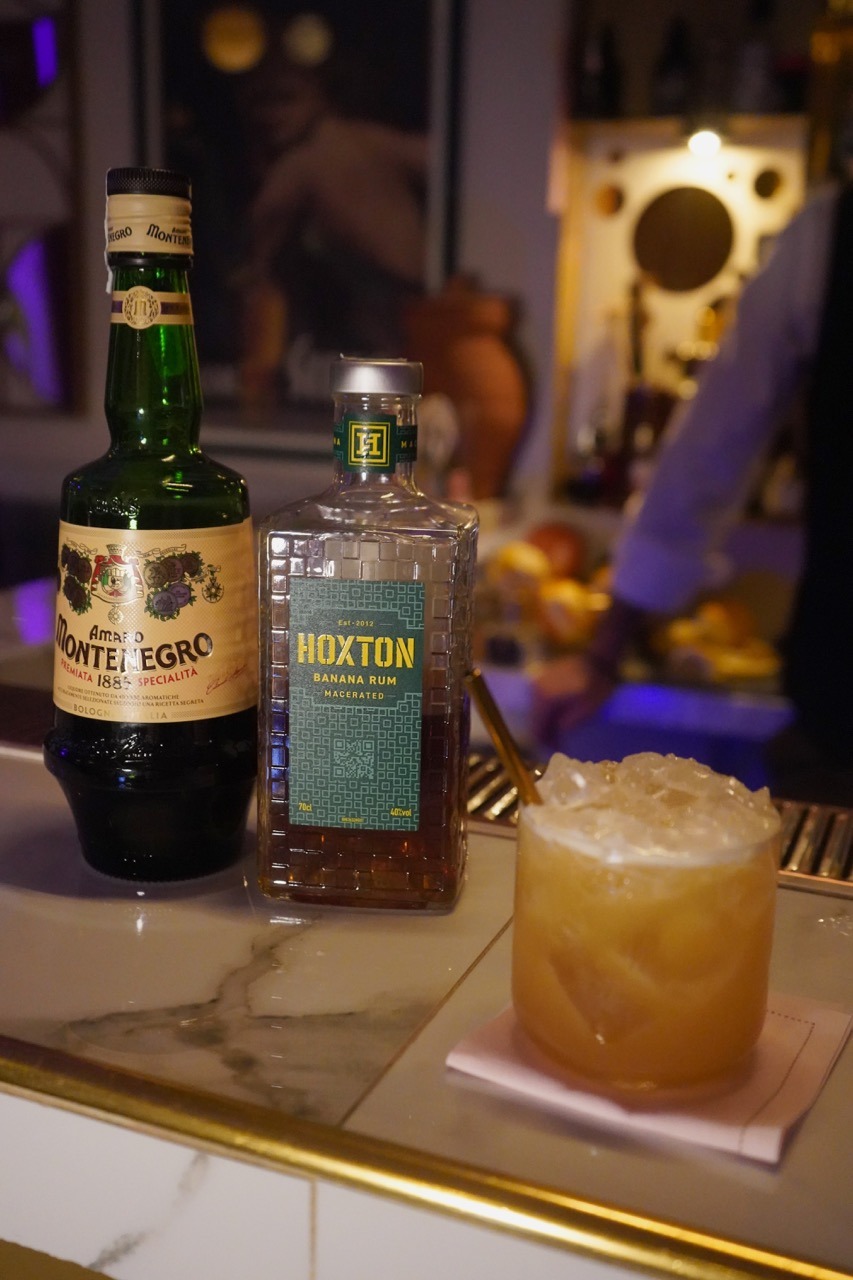
Yellow Bird
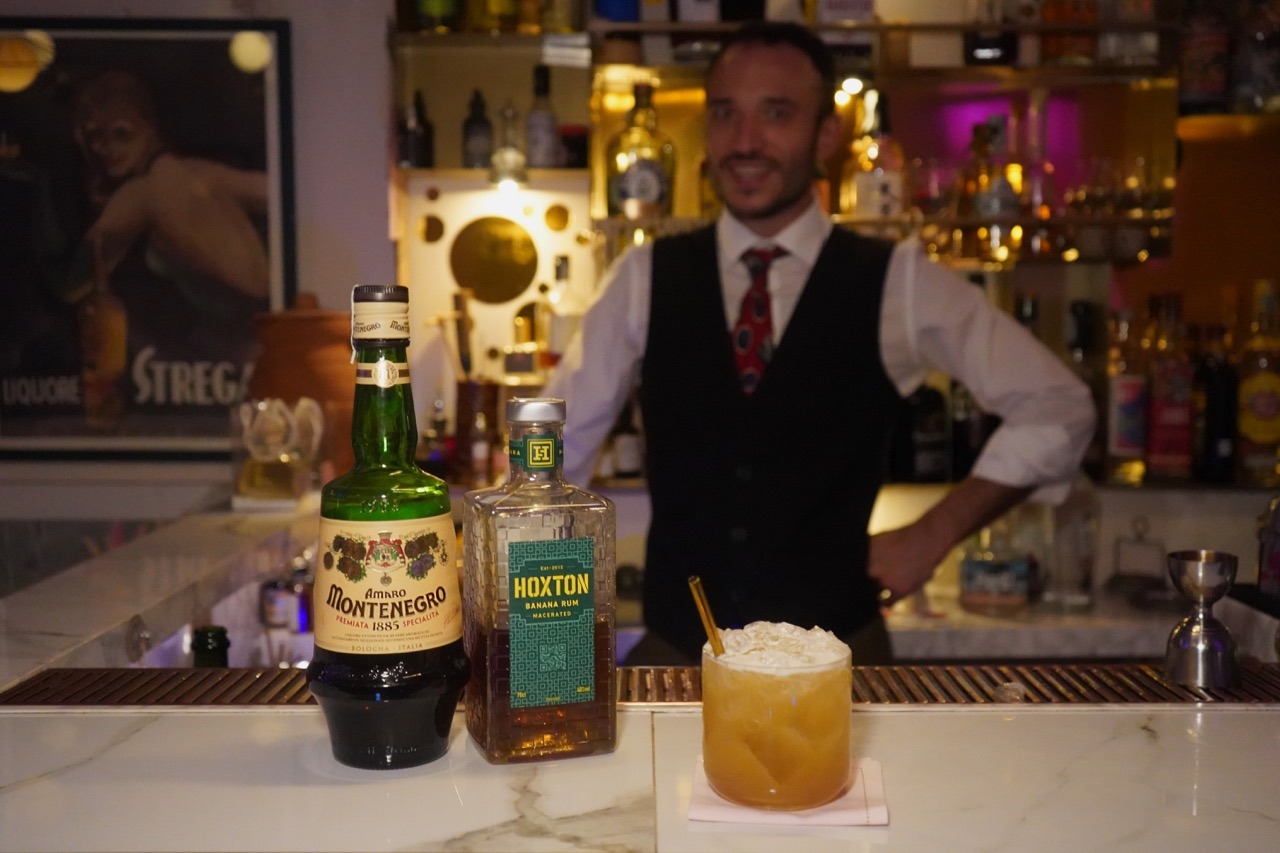
45 ml Hoxton Banana Rum
15 ml Amaro Montenegro
45 ml Pineapple juice
15 ml Lime juice
10 ml Sugar syrup
A bright, golden twist on the 1973 Jungle Bird. Exotic banana rum and fresh pineapple are perfectly grounded by the gentle, botanical bitterness of Italian amaro.
Of the many rum classics he could have chosen, using the Jungle Bird as a framework for Hoxton Banana Rum—and then replacing Campari with Amaro Montenegro—is an inspired choice. Montenegro is gentler in bitterness than Campari, with notes of sweet orange, herbs, cinnamon, clove, vanilla and caramel that melt into the ripe fruit flavours of banana rum and pineapple, allowing them to unfold with greater complexity.
The sharp, fresh green acidity of lime cuts through the richness and brings the drink into perfect balance. Borrowing the structure of a Jungle Bird while elevating the character of the banana rum, it is an exceptionally well-judged twist.
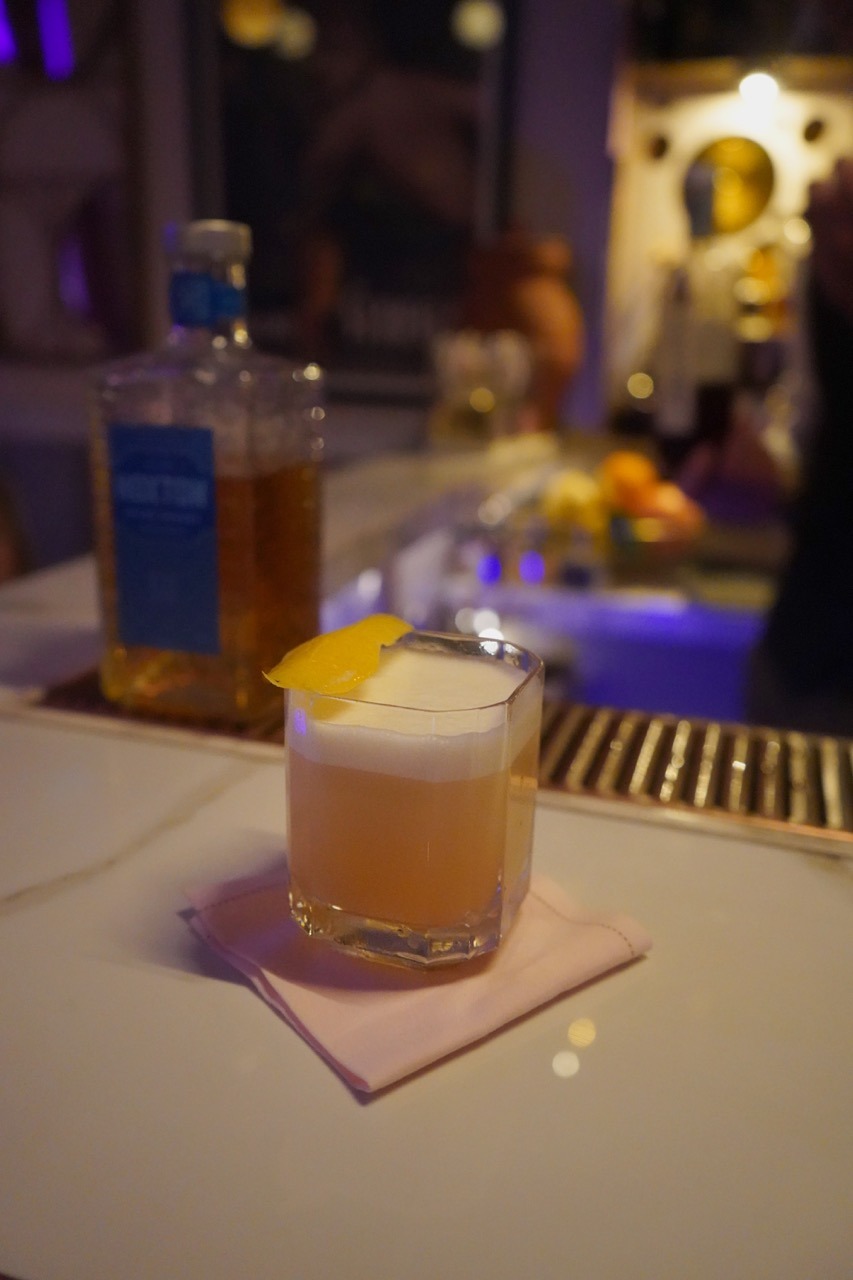
Spicy Tie
40 ml Hoxton Spiced Whisky
20 ml Amaretto Adriatico
30 ml Lemon juice
20 ml Egg white
Lemon peel, to garnish
A warm, silky twist on the classic Whiskey Sour. Bold spiced whisky and bright fresh lemon are beautifully softened by the rich, roasted almond notes of Amaretto Adriatico.
This is a twist on the Whiskey Sour, but what makes it particularly interesting is the decision to use amaretto, rather than sugar syrup, to provide the sweetness and highlight the character of Hoxton Spiced Whisky.
The whisky reveals multiple layers of fruit and spice, with notes of orange, anise, raisin, cacao, cinnamon, nutmeg and vanilla. The amaretto supplies the necessary sweetness while its roasted almond character connects naturally with the whisky’s warm spices. This adds even greater depth and dimension to an already complex spirit.
A remarkably accomplished cocktail, built around a combination that works precisely because of the distinctive character of Hoxton Spiced Whisky.
Every cocktail was delicious, and there are still so many more Hoxton drinks I would like to try.
The coconut-scented Tropical Gin, the elegantly floral Pink Gin and the Banana Rum reimagined in a new take on the Jungle Bird each revealed a different side of the range.
At a bar, I often find myself returning to drinks I already know I like. Hoxton’s cocktails, however, gently drew me beyond those familiar choices.
Discovering new flavours became part of the pleasure. Before I knew it, I’d had a little more to drink than usual.
As I enjoyed those unexpected discoveries, I found myself thinking back to something Gerry had said:
“If people are having a good time and discovering a flavour they didn’t expect to love, then we’ve done our job.”
Hoxton
%20Large.jpeg)






square.jpg)