La Rotonda: You Are Here
At La Rotonda in Porto Recanati, sixty years of seaside cooking have evolved without leaving anyone behind — neither the fishermen, nor the farmers, nor the regulars.
Among the old papers kept at La Rotonda there is an order slip that reads more like a note between neighbours than a bill. "Beppe, bring the chard, I'll add the cuttlefish. A thousand lire." The farmer brought what came from his fields, the kitchen added what the sea had given that morning, and lunch was settled.
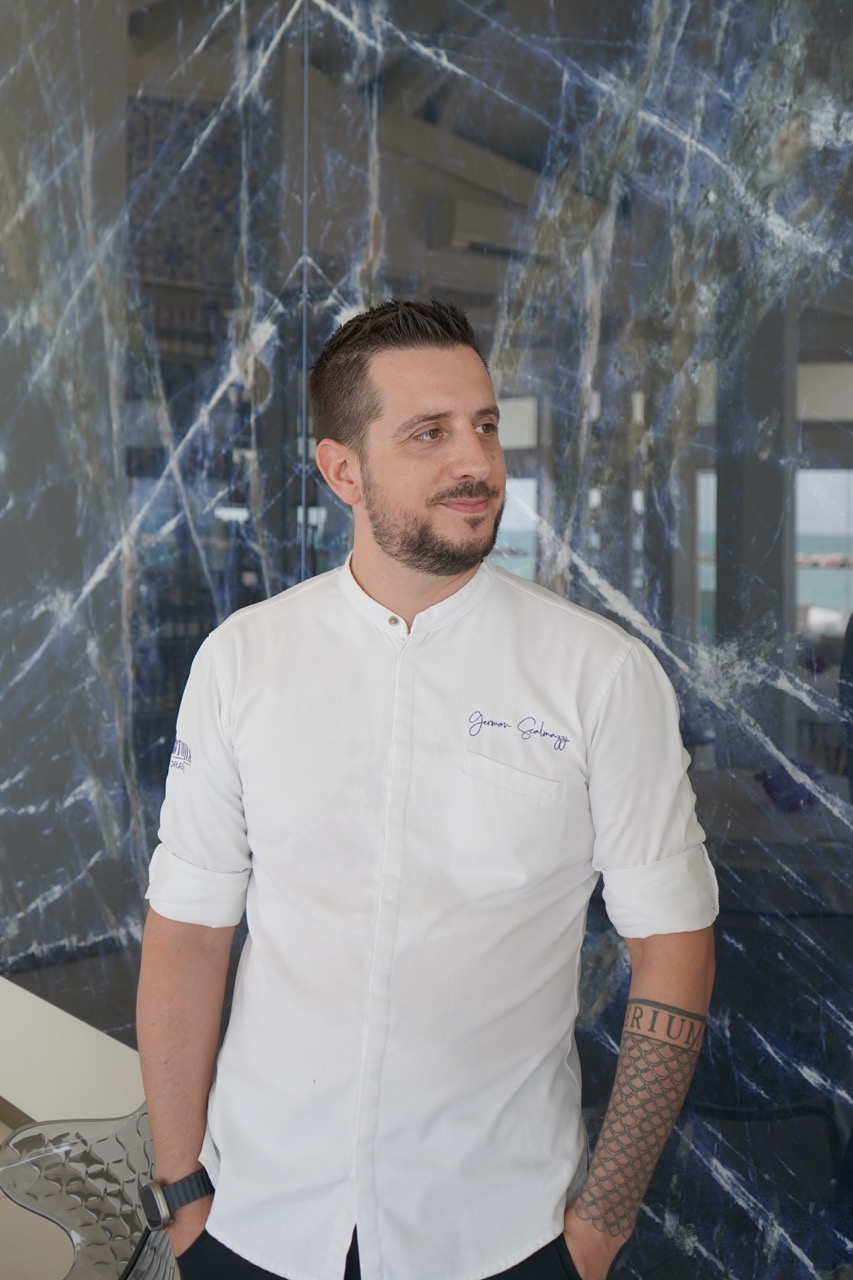
Sixty years later, the chard comes from twelve hectares of fields two kilometres inland, and the cuttlefish has become the dish the chef calls his own. The logic, however, has not changed. "If you eat here," says German Scalmazzi, "you have to understand where you are."
It is a simple sentence. At La Rotonda, it is also the whole menu.
Macerata Mare
It all began with a hut on the sand. Every day someone went to fetch a block of ice, and bottles of water were laid around it to keep cool. Antonio worked as a lifeguard and, when he could, as a fisherman. His wife Antonia ran the kitchen, and what he caught during the day ended up on the plates that evening.
This stretch of coast was known as "Macerata Mare". The coastal road linked Macerata and the villages of the hinterland directly to the sea, and there was even a bus with those words written on its side. People came from inland and stayed from morning to night.
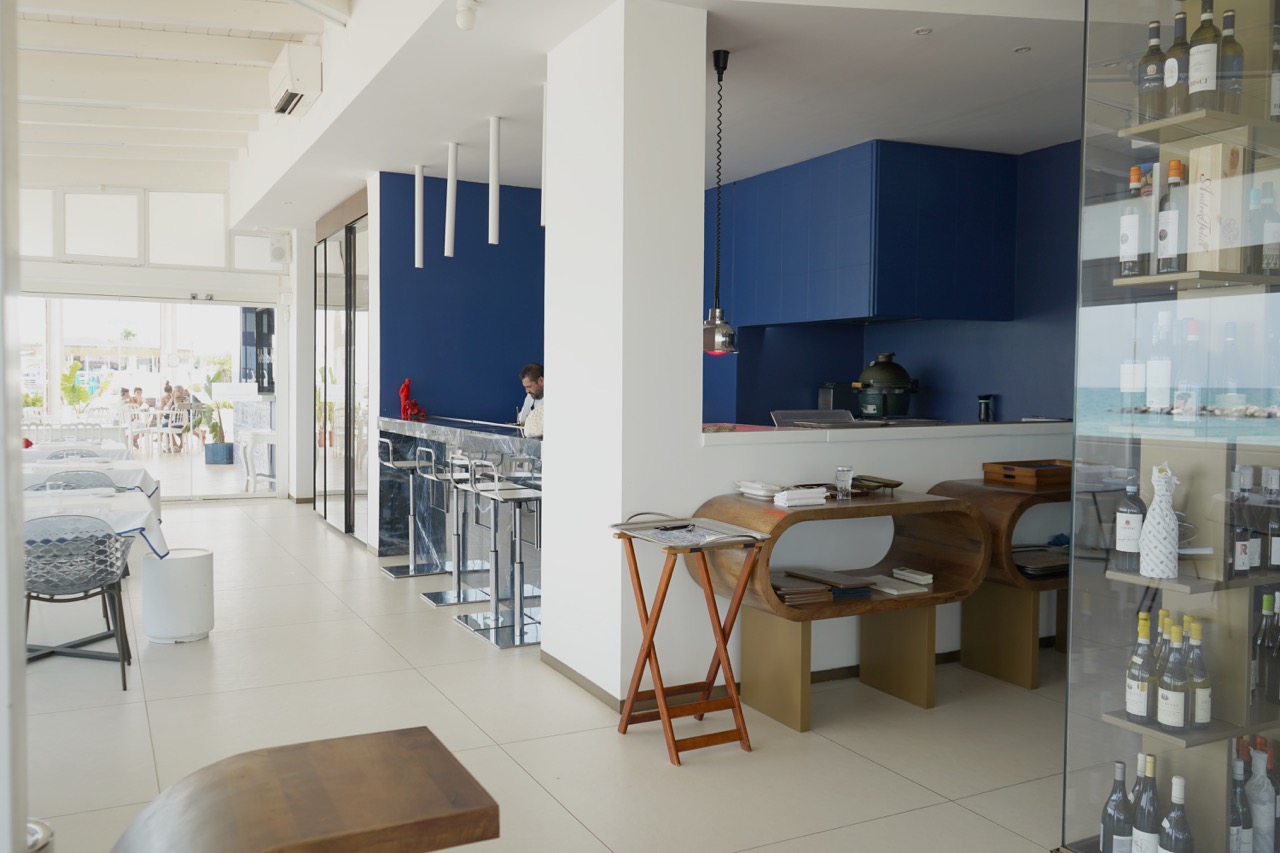
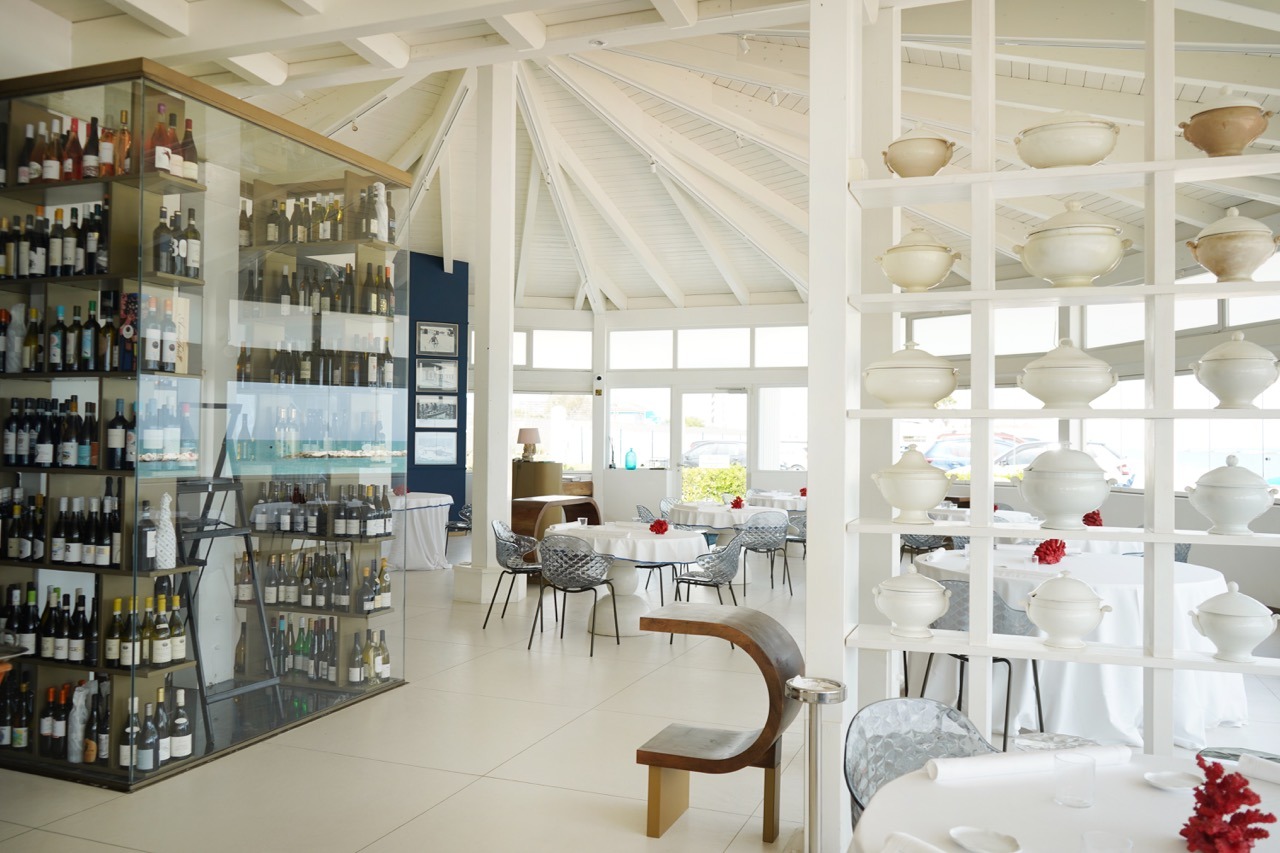
The building grew with them. Old photographs, spanning the 1960s to the late 1990s, show the structure changing year after year: the original hut, which still survives as a small outdoor kitchen, then the bathing cabins, later used as storerooms, and finally the circular dining room that gave the place its name.
A Change of Hands
German and his wife Sara arrived in 2004. In 2007 they took over the business from her family. At the time La Rotonda was a very different place: brown, busy and seasonal, open only four months a year, with 200 to 220 covers a day served over three sittings. The menu was classic seaside fare: marinara, skewers, fried fish.
Before 2004 German had worked abroad, including in Paris with Alain Ducasse. Those years left him with an idea he never let go of, and above all with a method. "What stayed with me most was organisation," he says. "It's something you carry with you."
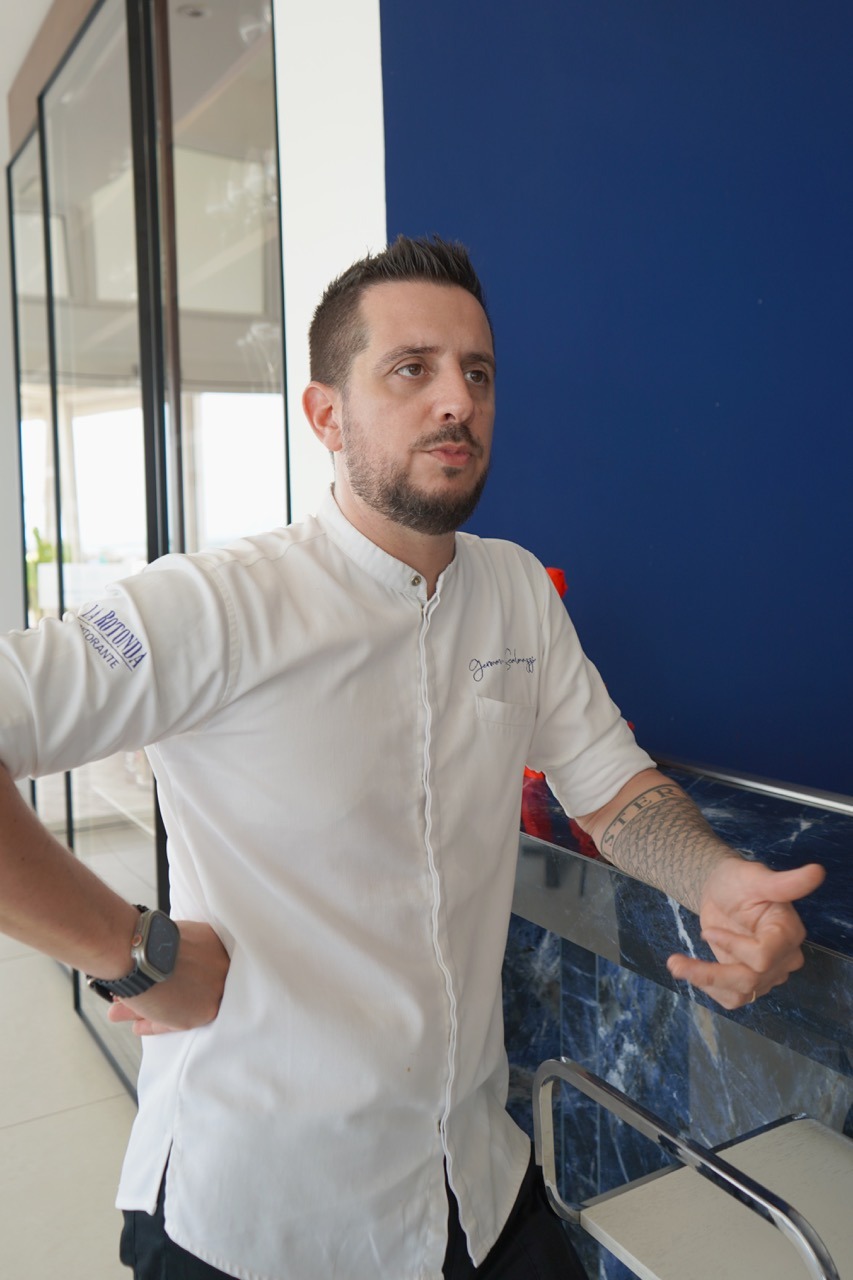
The first big decision was to open all year round. Later the couple began travelling on their own, as guests rather than professionals, to see what was happening elsewhere. The dining room changed too, often unexpectedly. When the pandemic closed everything they came here and started working on the space themselves. The following year they did more. Sara still adds something new every season.
It would have been easy, fifteen years ago, to take the money, tear everything down and start again as something else. They chose not to, they decided to change it slowly and progressively because “we want people to feel good here, and above all we don't want to lose my customers."
The proof sits at the tables. Some of the guests who came before 2004 still come today, and now their families do too. The grandfather who once booked a banquet is followed by the grandson who books his wedding, a communion, a confirmation. Behind that continuity there is also a team that stays: the same team is working together over the years. The restaurant closes in January, reopens around Valentine's Day, and keeps weekly 2 days off even in summer whenever it can. "We work a lot,"German says, "but a healthy environment comes first."
Fifty Kilometres
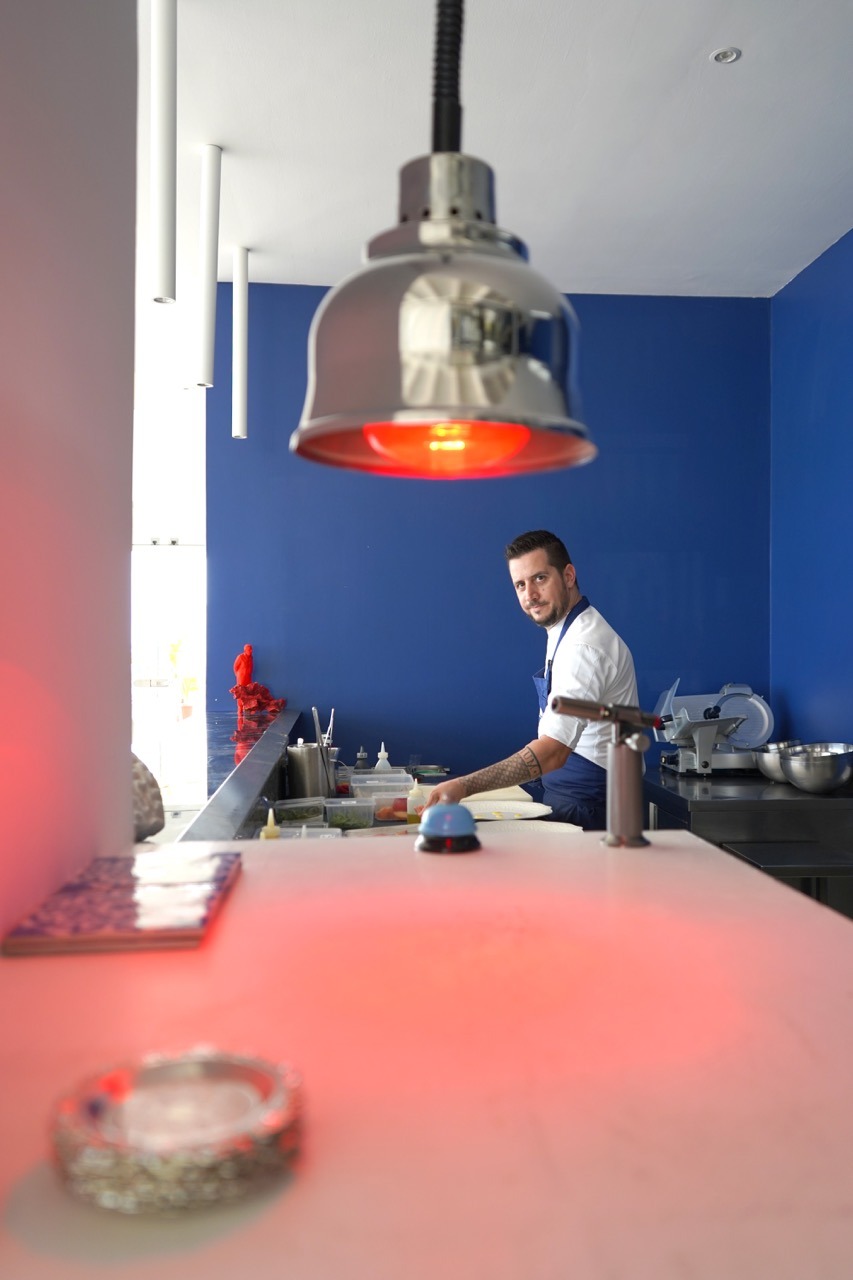
Travelling and eating in starred restaurants in Barcelona, Milan, Rome and elsewhere taught German one thing. "If I come here, I shouldn't eat as if I were in Barcelona." His rule is that what reaches the plate should come from no more than fifty kilometres away. "Otherwise everything becomes standardised. And that's exactly what I don't want." You will not find salmon on this menu.
In front of the restaurant there is a small kitchen garden. Two kilometres inland there are twelve hectares tended by two farmers, part of them farmed exclusively for La Rotonda, along with five or six greenhouses for early produce and the varieties the kitchen needs. The planting plan for the year is decided in January.
The sea is covered from several sides. The kitchen follows the fish auctions of San Benedetto del Tronto and Pescara, goes to Ancona when it needs, and calls the fishing boat directly while they are still out, asking what they have on board. Then there is small-scale fishing, for prawns, mantis shrimp and blue lobster, and even the line fishermen who turn up with a single sea bass.
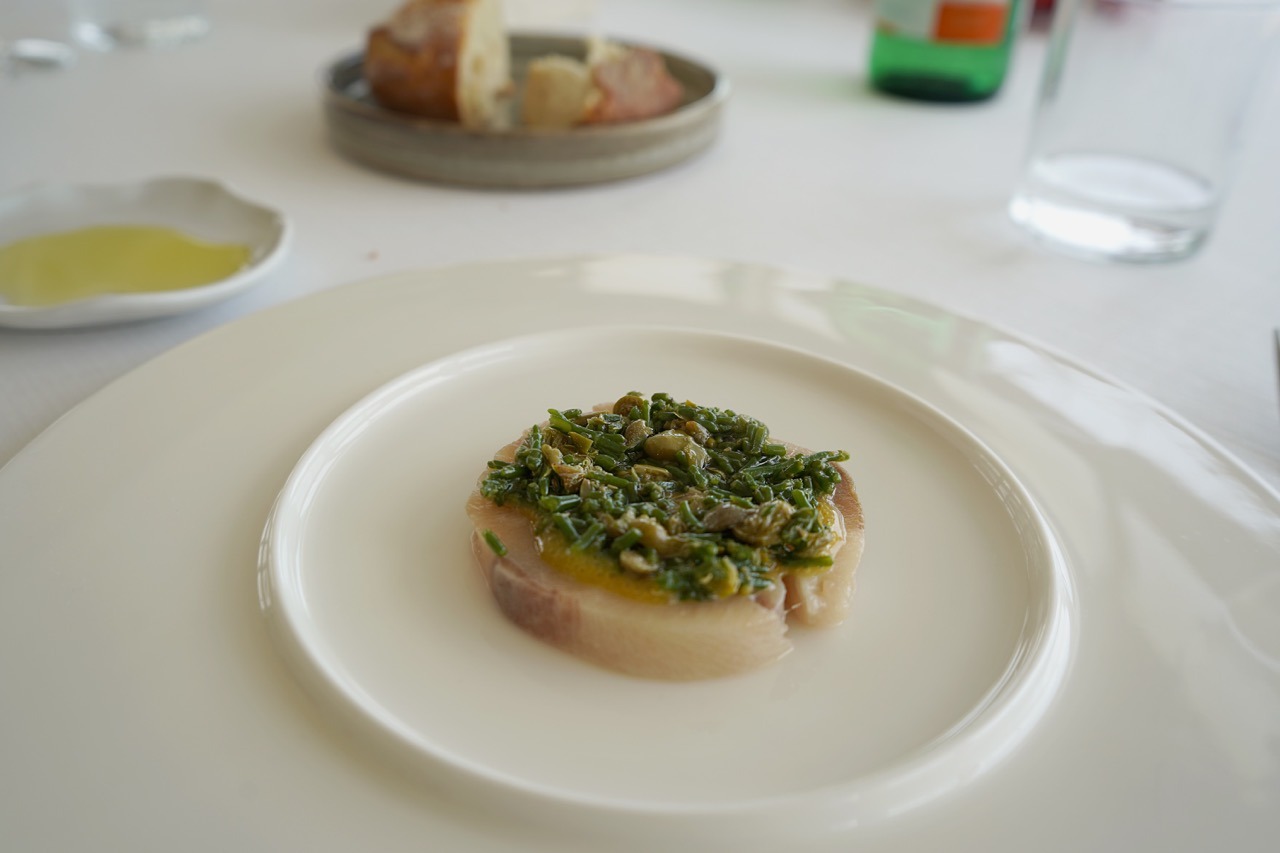
The principle behind it is strict. "If the product isn't there, vegetable or fish, the dish isn't made. We don't force it." Technique matters, German adds, but the raw material must come first. "You should like it as it is. It shouldn't be manipulated too much." The amberjack served during our visit proved the point: a simple dish, and therefore an easy one to get wrong, cooked with absolute precision. It is a simple amberjack marinated with mandarin and served with salicornia and capers, a dish of absolute balance and sapidity, a must-try.
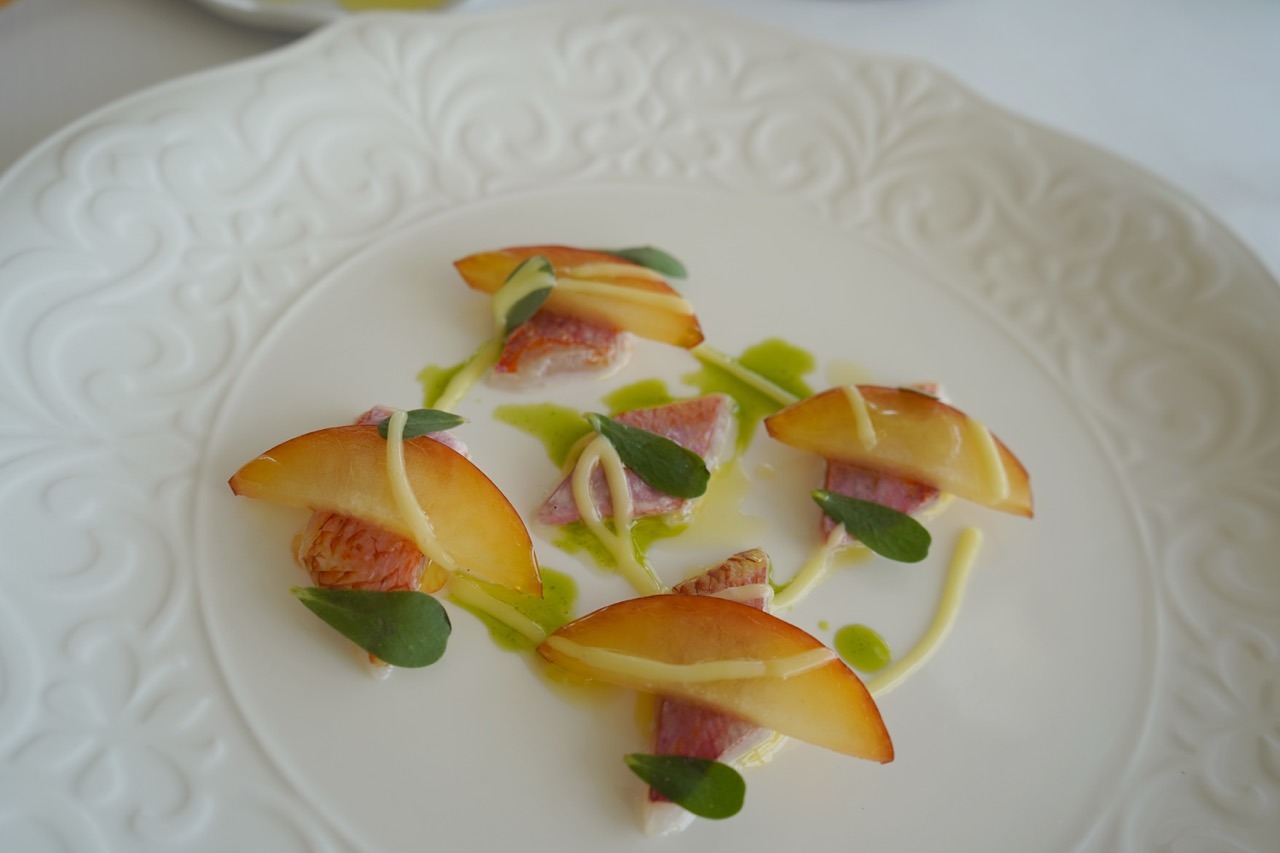
The same goes for the red mullet, where the quality of the fish speaks for itself, paired with plum served at different stages of ripeness: a simple dish, yet an intriguing one. The balance between the sweetness and acidity of the plum keeps the fish at the center of the plate.
Familiar Shapes, New Language
Many guests arrive with an idea of what a seaside restaurant should serve: fried fish, cuttlefish and squid skewers. La Rotonda does not ignore that memory. It translates it.
On the menu, the Totano di bonaccia is a single iron skewer threaded with four pieces of flying squid, cooked over charcoal. On top go fresh herbs, including a culinary mint rather than the cocktail kind, alongside chimichurri and salsa criolla. "The idea is to find the Sunday skewer again, in a different form." And for the regular who simply wants grilled fish, the charcoal is always lit. "There doesn't have to be a compromise."
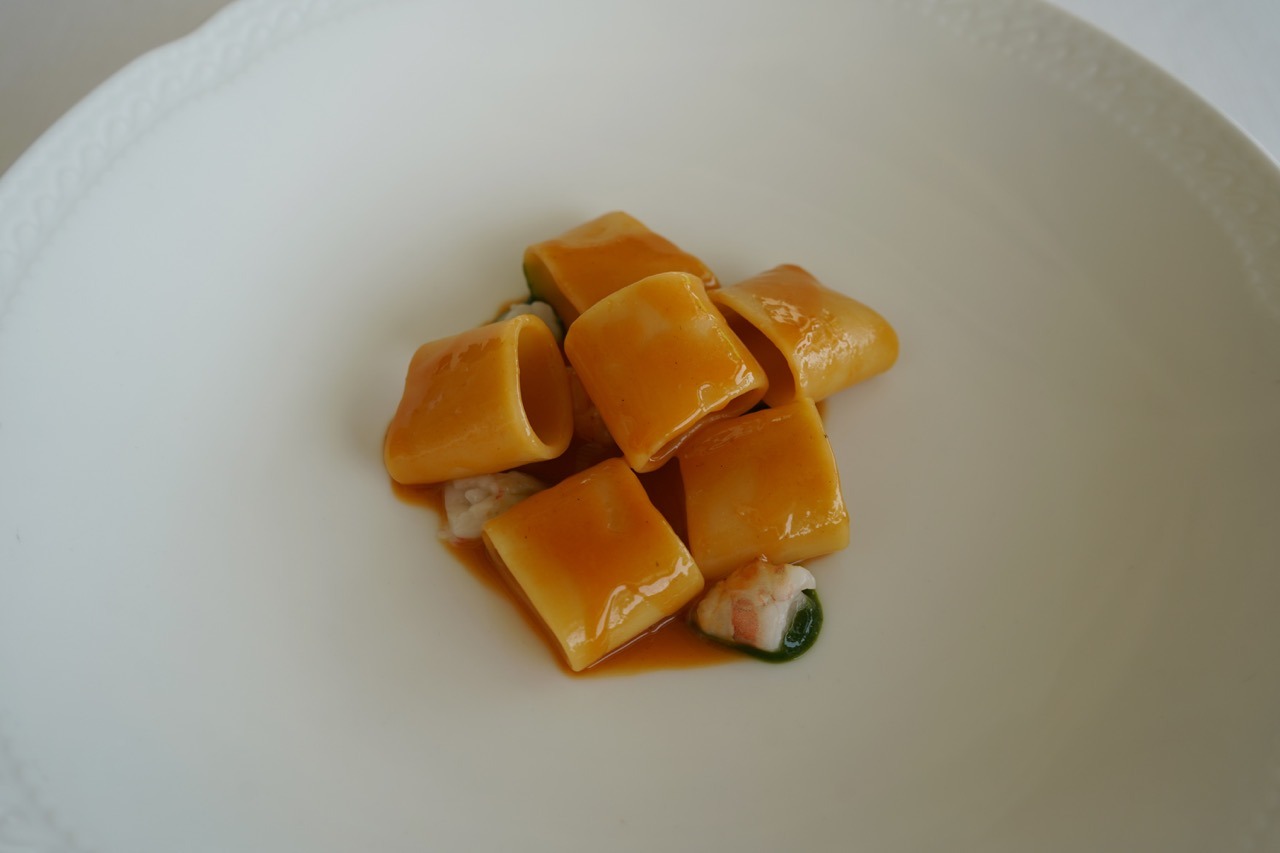
Another clear example of this approach is the mezzo pacchero allo scoglio: a deeply reduced seafood broth, cooked slowly over time, in which the flavour of the sea doesn't fade but rather intensifies, enhanced by the addition of raw shellfish.
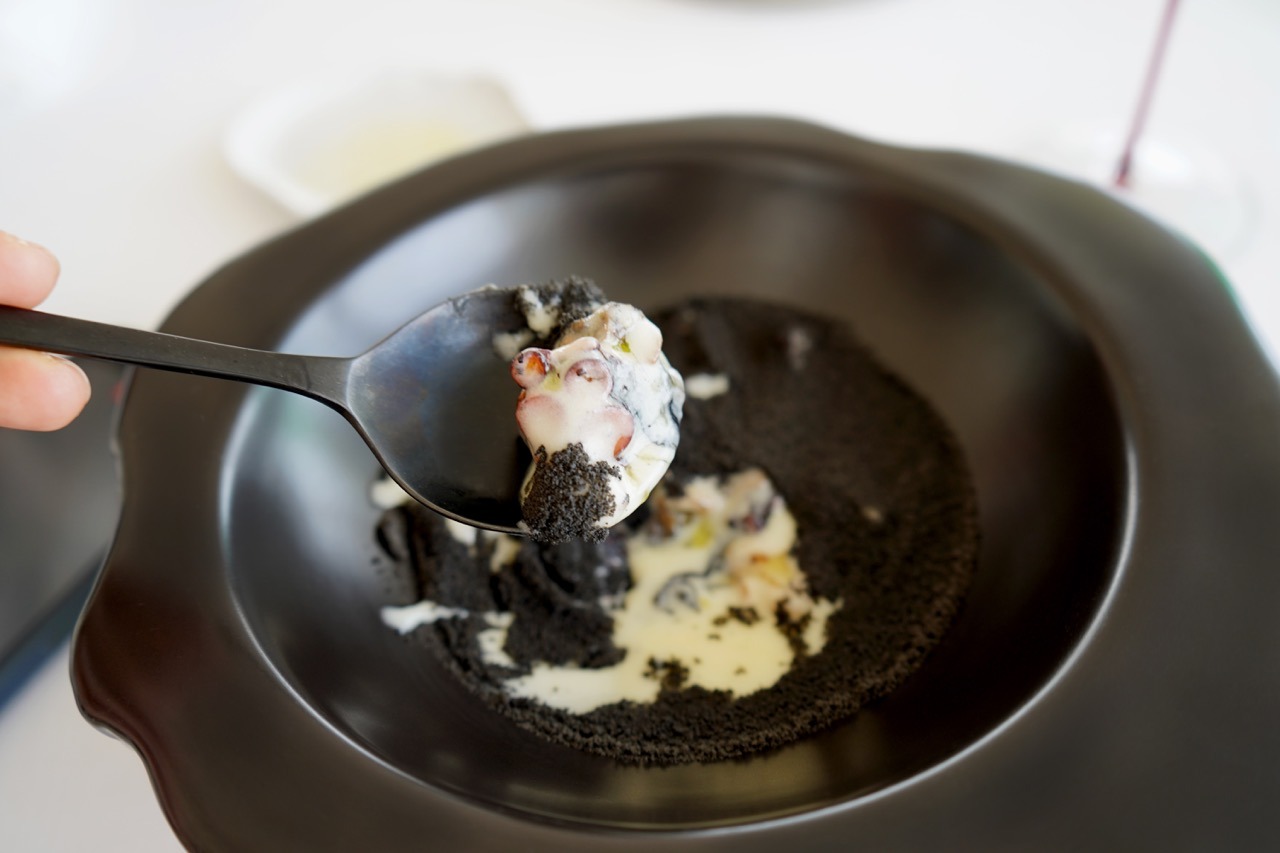
At the same time, more daring dishes are also on the menu, such as the “Back in Black”: octopus on a bed of parmentier cream, with chiodini mushrooms, all covered in smoked potato powder. A really interesting combination.
Nothing Goes to Waste
According to the FAO, roughly a third of the world's fish catch is lost or wasted every year. Some fish never reach a counter because they are the wrong size, or simply not what the market expects. "Every day an enormous amount of fish is thrown away," German says. "Some fish become hard to sell just because they don't have certain commercial characteristics."
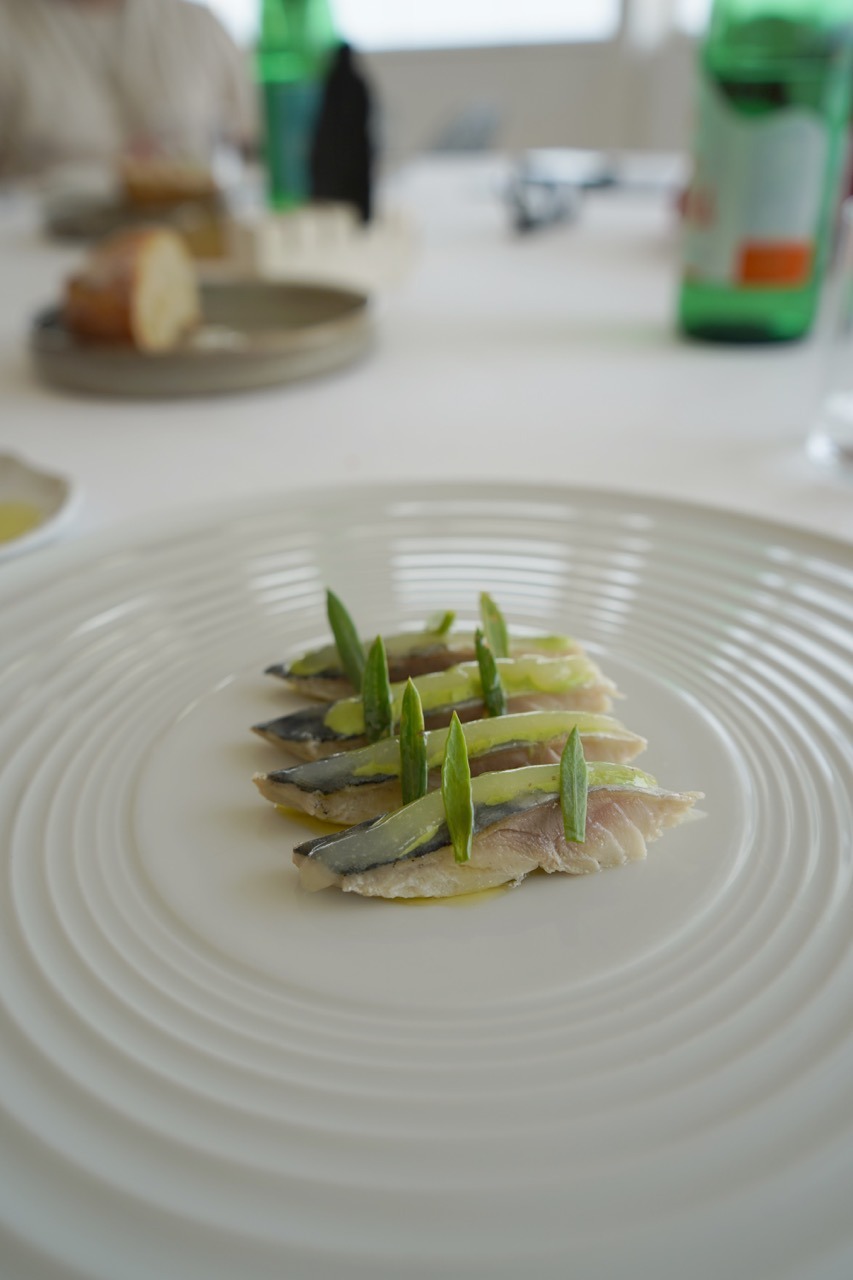
In his kitchen that logic is turned upside down. Mackerel takes the place that tuna would hold elsewhere, part of a deliberate choice to cook species seen less often than the usual standardised ones. The mackerel is served with paccasassi, a traditional plant from the Marche coast, as a way of always remembering where we are.
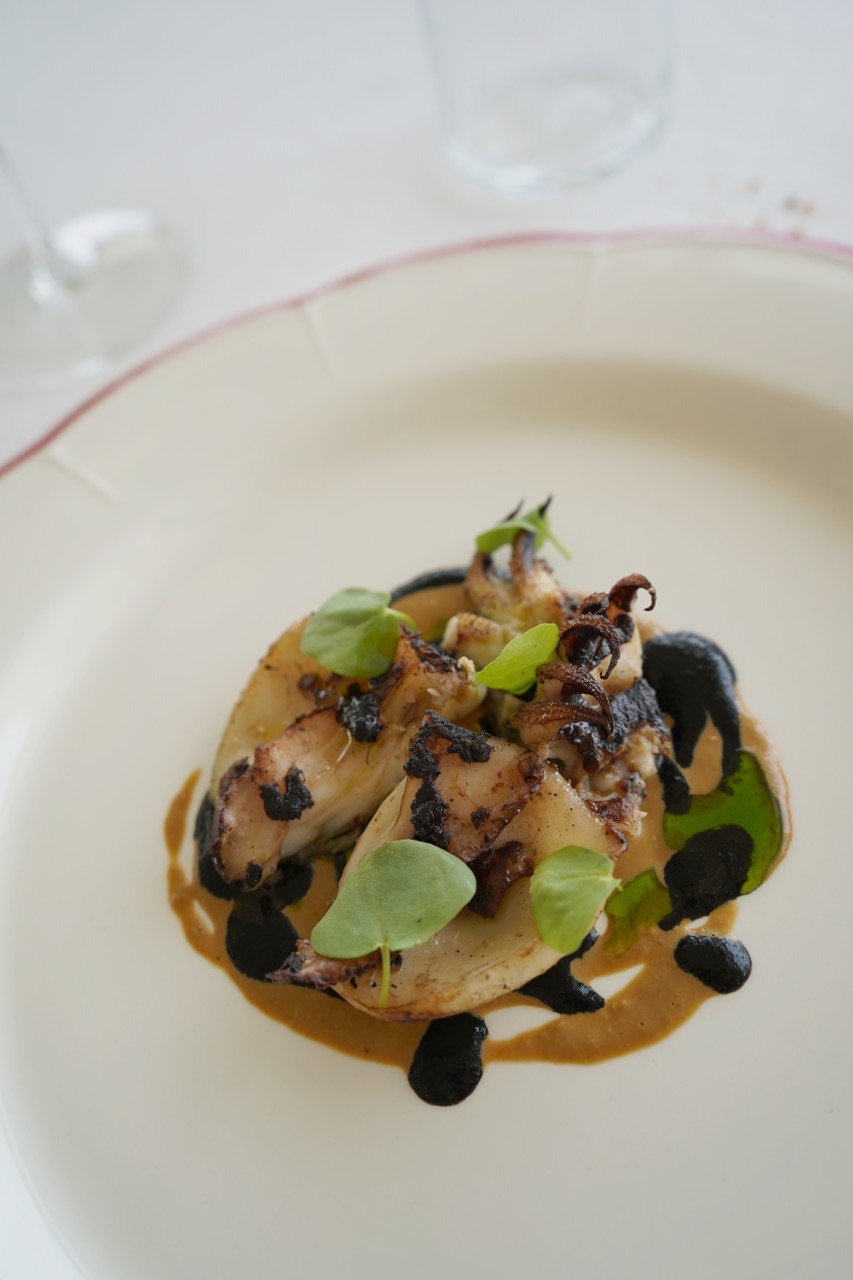
The cuttlefish liver, which most kitchens discard, enters the dish. The livers are set aside and pasteurised, then cooked "alla veneziana" with onion, a clove of garlic and olive oil. No thickener is needed: the liver sets on its own. It is then blended, sieved and brought to the desired consistency. "Anything from the quinto quarto is fine by me, we don't throw anything away. Really, nothing."
The Dining Room Is Seventy Percent
"The dining room is seventy percent of a restaurant," German says. "It's the dining room that saves you." That room belongs to Sara, who also oversees desserts and much else. "I just play with the raw material."
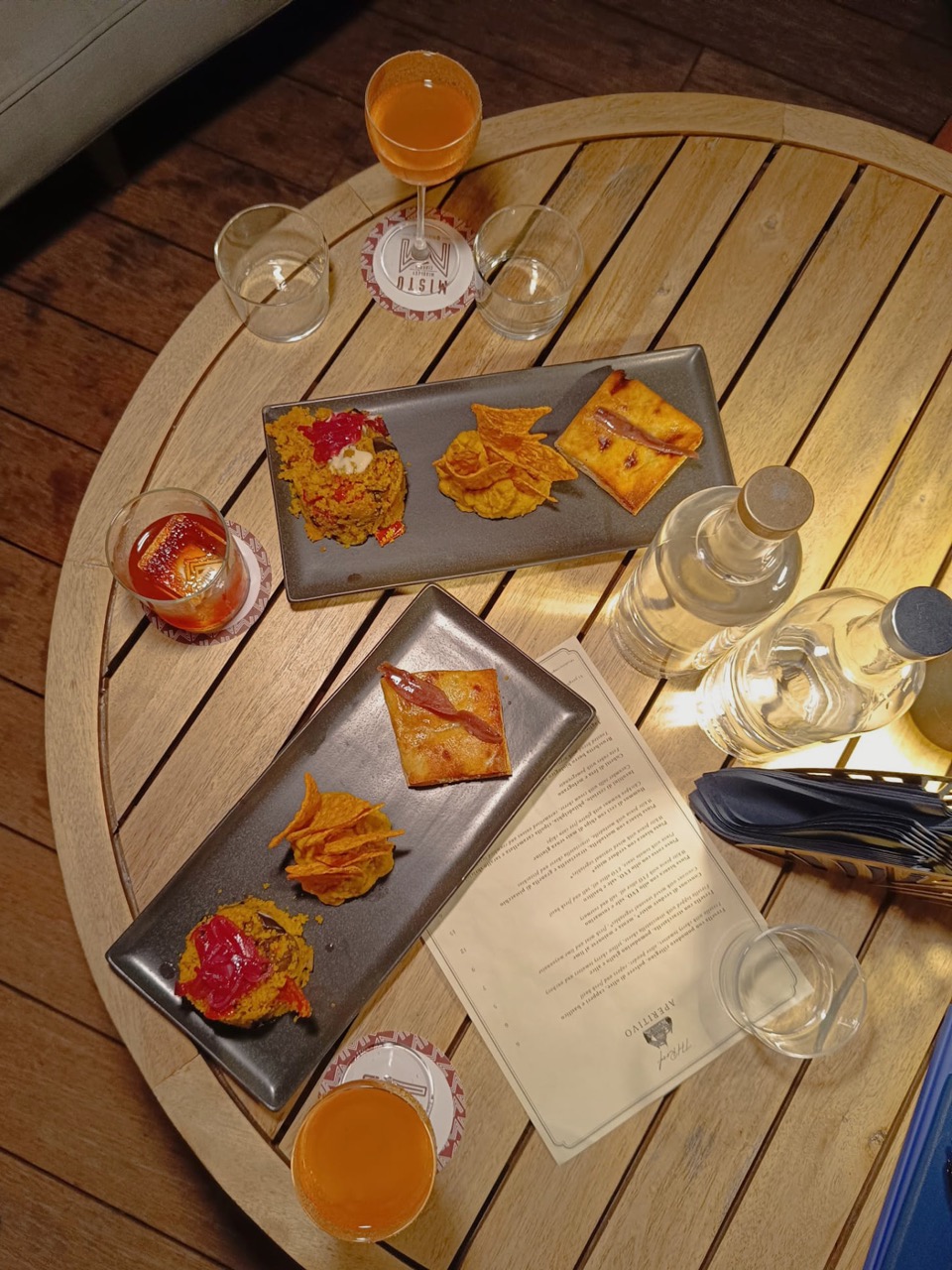
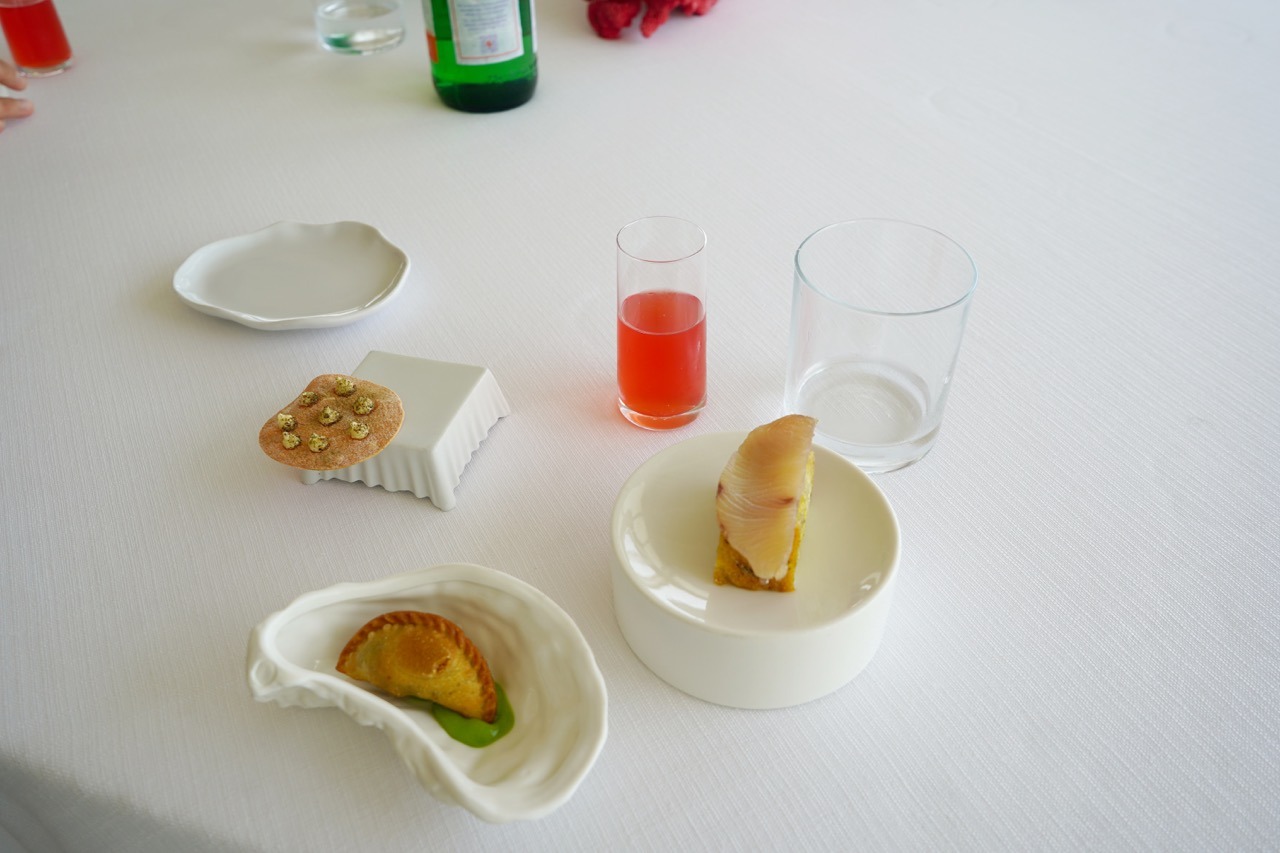
The dialogue between the two halves of the restaurant is visible from the very first sip. The opening bites arrive with an alcohol-free Negroni served as a small shot: a tomato wafer with butter, savoury yet sweet; an empanada whose filling almost bursts in the mouth, with peas that bring a dry, green note; a focaccia, richer, topped with amberjack prosciutto. "The kitchen made a request, and the dining room gave its answer," German explains. Alcohol was deliberately left out, so as not to interfere with what guests would drink next, while the drink stays fresh enough to clean the palate.
The wine list was first built by a sommelier. When their paths parted, a few years after the 2007 takeover, the cellar was taken in hand in-house by Sara and rebuilt around the producers of the area, relationships that are personal as much as commercial. In the last three years it has looked towards France, especially Champagne and Burgundy, with regular trips there and the next one already planned for 2027. Increasingly, guests let themselves be guided.
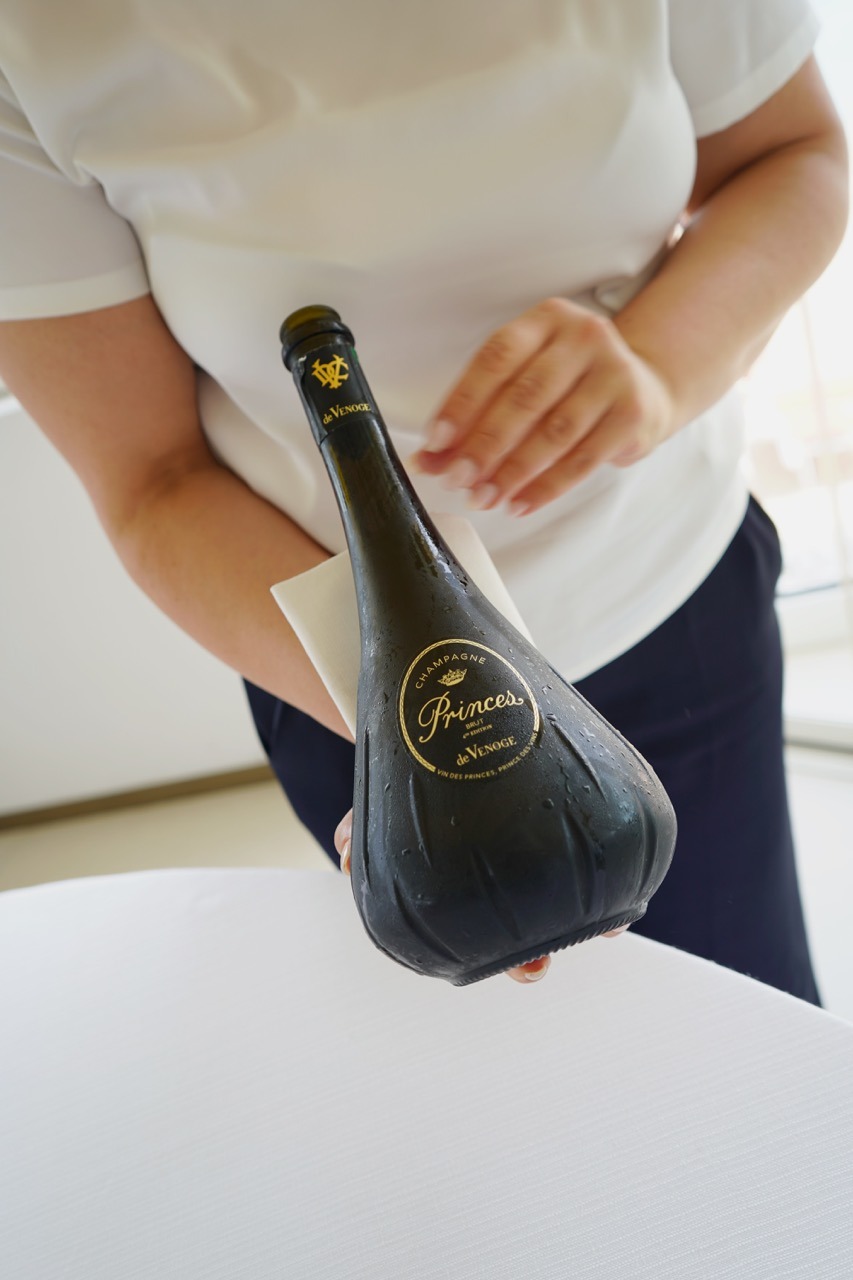
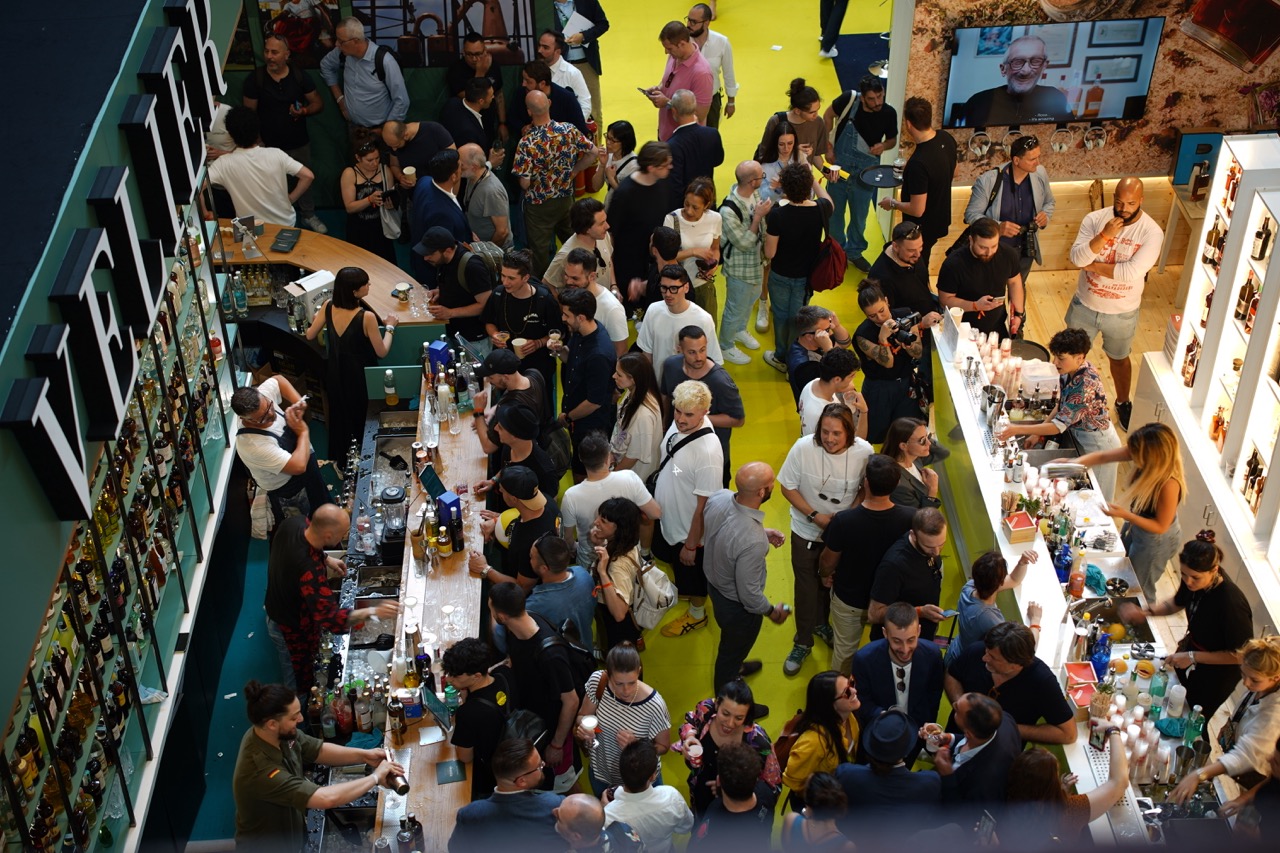
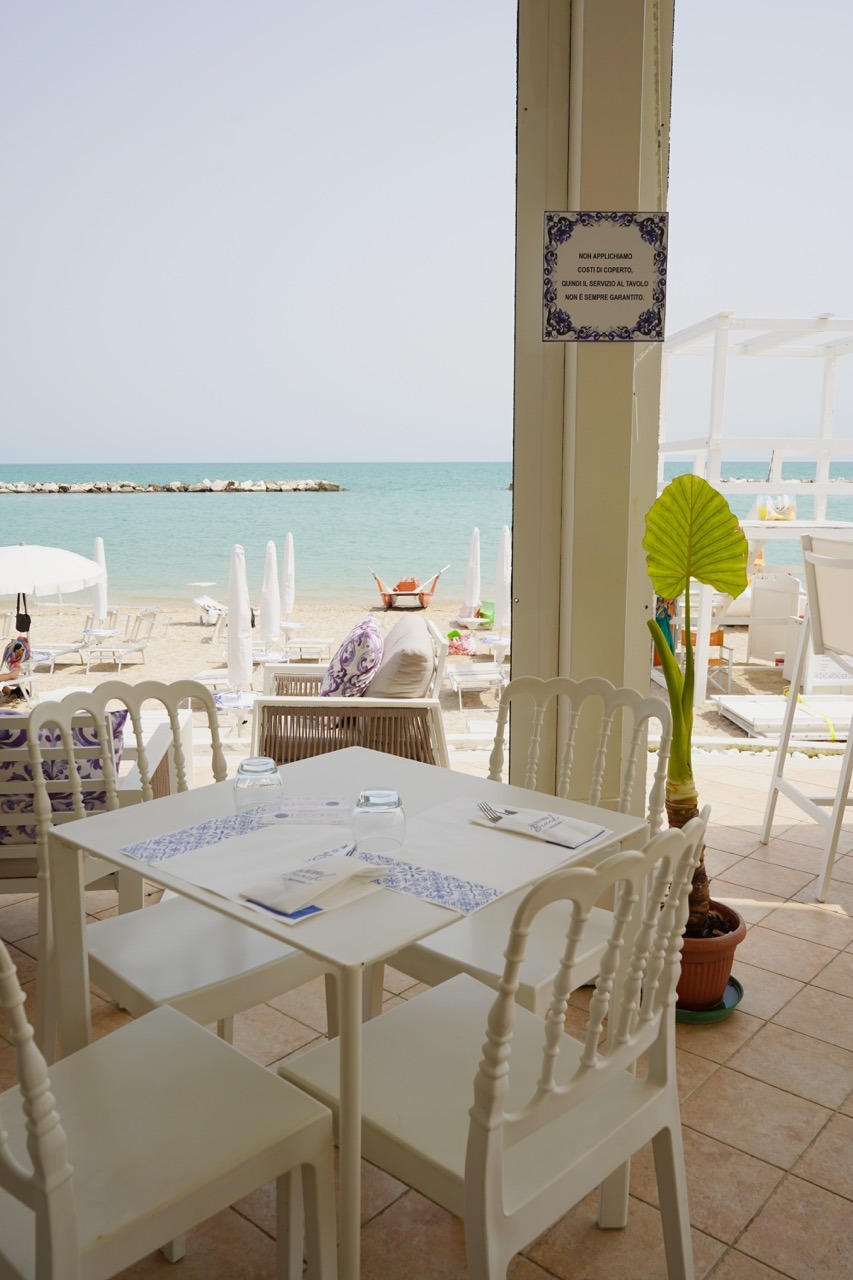
Once a year that relationship moves onto the beach. Umbrellas and loungers are cleared away, and the entire kitchen and dining room are set up on the shoreline. This year's edition brought together chefs including Enrico Mazzaroni of Il Tiglio, the Champagne house Champagne De Venoge "It isn't simply a tasting."
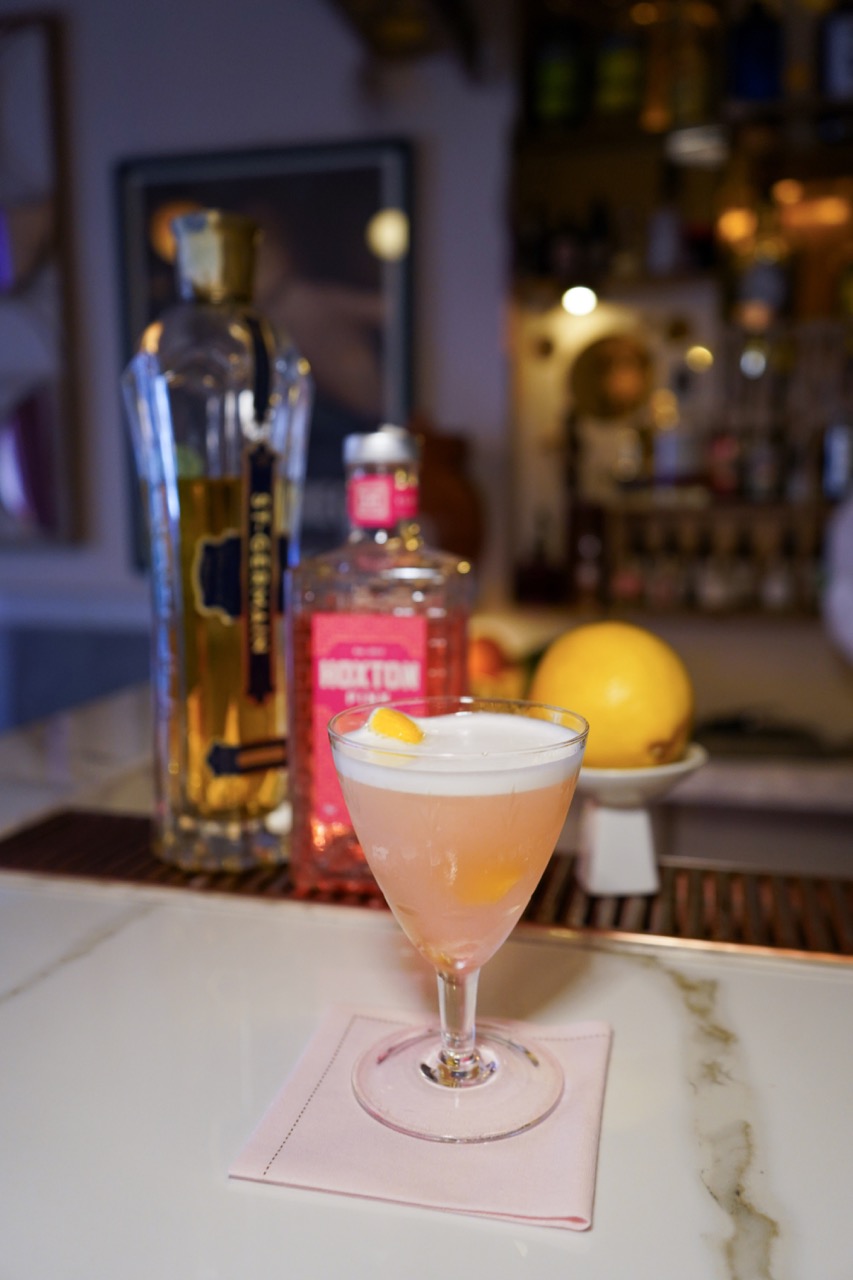
Wine remains the core, but there is room for a gin and tonic selection, aperitivo and concert evenings with the Salumeria di Mare, and signature cocktails, who works with the team. Food and cocktail pairings are part of the conversation too.
Full Circle
Asked which dish he loves most, German hesitates but then goes for the cuttlefish. "Because it tells our story best, the path we've taken." Sara's grandfather fished cuttlefish all his life, so the dish already carries a family history before it reaches the table.
It is also the plate where every idea of La Rotonda meets. It starts from a classic of this coast and uses the whole animal, quinto quarto included: the small white nodules most cooks throw away, the eggs found inside, with their unusual texture on the palate. "It's a dish that gives me a lot of satisfaction. It starts from something traditional, but it uses the parts nobody usually considers."
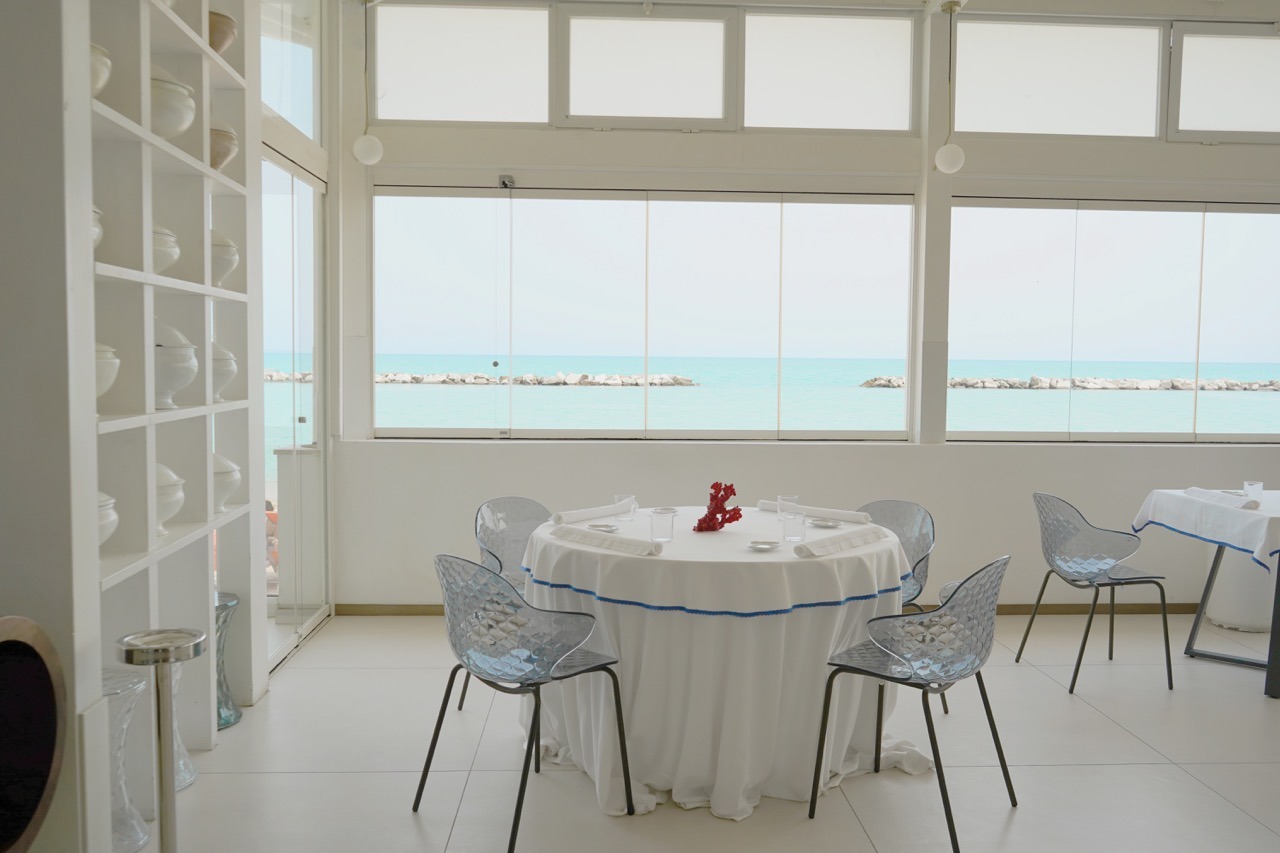
Sixty years ago, a note on an order slip promised cuttlefish in exchange for a farmer's chard. Today the cuttlefish is still there, used down to the last piece, and the vegetables still come from the fields just inland. The building has changed shape many times, the menu even more. The answer to the chef's question has not. Sitting in that round room, facing the Adriatic, you know exactly where you are.
La Rotonda Ristorante Porto Recanati