The Forests, Time and People Behind the Value of White Truffles
When people think of white truffle country, many picture Alba in Piedmont. Yet farther south, in the upper Tiber Valley, lies another region with deep ties to truffles.
Città di Castello is a small town in northern Umbria, close to the Tuscan border. The surrounding woodlands yield both white and black truffles.
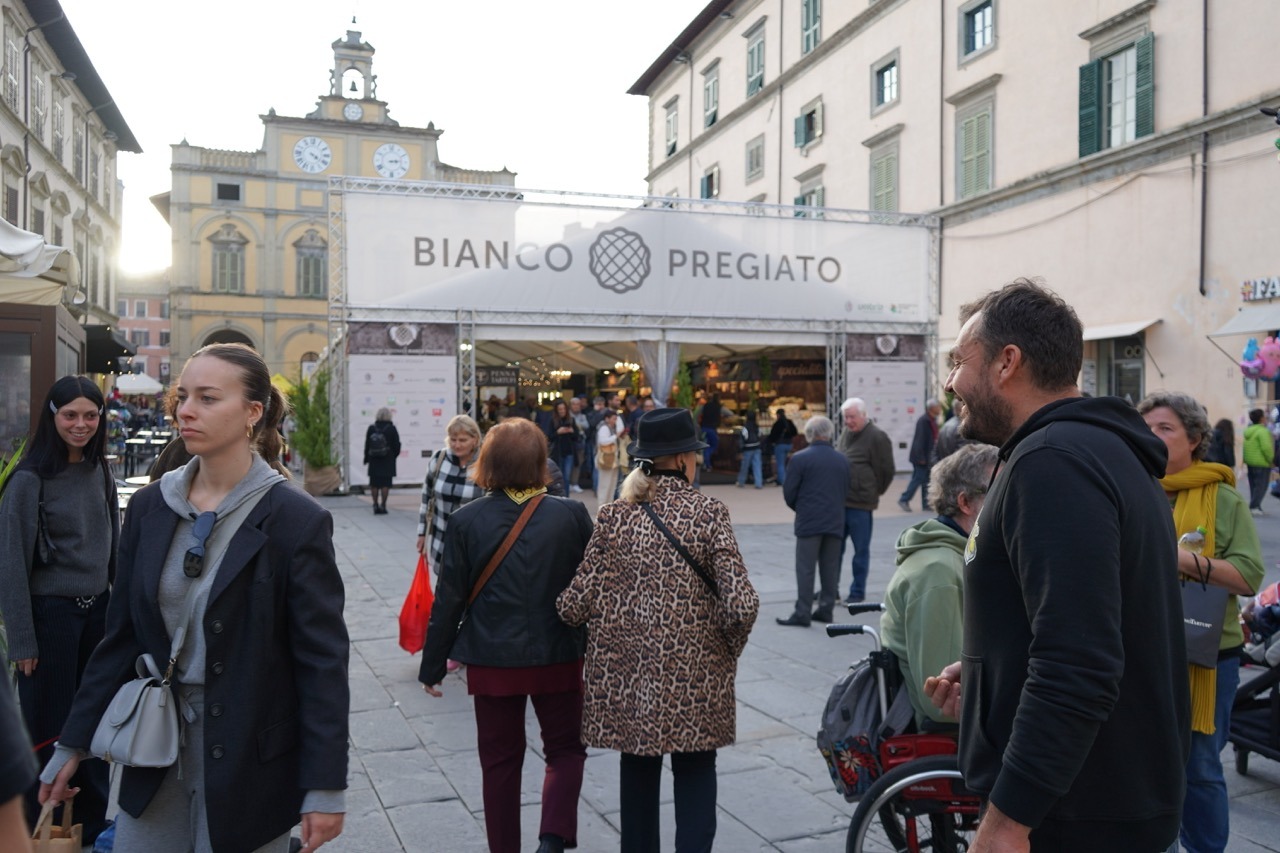
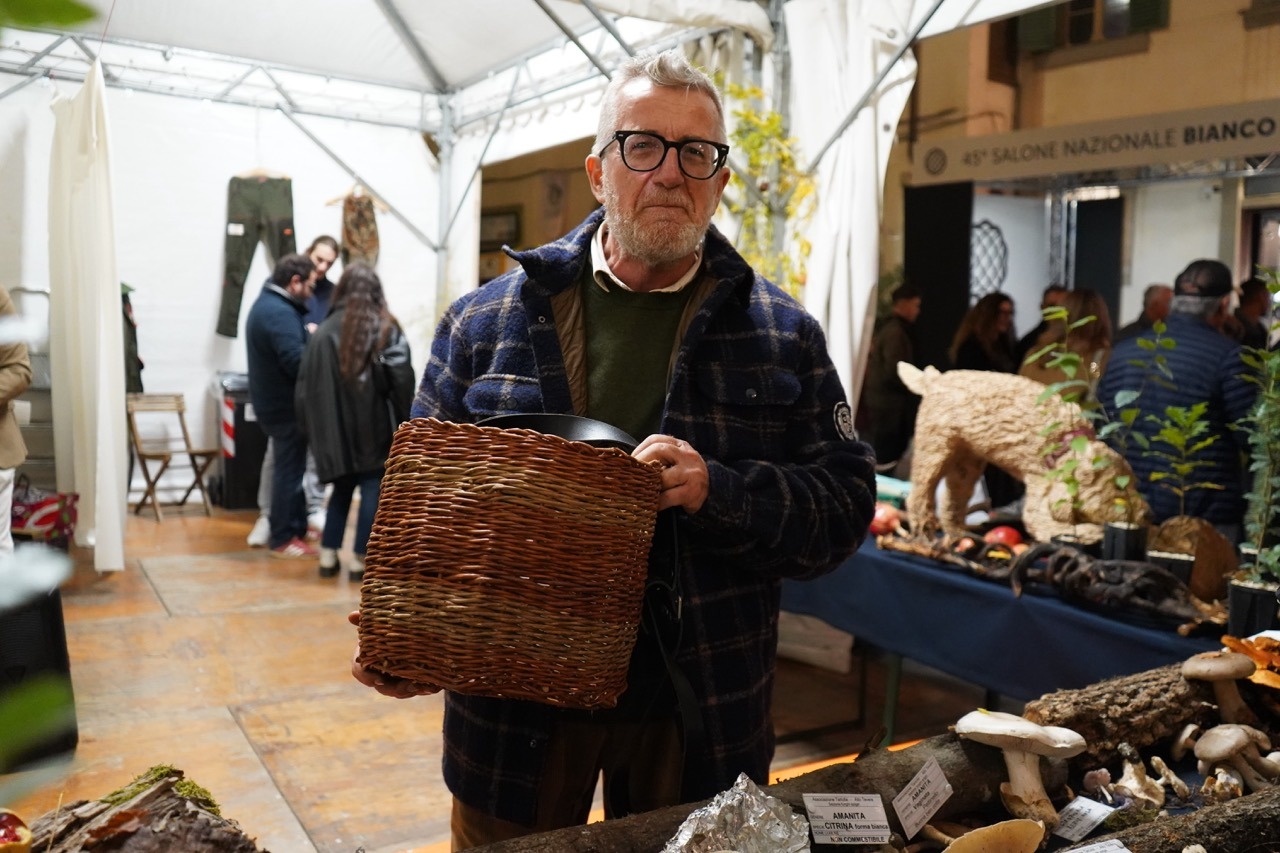
Every year, when white truffles reach their peak from late October to early November, the town hosts the National Exhibition of Fine White Truffles. Freshly unearthed truffles fill the historic centre, varying widely in size and shape, while visitors pause to take in their aroma and choose carefully among them.
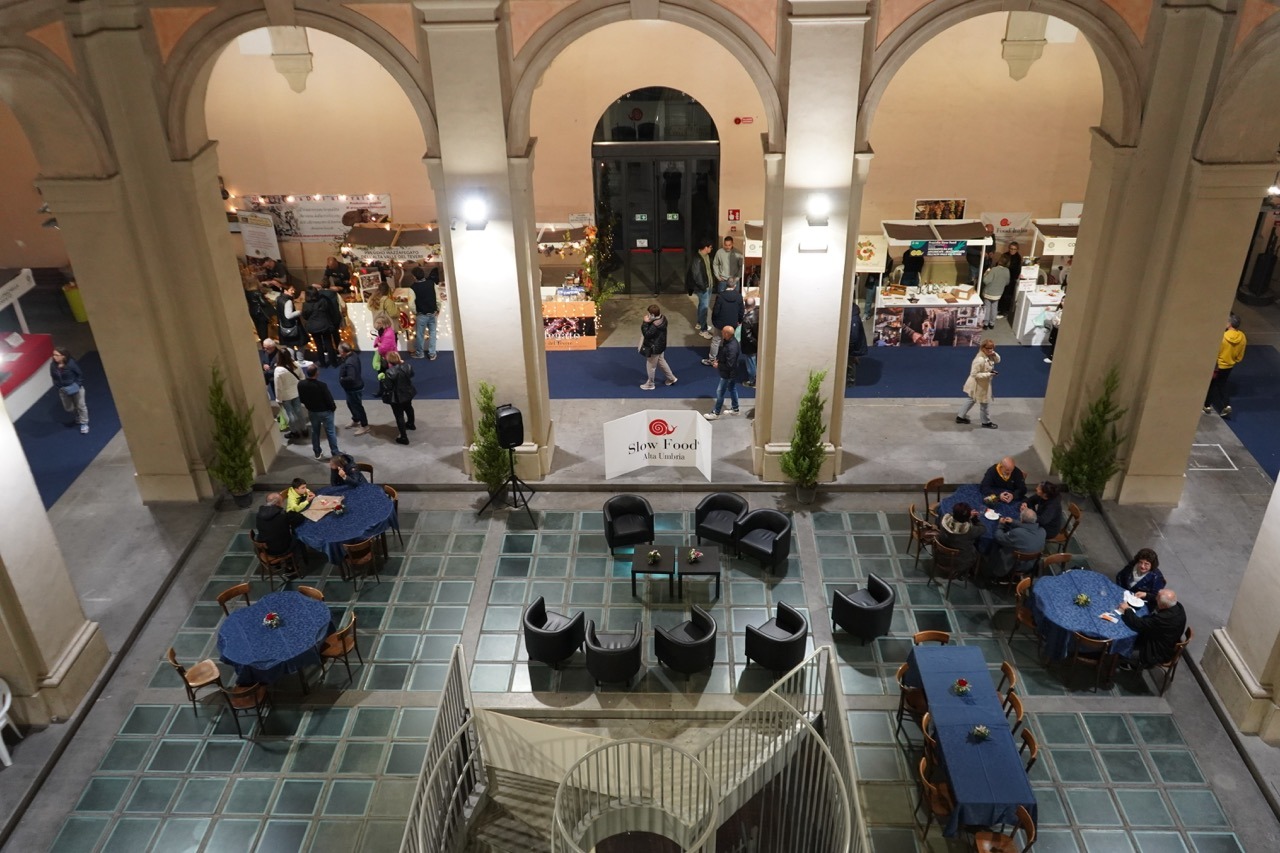
A temporary truffle restaurant opens at the venue, while restaurants across town introduce seasonal menus of their own. Exhibitions, cooking demonstrations and aperitivo events led by a local culinary school are among the many activities on the programme.
The fair attracts not only the general public, but also chefs and other food professionals who come to source ingredients and gather information.
How Professionals Assess a White Truffle
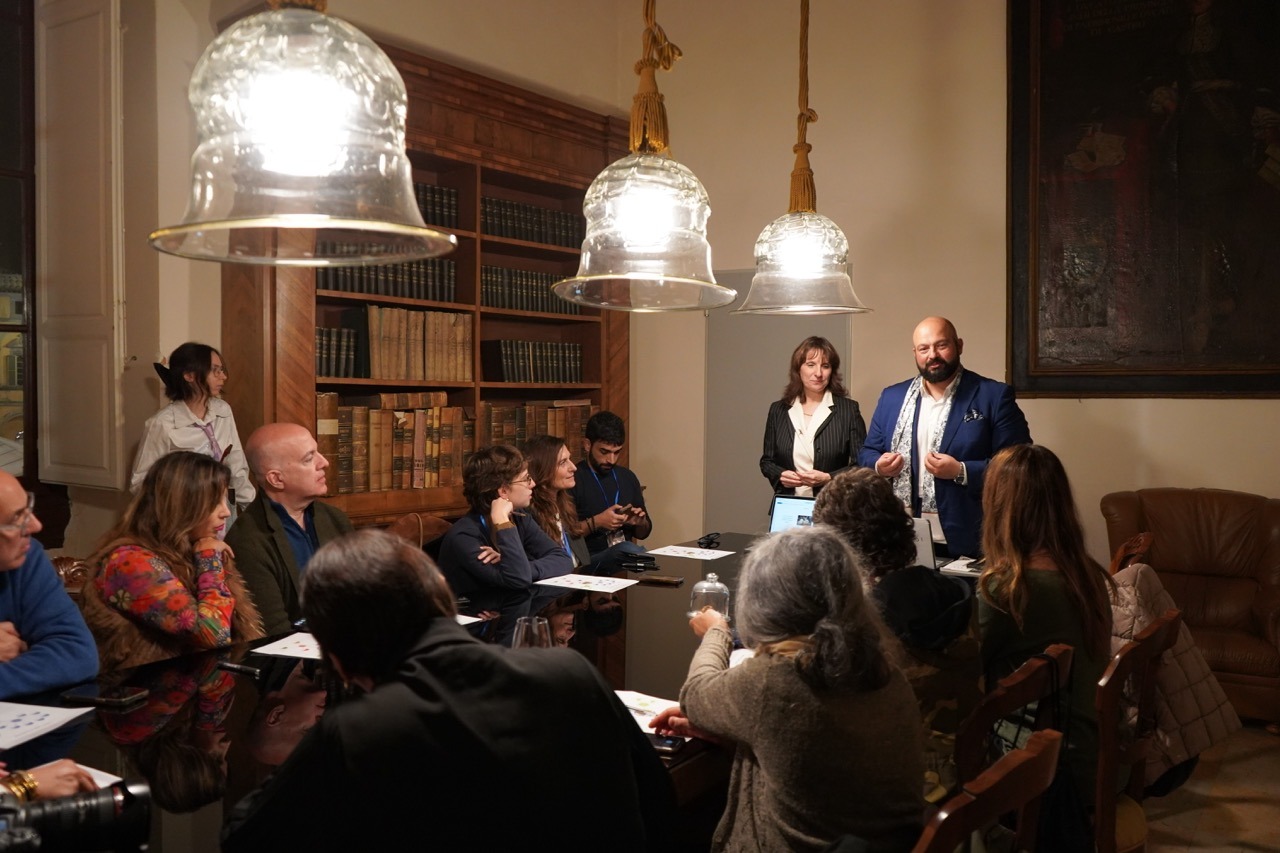
One of the most interesting events was a sensory evaluation session designed to teach participants how to judge freshness and quality for themselves. Rather than simply learning about provenance and price, we compared truffles freshly unearthed from the soil, examining, touching and smelling them to understand what to look for when making a selection. The chance to compare several specimens side by side was something only a fair held in the producing region could offer.
The session was led by truffle sommelier Daniele Violoni, known as “The Lord of Truffle,” and Monica Panzeri, vice-president of Narratori del Gusto, an association dedicated to communicating food culture.
The value of a white truffle is not determined by size and weight alone. Is its aroma sufficiently pronounced? Is it firm throughout? Is its shape regular, and is the surface free from damage or dirt? Its quality is assessed by considering all these elements together.
On the table were white truffles in glass containers, gloves and evaluation sheets listing the criteria. The assessment followed three stages: looking, smelling and touching. We put on our gloves and began by examining each one.
In front of us were pale yellowish-brown objects that looked like clumps of earth. Without any prior knowledge, it was difficult to see much beyond whether they were large or small. Once we began following the criteria we had been taught, however, differences emerged among specimens that had initially appeared almost identical. Some still had soil clinging to their surface; others were chipped or marked. Some were rounded, while others were covered in irregular bumps and hollows. We were told that a small indentation might even be the mark of a snail bite. Trying to work out how each one had grown underground was surprisingly fascinating.
After the visual inspection, it was time to assess the aroma.
Following the instructions, we held each truffle about two centimetres from the nose and inhaled slowly for three seconds. Flowers, dried grass, mushrooms, spices, earth, fermentation and the sharpness of ammonia.
Smelling it several times and shifting our attention from one note to another seemed to reveal new aromas beneath the first. Was it dried grass, damp soil or something else? The impression was not immediately easy to put into words; we had to search through our own memories to identify it.
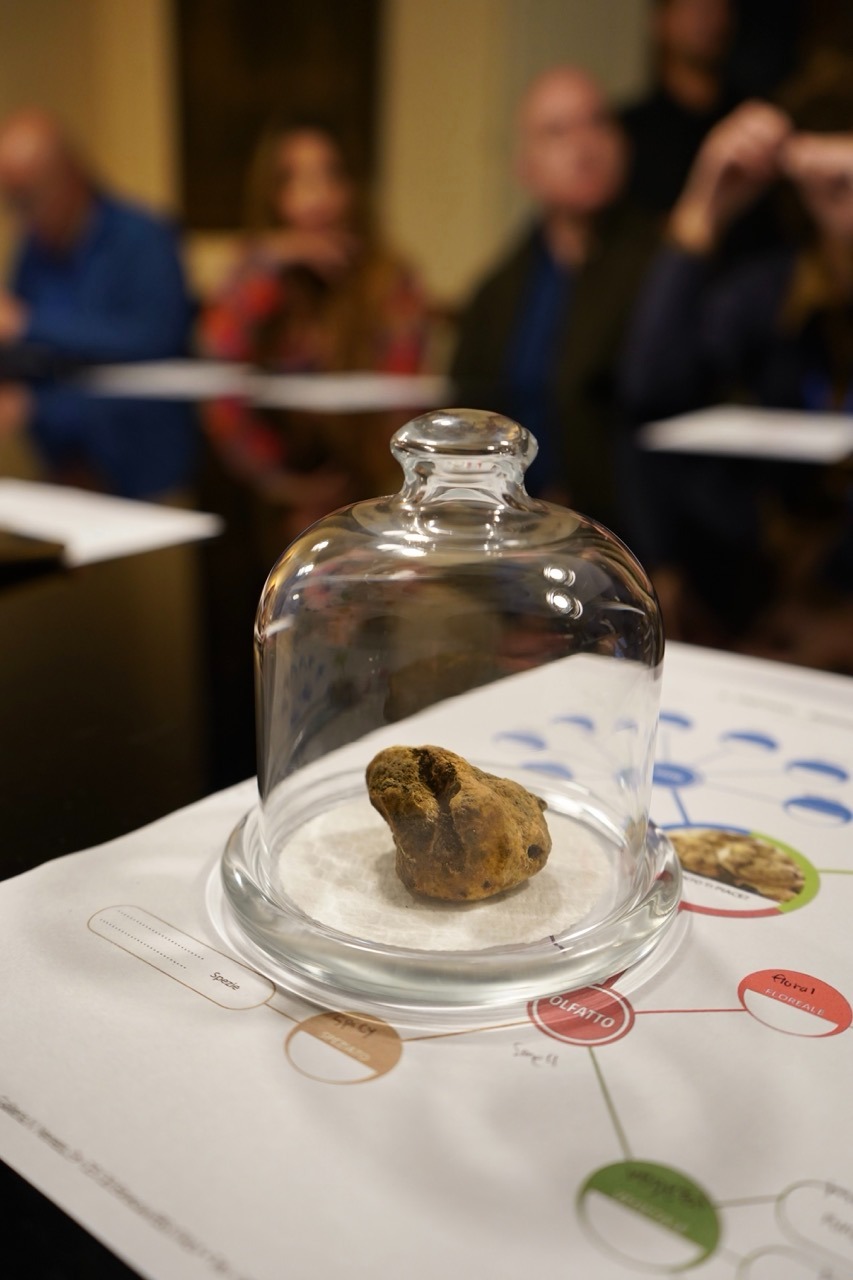
Once we had learned how to look and smell, two new white truffles were placed on the table. This time, we had to use what we had learned to assess their condition ourselves.
“Which one do you think is fresher?”
We compared them beneath their glass covers. There was no obvious difference in shape or colour, and appearance alone offered no answer.
The covers were then removed, and we leaned towards each one in turn. One carried a faint scent reminiscent of cabbage; the other smelled closer to earth and the undergrowth of a forest. As we compared them several times, recalling the vocabulary we had just learned, distinctions we had missed at first gradually became perceptible.
Next, we picked them up to test their firmness. Rather than pressing in just one place, we moved our fingers around the surface and gently checked several points. A fresh truffle feels firm throughout, almost pushing back against the pressure of the fingers. One that has begun to soften in places is known in the trade as a tartufo stanco—a “tired truffle.”
A truffle can become “tired” not only because time has passed since it was harvested. It can also happen when an uninterrupted cold chain is not maintained during transport, causing repeated fluctuations in temperature, or when its wrapping paper is not changed during refrigerated storage.
That does not mean it must immediately be discarded. Aroma may remain inside, and it can still be used effectively in certain dishes. Its decline in quality does, however, reduce its market value: it cannot command the same price as one freshly harvested and in peak condition.
This is why provenance and appearance alone are not enough when buying white truffles. It is worth asking when they arrived and how they have been stored. Whenever possible, buyers should handle them, test their firmness in several places and smell them. With an ingredient whose freshness is so closely tied to both aroma and price, these checks can significantly influence a purchasing decision.
To close the session, we were served crostini topped with butter. White truffle was shaved over each serving in front of us. As the delicate slices fluttered down and gathered on the bread, the vivid, vibrant aroma that comes only from freshly shaved truffle rose into the air.
On the palate, the mellow richness of the butter embraced its complex, earthy, woodland aroma, and the two worked remarkably well together. I went on to taste many more elaborate dishes, yet this simple way of eating it remains the one I remember most clearly.

Unearthing a Truffle Without Damaging Its Shape
That year, a giant white truffle weighing more than 750 grams was presented at the fair. A specimen of that size is rare. Its value, however, lies in more than weight alone.
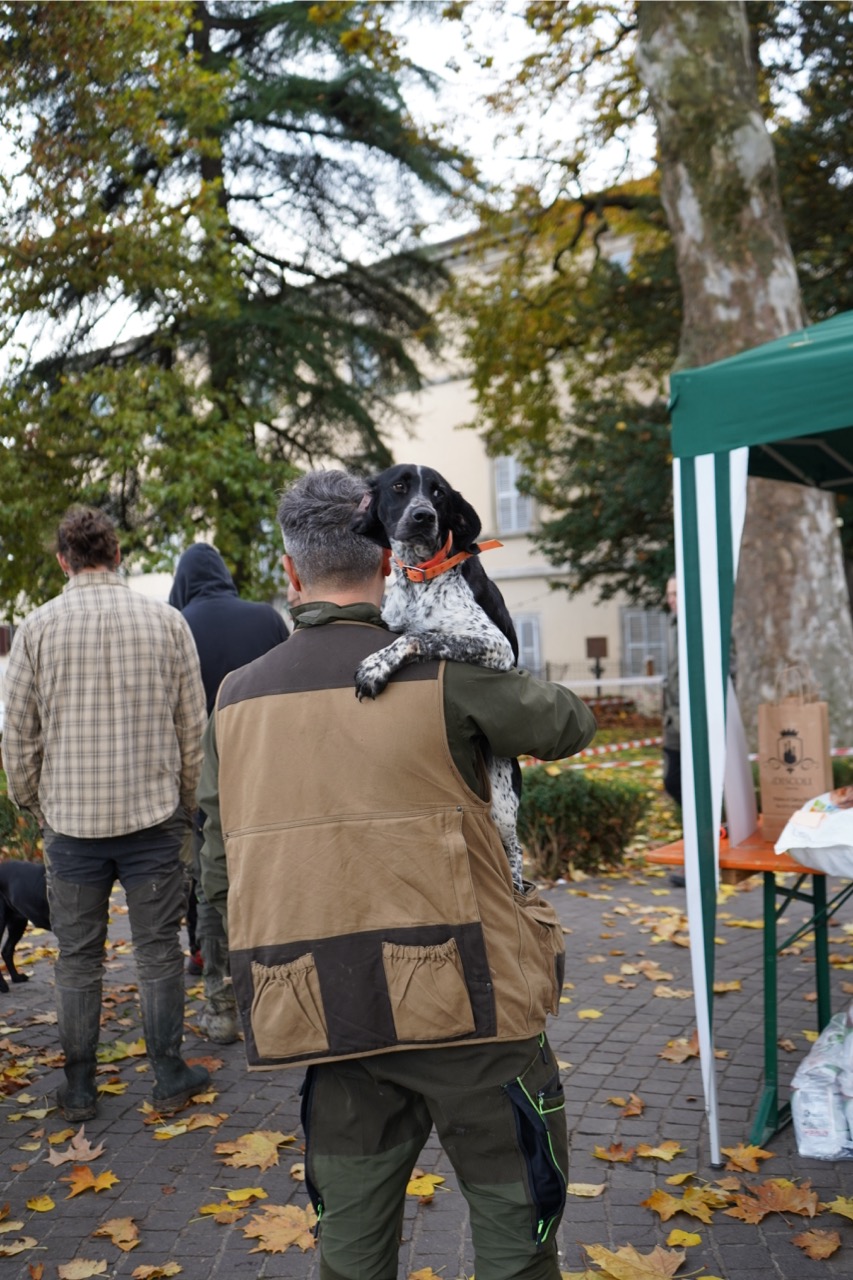
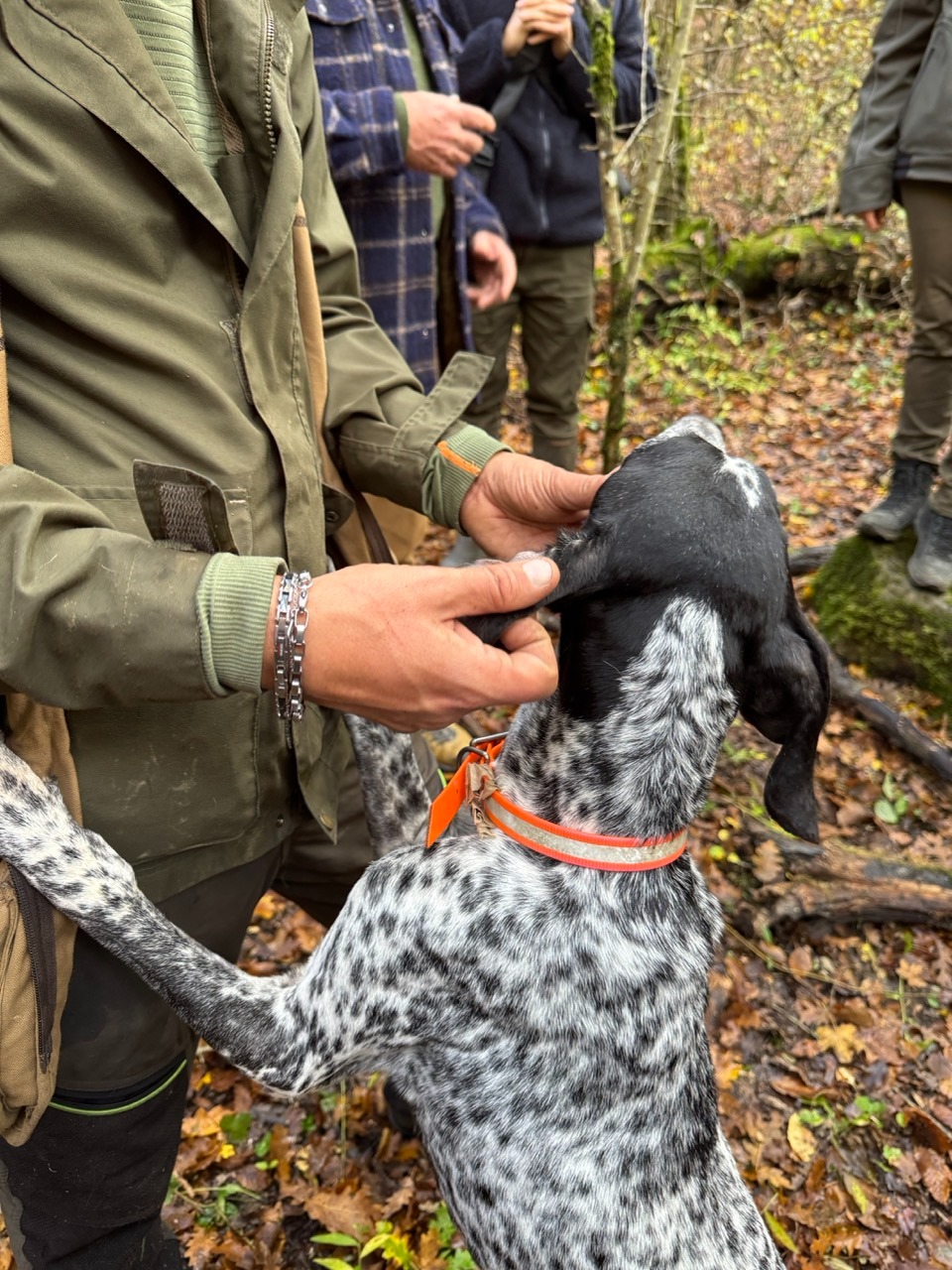
Because white truffles grow buried in the soil, neither their exact location nor the shape in which they have developed can be seen from the surface. Hunters walk through the woods with trained dogs. When a dog catches the scent, the hunter immediately moves in and begins digging with care. If allowed to continue on its own, the dog might damage the truffle—or eat it first.
For a giant specimen to emerge from the earth intact, it must not only have had the chance to reach that size in the forest. A dog must locate it, and a hunter must judge its position and shape precisely enough to dig it out without breaking it.
But what does the search actually look like? The following morning, I joined the hunters and their dogs in the woods to find out.
There Is No Truffle Hunting Without Dogs
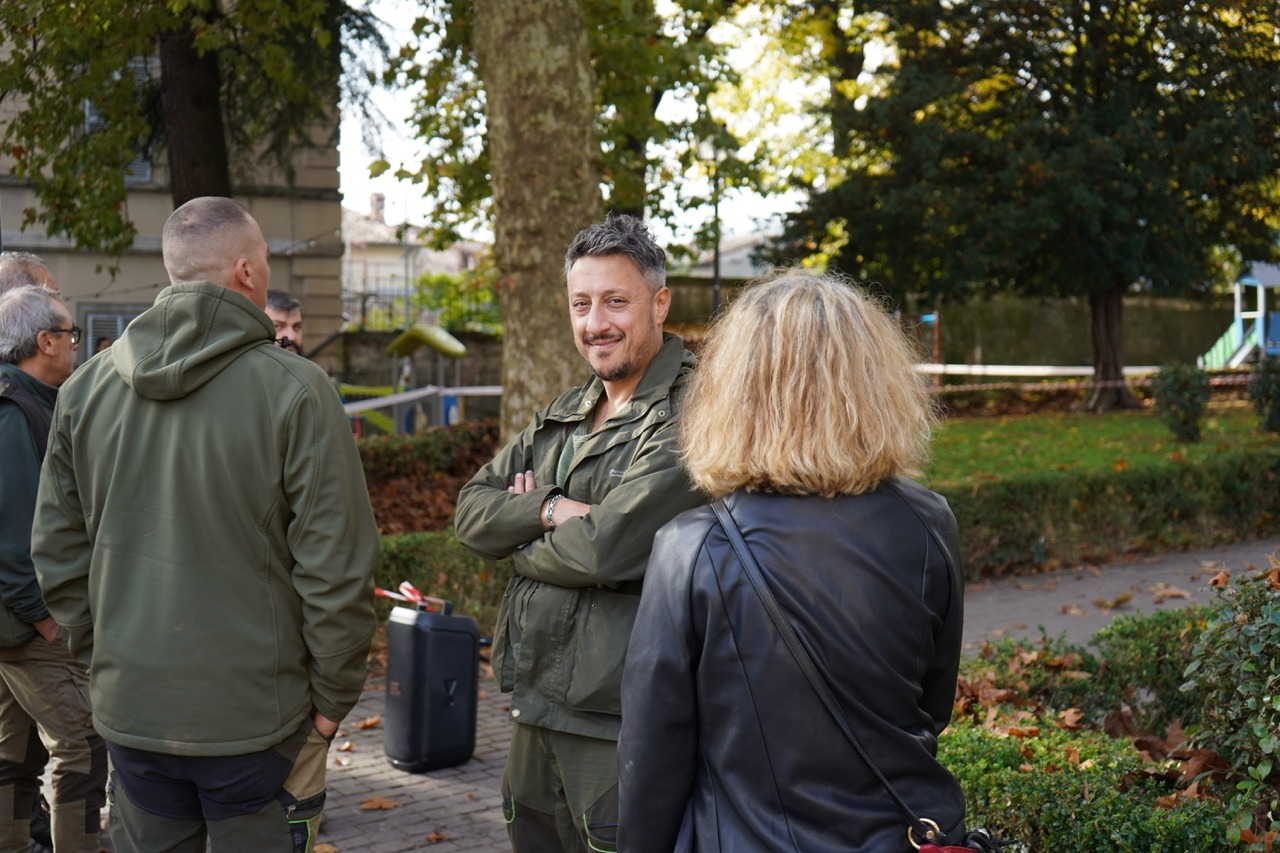
Our guides were Andrea Canuti, president of the Associazione Tartufai Altotevere, and mycologist Paolo Fabbriciani. We travelled along muddy tracks in four-wheel-drive vehicles, then continued on foot through the damp forest, crossing a stream along the way.
Several hunters and their dogs came with us. As soon as we entered the woods, the dogs ranged over a wide area, noses close to the ground as they darted between the trees. It was hard to tell whether they were searching or simply running with abandon.
Whenever one began digging furiously, its hunter ran over. But digging did not necessarily mean a truffle was there. The dogs repeatedly dashed off to another spot and began again, while the hunters watched their reactions and followed. Long stretches passed without a find.
Only after specialised training can a dog learn to search for truffles. Even then, picking out a faint scent beneath the ground in a forest thick with different plants is far from easy. The dogs did not seem able to pinpoint the exact location immediately; instead, they appeared to probe the ground by digging in several places.
The hunters watched every movement carefully, judging where a truffle might be. Before a dog could dig any farther, its handler reached into the soil and gradually cleared away the surrounding earth to avoid causing damage.
We walked through the vast forest for hours. Each time a dog began to dig, a hunter hurried over to inspect the spot. The same sequence played out again and again.
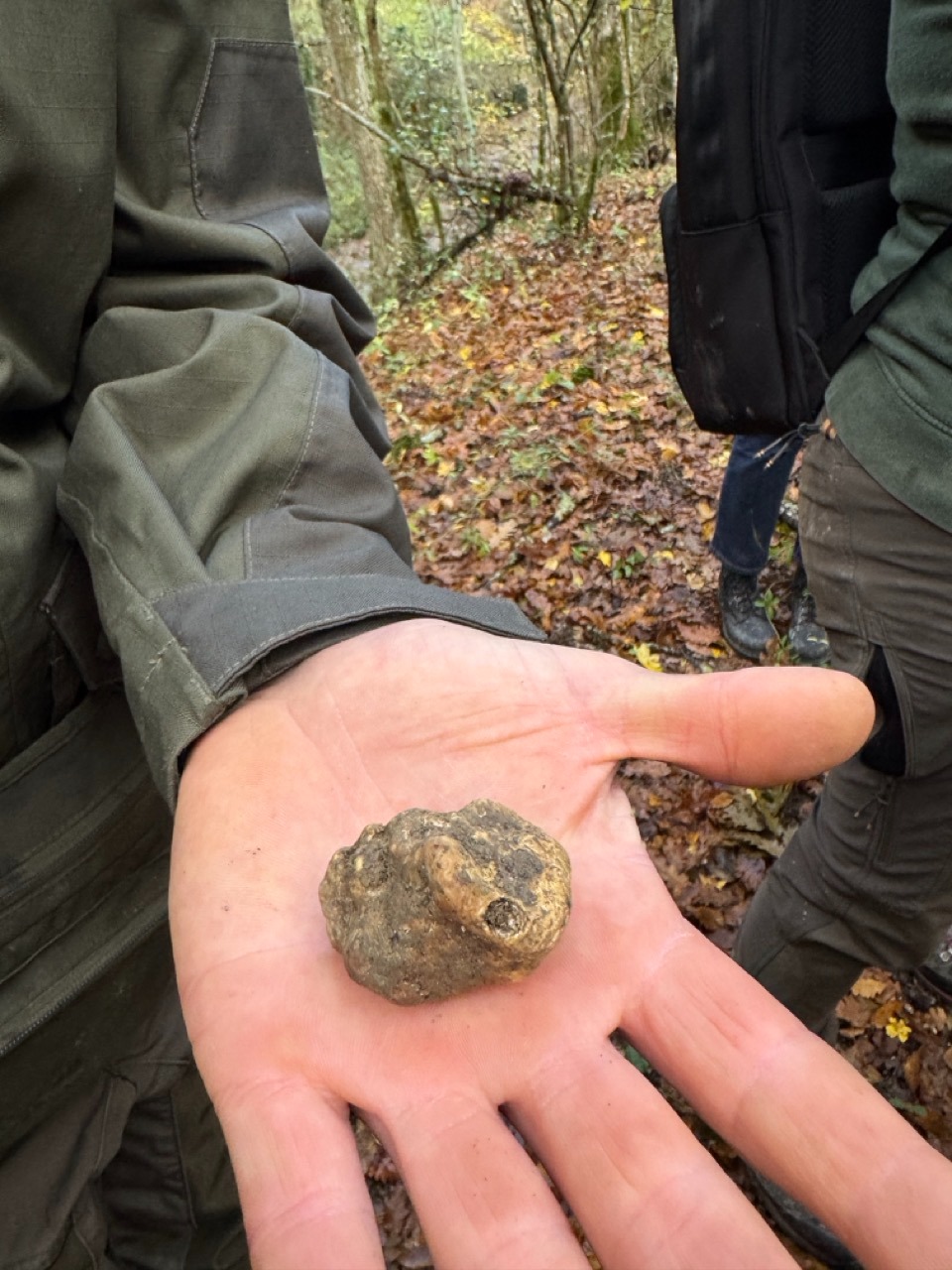
Then one of the dogs started digging. Its hunter rushed over, held the dog back and reached into the ground. As he carefully removed the soil around the spot, a small lump emerged. After hours of walking through the woods, we had finally found one.
The location of a find is a closely guarded secret among hunters. Which trees are most likely to support their growth? How should the search area change according to the rain, sunlight and the progression of the seasons? Alongside the training of their dogs, hunters inherit knowledge of how to read the forest—knowledge built through years of experience.
How Is the Price of a White Truffle Determined?
Once a white truffle has been unearthed, the window in which it can be enjoyed at its best is limited. Two specimens may be of the same variety and appear similar in size, yet differences in when they were harvested, how they were transported and how they were stored can all affect their aroma and condition.
Scarcity alone does not determine the price. Rainfall, temperature and the size of the harvest in a given year all matter, as do the size and shape of each specimen, any damage it has sustained, its aroma and firmness, and the time that has passed since it was unearthed. Since growing conditions in nature are never identical from one year to the next, neither quality nor market prices remain constant.
At the fair in 2025, around €5,000 per kilogram was given as a benchmark for white truffles weighing more than 15 grams. Larger specimens of approximately 120 to 200 grams could reach €6,000 to €7,000 per kilogram.
These figures reflected the 2025 harvest and the prices presented at the fair. There is no guarantee that the same rates will apply the following year.
Accomplished Chefs Show What Truffles Can Do
Although the fair bears the name “Fine White Truffle,” its chef demonstrations featured black truffles. Both white and black varieties are found around Città di Castello.
Black truffles can do more than serve as delicate shavings: they can be cooked or incorporated into doughs and batters. Across dishes ranging from rice and soup to dessert, three chefs demonstrated distinctly different approaches.
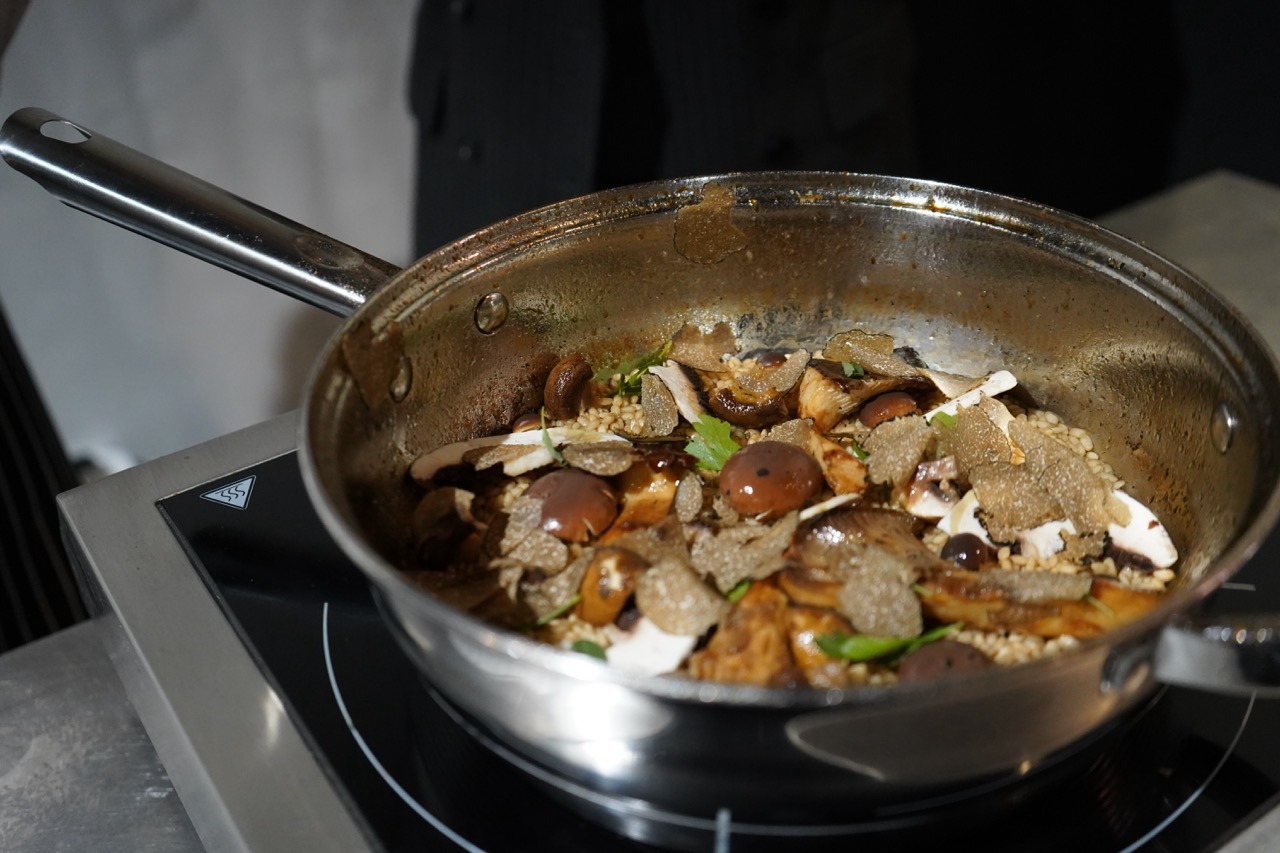
Daniele Auricchio prepared a vegetarian paella inspired by the forest. He gave pioppini mushrooms a sweet-and-sour treatment, pan-seared cremini and cardoncelli, and left button mushrooms raw. Each variety was prepared in the way that suited it best.
For the rice, he used Spanish bomba, a variety that absorbs liquid readily while retaining its shape as it cooks. Rather than stirring it as he would a risotto, he added the rice and liquid to the same pan used to cook the mushrooms, then left it undisturbed. The grains absorbed the savoury flavours remaining in the pan while staying distinct from one another. The dish was finished with fine shavings of black truffle.
Auricchio repeatedly returned to one idea: the finer and more delicate the ingredient, the less it should be manipulated. His aim was not to erase the other ingredients so that the truffle could dominate. By layering the different textures and aromas of the mushrooms, he wanted the entire plate to evoke the forest.
Next was Nicola Cassini, chef of Locanda del Cardinale in Assisi, with a dish based on French soupe à l’oignon.
Locally grown yellow onions were cooked slowly in broth, hollowed out and filled with onion soup. Gruyère was placed on top, with bread scented with garlic and herbs served alongside. At the base of the plate was a sauce made by simmering roasted onions for an entire day, then reducing the liquid until thick. Fine shavings of black truffle completed the dish.
To complement the truffle, Cassini chose onion rather than meat. The same onion appeared in three forms: cooked whole, made into soup and reduced to a concentrated sauce. This gave depth to its sweetness without introducing too many ingredients. The gentle flavour of onion, he explained, can enhance white truffles as well as black.
The third dish was a dessert by Elia Lunghi of Evo Bistrot. Drawing on his own background as the son of a German mother, he chose the Black Forest gateau, Schwarzwälder Kirschtorte.
To its familiar combination of cocoa sponge, sour cherries, cream and cherry spirit, he added black truffle. It was not only shaved over the finished dessert: it was also grated into the sponge mixture and layered between sections of the cake.
Because the preserved cherries brought considerable sweetness, Lunghi chose a cocoa with pronounced bitterness and kept the sugar in the cream to a minimum. He explained that the pairing of black truffle and cocoa creates an iron-like note rarely found in conventional desserts.
Rather than allowing the truffle to dominate, Lunghi balanced it so that it worked in harmony with the other ingredients.

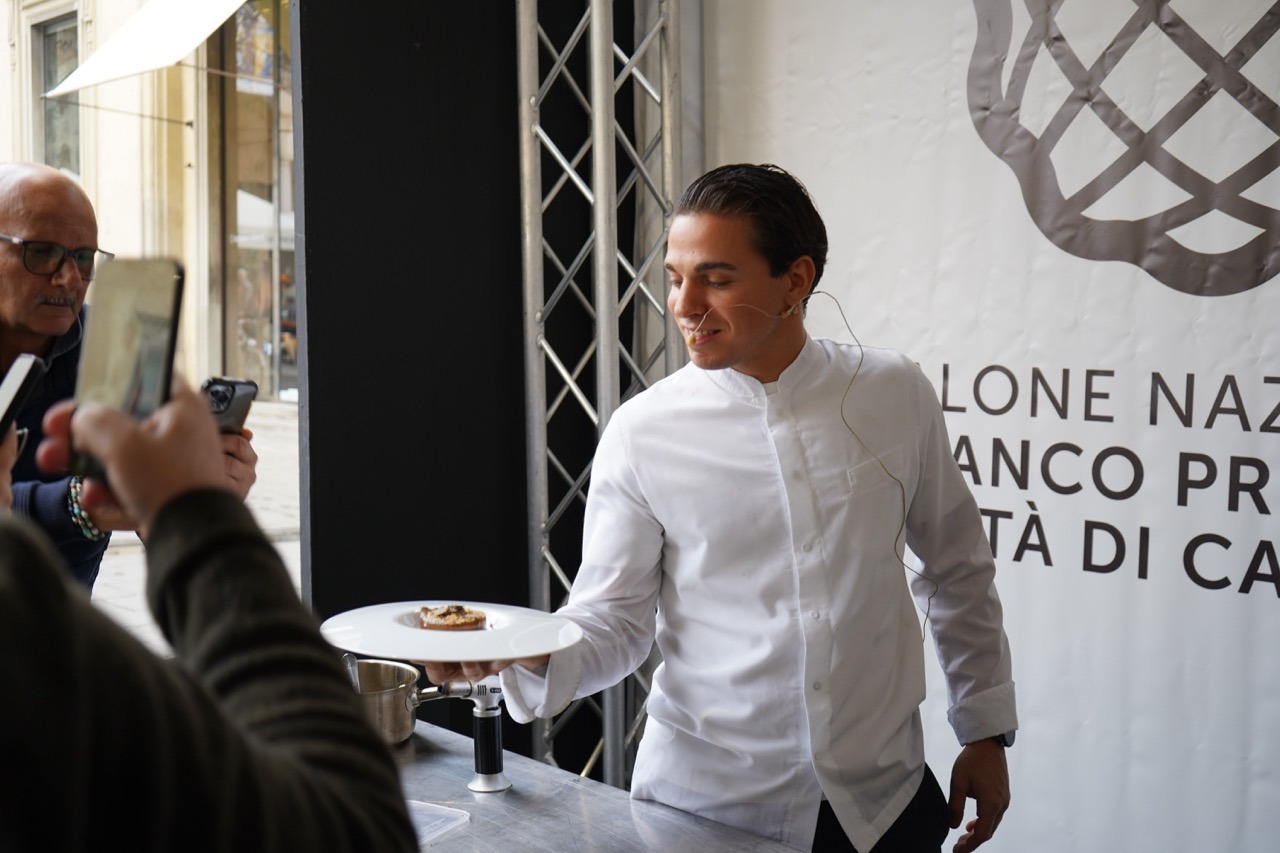
Throughout the fair, chefs working in Umbria and across Italy take to the stage for a succession of cooking demonstrations. When should the truffle be added? How much should be used? Why pair it with a particular ingredient? By listening to the chefs and watching their hands at work, visitors can understand the small decisions that are difficult to see in the finished dish. On some occasions, the completed dishes were also served to the audience. Watching a single ingredient transform into entirely different creations in the hands of different chefs was one of the fair’s greatest attractions.
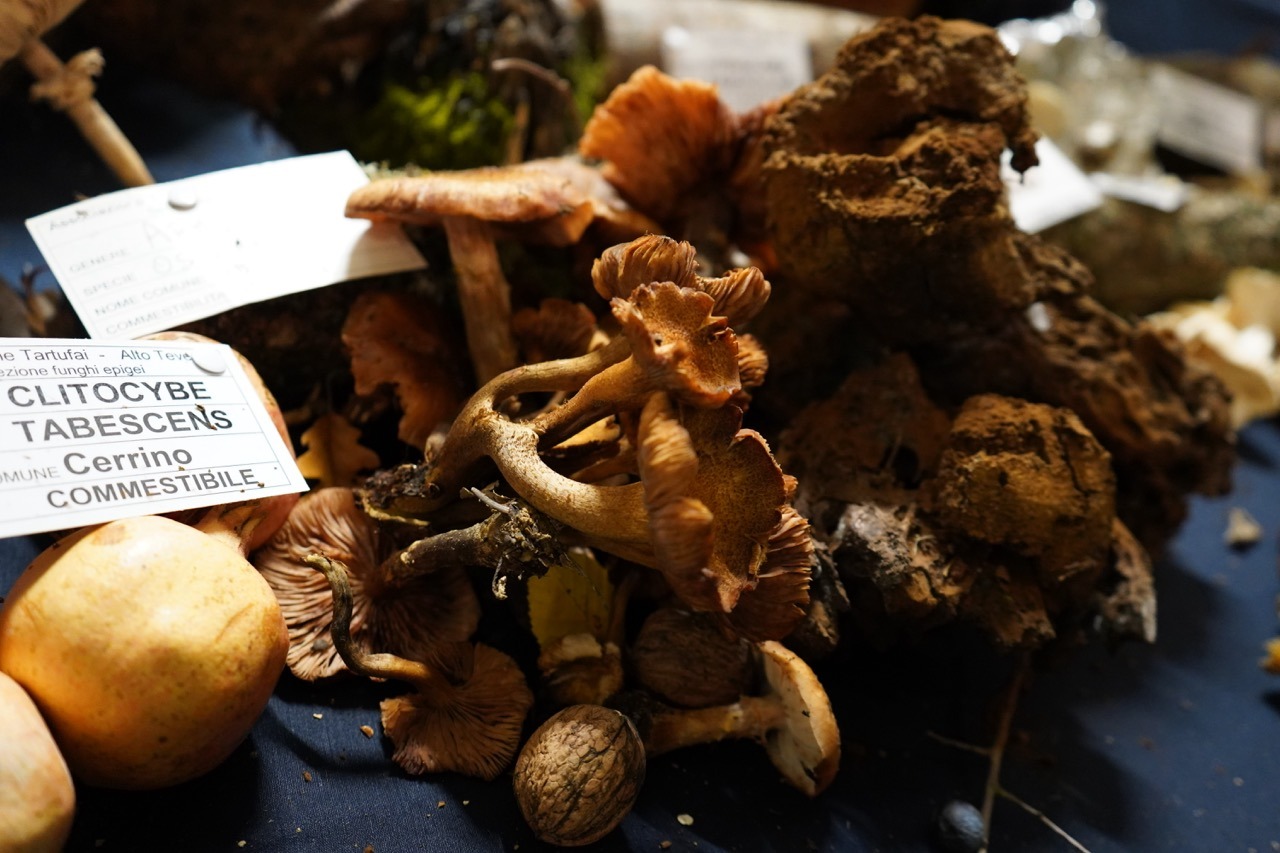
A Town That Draws Me Back in White Truffle Season
The days I spent in Città di Castello were full, with events beginning in the morning. Yet nothing felt hurried. The hours spent walking slowly through town were some of the most pleasant.
Perhaps that is because this is not an event created solely for tourists, but an important annual occasion that local people welcome as part of the season.
I walked through the town, discovered the dishes and products made around it, and listened to the people who hunt truffles, cook with them and live here. Over those few days, I came to understand that truffles in Città di Castello do not belong only to a handful of fine-dining restaurants. They are woven into the work of the town and the rhythm of its seasons.
What stayed with me most was the warmth of the people, who seemed to welcome those of us arriving from elsewhere naturally into an occasion of their own.
White truffle season is approaching once again. Visiting this town may well become an autumn tradition of mine.
Salone Nazionale del Tartufo Bianco Pregiato
https://biancopregiato.it/





square.jpg)