Amaro Don Carlo
The first time I saw the name Eboli on a map, the very first thing that came to mind was the famous title by Carlo Levi.
“Christ Stopped at Eboli.”
Quietly resting inland in the Campania region, south of Naples, this small town became immortalized in world literature through the novel published in 1945.
On the hilltop, the old stone town spreads out in overlapping layers, surrounded quietly by olive groves and farmland. In the afternoon, the harsh southern Italian sunlight falls across the dry white walls, while church bells ring in the distance. There is an atmosphere here that feels somehow suspended in time, different from either Rome or Naples.
It is not overflowing with tourists, nor lined with flashy signs. What exists here is the simplicity of everyday life. That is the kind of place Eboli is.
An Amaro from the Heart of an Enoteca
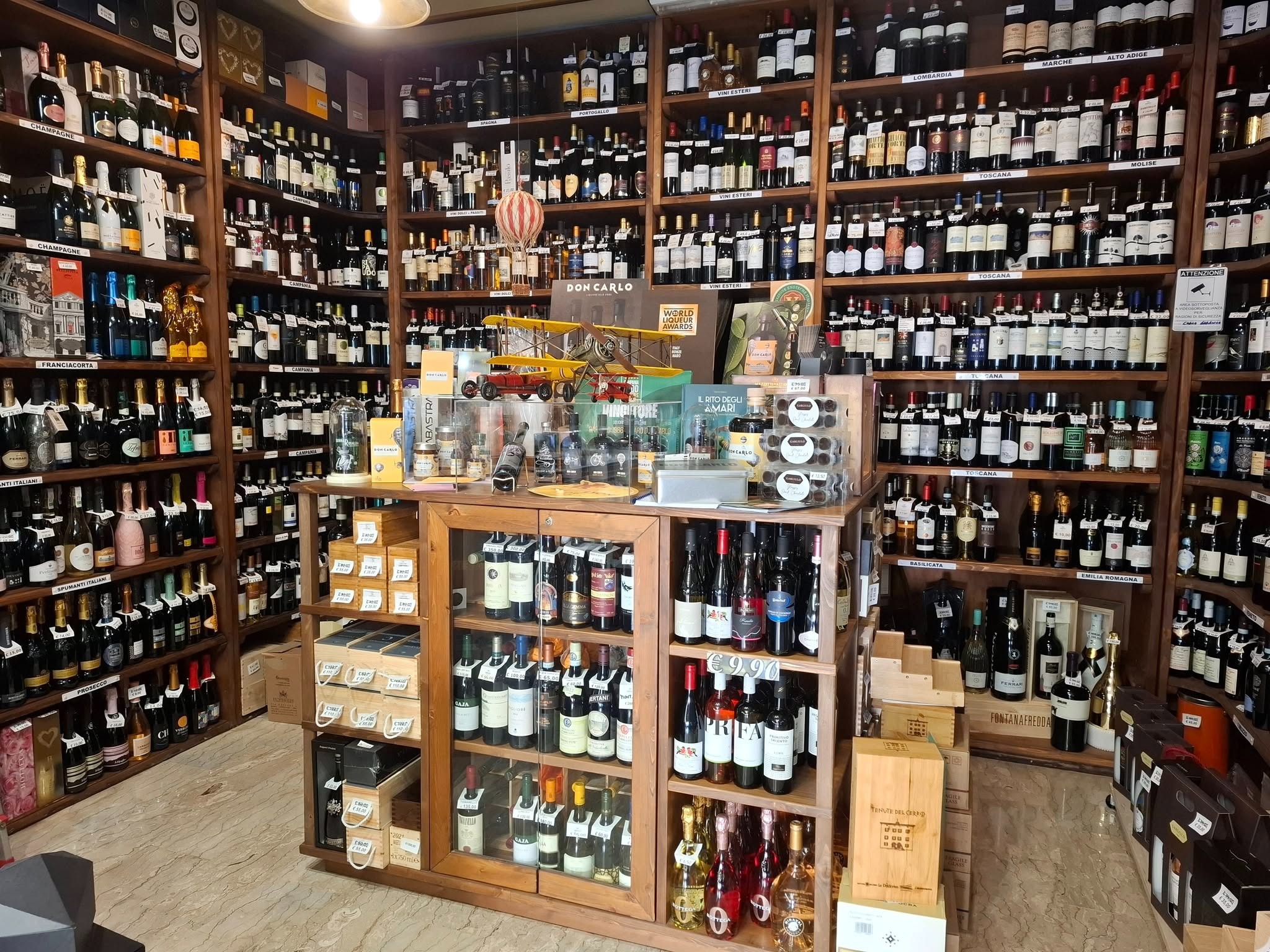
In one corner of the town stands a small enoteca called “Gargiulo Coloniali” which has been there since 1966.
It is a family-run wine and liqueur shop, but the word “liquor store” somehow feels insufficient. It feels more accurate to describe it as “a place that has preserved the food and herbal liqueur culture of southern Italy for more than half a century.”
Each bottle lined up on the shelves seems to carry not just the idea of being selected as a product, but the owner’s quiet belief that “this is a flavor worth preserving.”
And in recent years, a single craft amaro released by this shop has begun attracting attention both in Italy and abroad.
That amaro is Don Carlo.
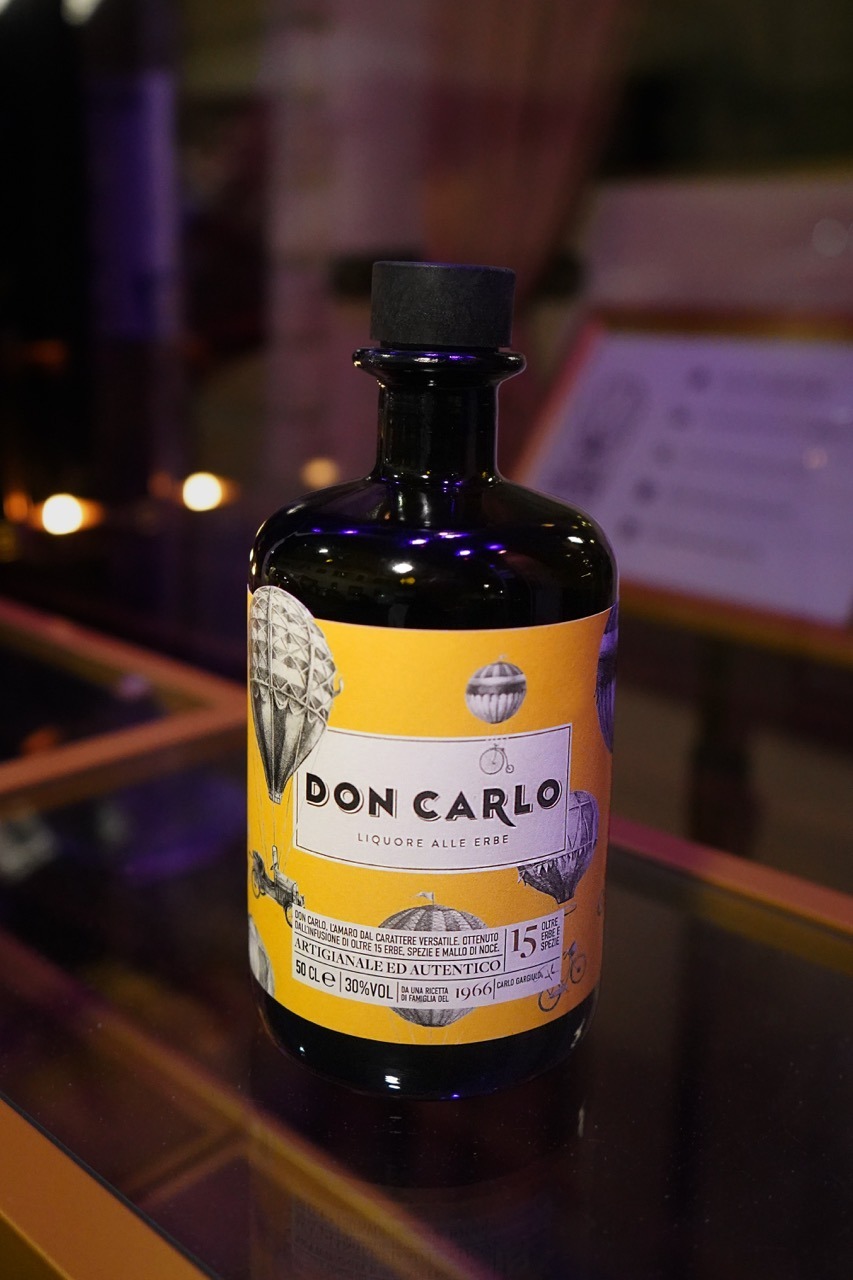
Poured into a glass, the liquid has a deep, almost black color with something mysterious about it. As you bring your nose closer, aromas of walnut, clove, cinnamon, damp wood, and dark chocolate slowly rise from the glass.
On the palate, a gentle sweetness appears first, immediately followed by a deep tannic bitterness. It is rich without being aggressive, slowly flowing across the tongue. The finish is long, leaving behind the sensation of damp air lingering deep inside a forest.
It is rare to encounter an amaro this distinctive.
The reason lies in its main ingredient.
Don Carlo is made using the green husk of walnuts, immature walnuts whose shells are still soft. And every year, the harvest takes place specifically on June 24th, the Feast of Saint John.
Why walnuts? Why that particular day?
To understand that, one must first know about nocino, the traditional walnut liqueur of northern Italy.
Nocino is a liqueur that can only be made once a year.
Particularly in Emilia-Romagna, there remains an old tradition of preparing it on June 24th. Behind this custom lies something even older than Christianity itself: a midsummer nature worship tradition connected to the summer solstice.
It is the time of year when the days are longest and the power of the sun is at its peak. In old Europe, people believed that plants possessed special powers on this night. Herbs released their strongest aromas, and fruits were filled with vitality. Hoping to capture that force of nature inside a bottle, people would go out at midnight to harvest green walnuts.
At this stage, the walnut shells have not yet hardened and can easily be cut with a knife. A dense green aroma rises from the cut surface, and because the fruit has not yet matured, it was believed to contain its greatest life force.
But here, a problem emerges.
The essence of amaro has always been harmony. It is a spirit carefully designed through the layering of herbs, roots, bark, and spices, balancing bitterness, sweetness, and aroma.
The green walnut husk, however, is overwhelmingly powerful.
Its tannins are intense, its color deep, and its aroma dominant. Even a small amount can completely reshape the character of the final product. Once placed at the center, it inevitably becomes “a walnut liqueur.”
For this reason, “nocino centered around walnuts” and “amaro pursuing herbal harmony” followed separate paths throughout history.
Nocino became an independent walnut spirit, while in the world of amaro, walnuts remained merely an accent ingredient kept quietly in the background.
Amaro Don Carlo can be seen as something that deliberately crosses that boundary.
Within Don Carlo, there is the overwhelming walnut character of nocino, while at the same time preserving the complex herbal depth expected from an amaro.
Like nocino, the immature walnuts harvested on June 24th are slowly macerated in alcohol for forty days. As the bitterness, aroma, and dark color of the husks are gradually extracted, the process feels less like manufacturing and more like a seasonal ritual.
An Amaro Crafted Through Love and Dedication
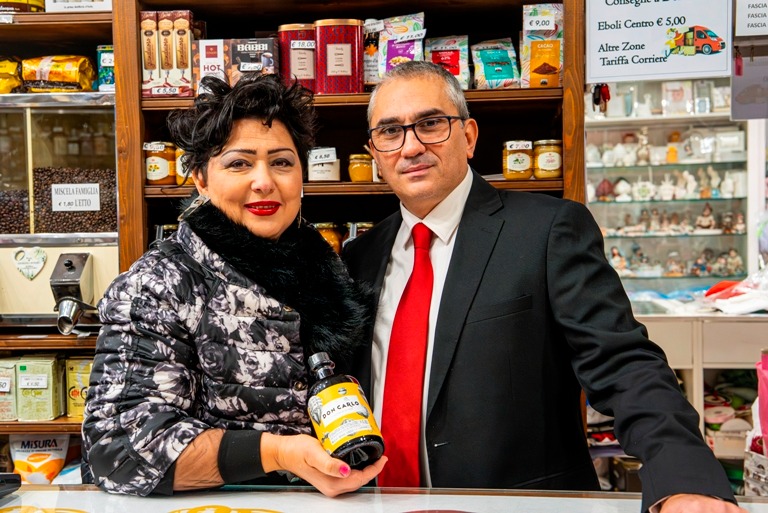
The creators of this amaro are Angela Caliendo and her husband Carlo Gargiulo.
The first recipe was completed in 1994. But the story begins much earlier.
In 1966, Carlo’s father Vito opened a small enoteca selling wine and liqueurs in one corner of Eboli. Eventually, the shop was passed down to Carlo and his wife Angela, and in 1989 it moved to its current location on Viale Amendola.
Carlo and Angela did not want to simply place amaro on shelves as another commercial product. They wanted to handle only what they truly understood and believed in. Both even obtained official amaro tasting certifications, continuing to select rare and high-quality bottles.
It was within this environment that Don Carlo was born.
Yet it was not originally created as a commercial product. It began as a homemade liqueur Angela made for her family.
Over the years, the recipe has been refined repeatedly, but the traditional method remains unchanged. Sixty percent green walnut husks are used, blended with carefully selected herbs and spices, then macerated for forty days. Within that process are love, dedication, effort, investment, and the history of a family.
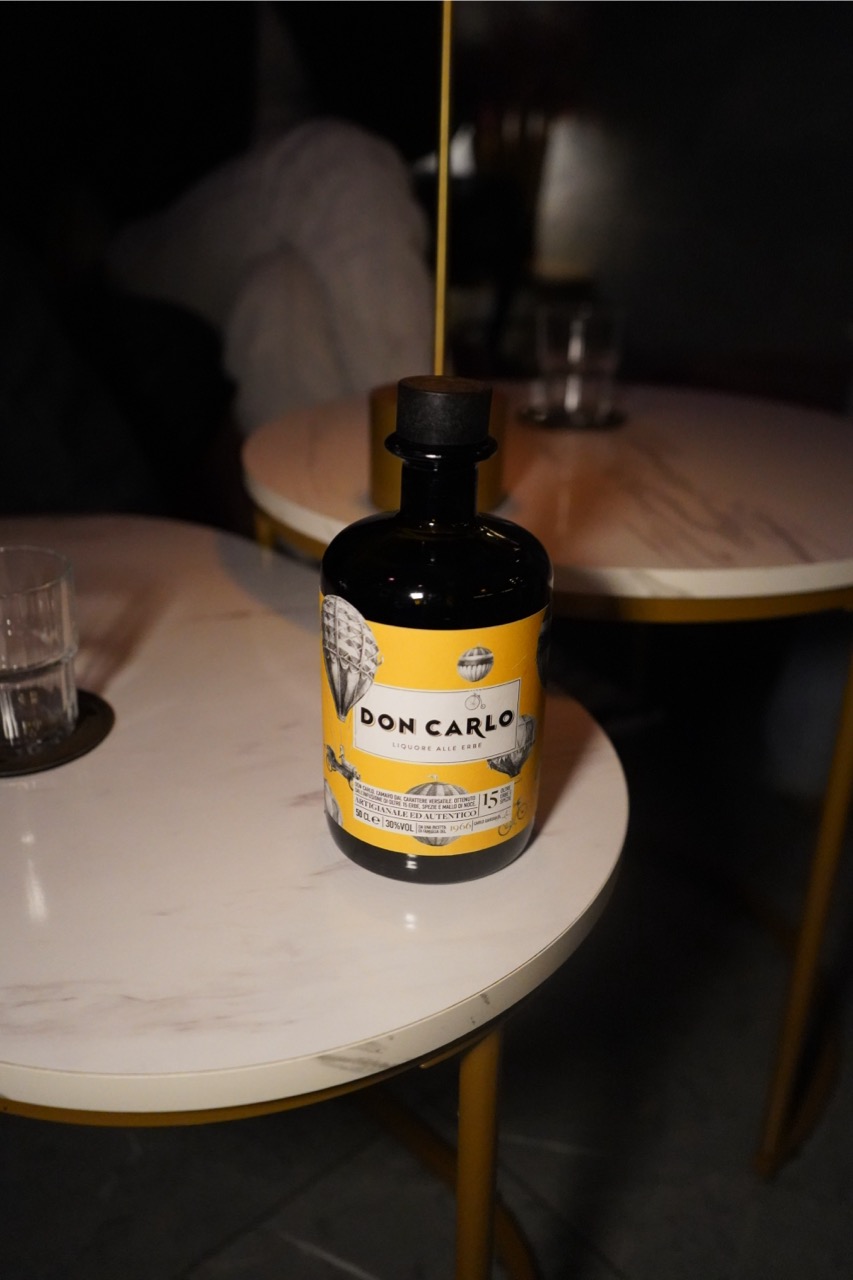
The label of Don Carlo expresses the passage of time within the family that created this amaro.
Three motifs appear on the label, a steam locomotive, a bicycle, and a hot-air balloon. Representing the journey from the past, to the present, and into the future.
The steam locomotive symbolizes the founding generation, heavy, powerful, and steadily moving forward. The family’s history, which began from a small enoteca, was never flashy, yet it moved through time with undeniable weight.
Beside it is the bicycle, representing the present.
It symbolizes the years in which Carlo and Angela inherited the shop, studied liqueurs from around the world, searched for their own taste, and slowly shaped Don Carlo into what it is today. It represents moving forward through life with one’s own feet firmly on the ground.
And then there is the hot-air balloon, symbolizing an unseen future. Floating softly upward into the sky, it carries the hopes of the next generation. The question of where this journey might lead next.
A deep yellow background with delicate golden decorations. Rather than flashy, it feels nostalgic, almost like the illustration from an old storybook. Even from afar, it naturally draws the eye without ever feeling forceful.
Within colors that recall the strong sunlight of southern Italy, there remains a quiet sense of warmth and home.
Don Carlo Cocktails
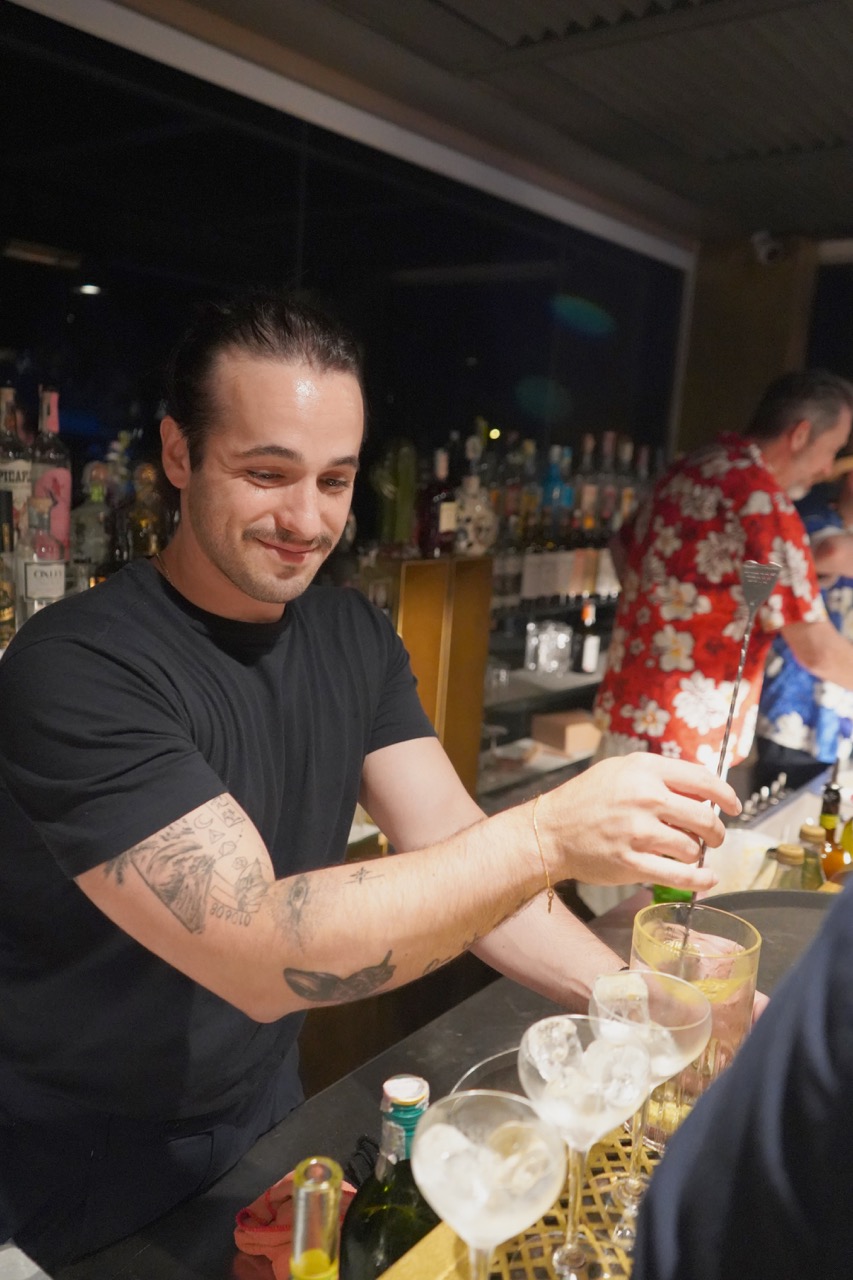
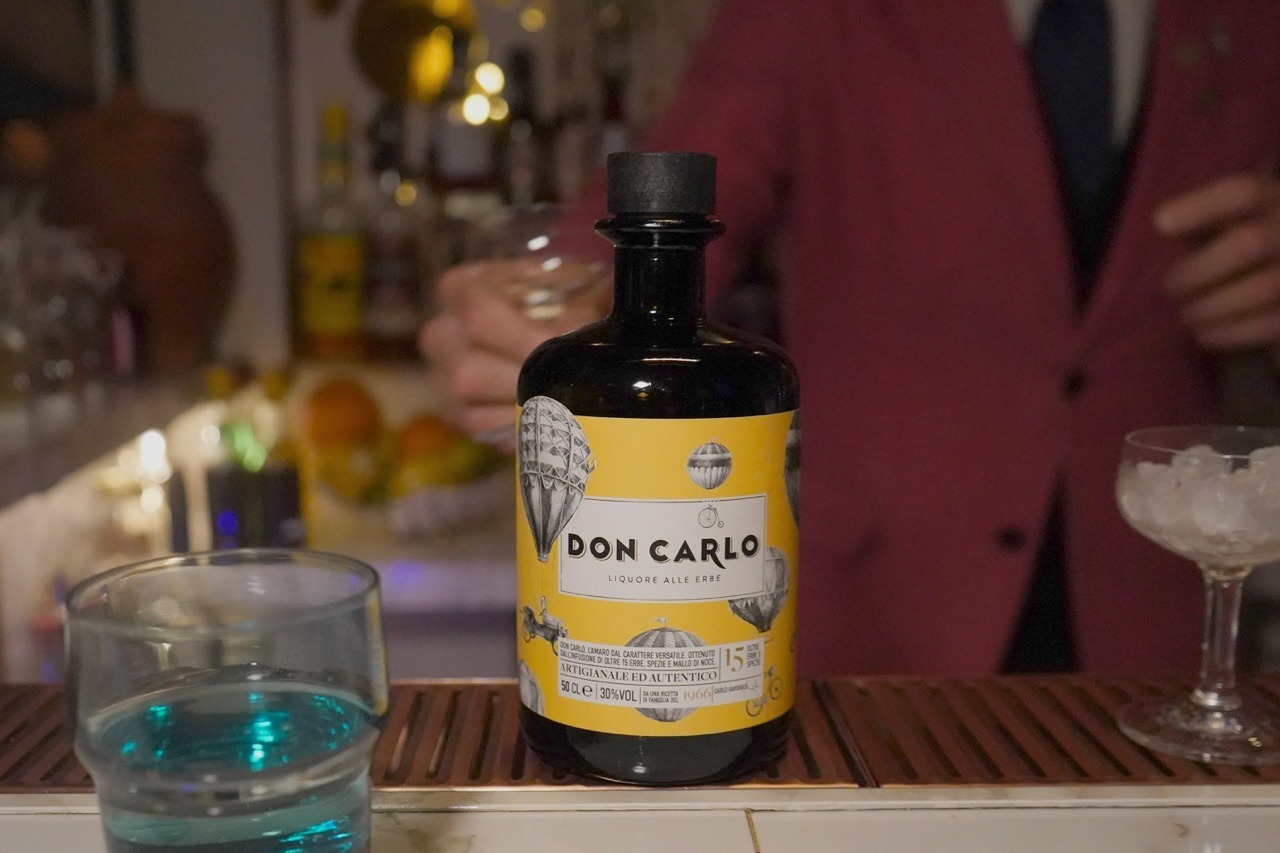
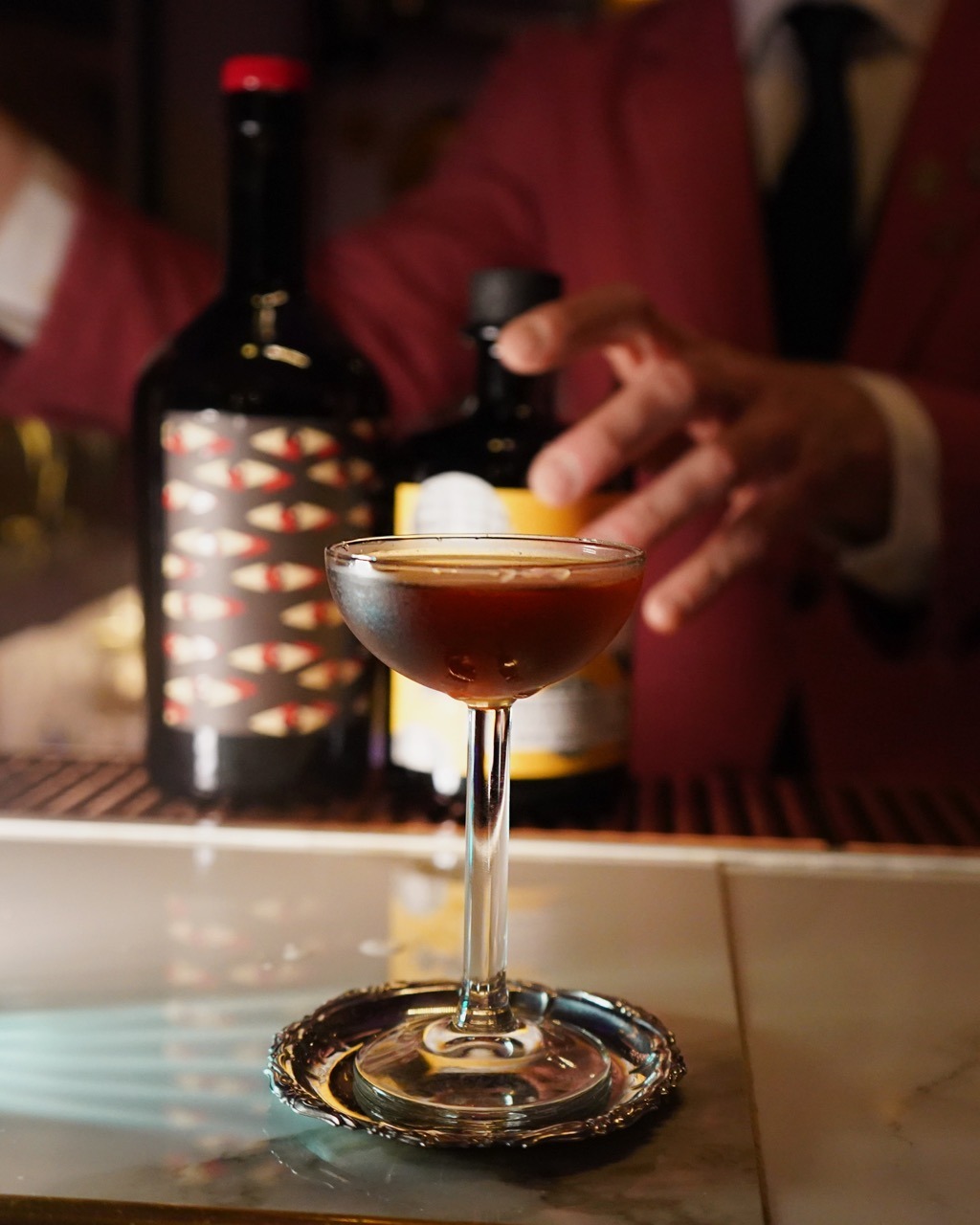
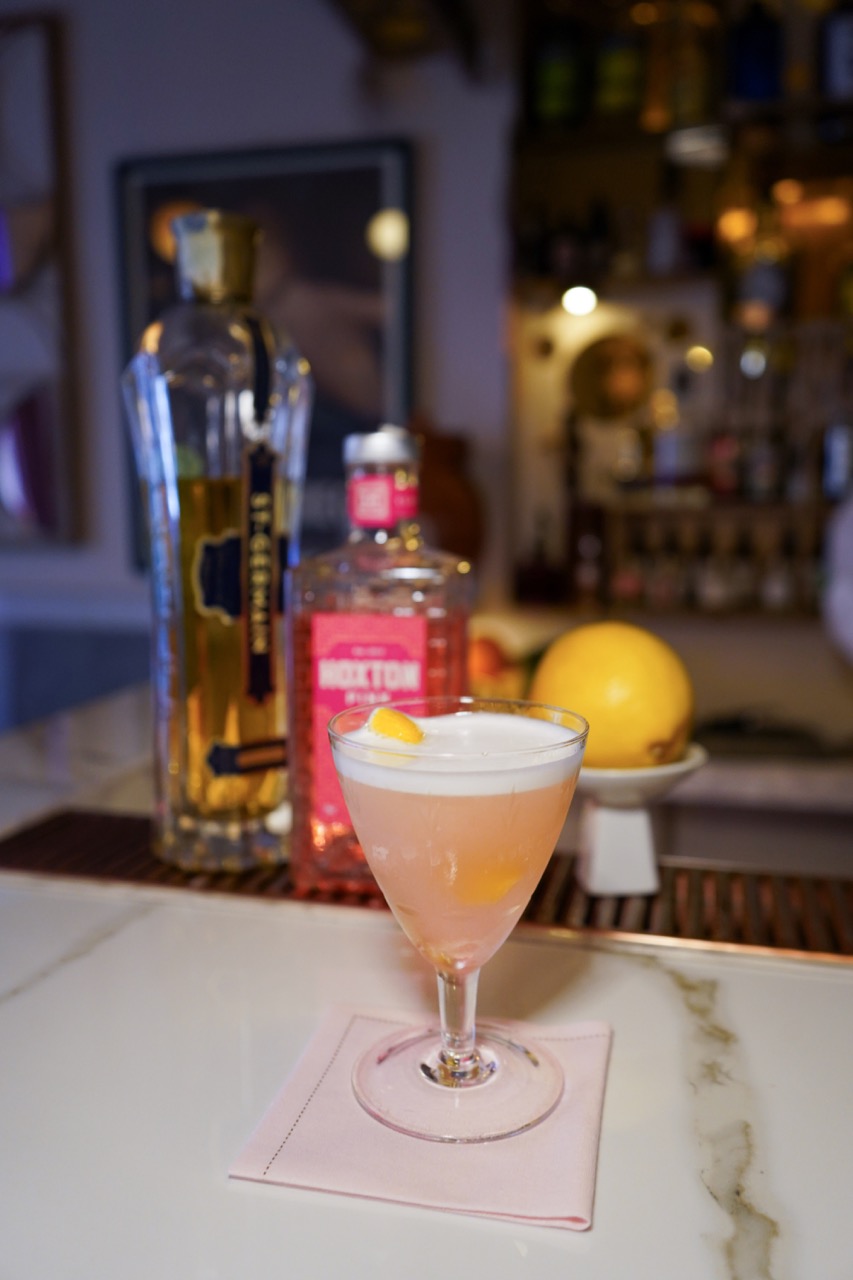
Here are two Don Carlo cocktails supervised by Lonely Avenue, a Rome cocktail bar with a passionate following among serious craft cocktail enthusiasts.
Twist on the Amaro Sour
Don Carlo’s herbal, earthy, and woody profile makes it an excellent base for a sour cocktail.
A twist on a sour, built on a mezcal base. From the glass resting on the counter rises the smoky aroma of mezcal, and behind it, the walnut and spice notes of Don Carlo slowly begin to emerge. Lemon sharpens the structure, creating a drink that feels rich yet surprisingly easy to continue drinking.
40ml Mezcal Vida Del Maguey
20ml Amaro Don Carlo
22,5ml Lemon
10ml Sugar
Twist on the Little Italy
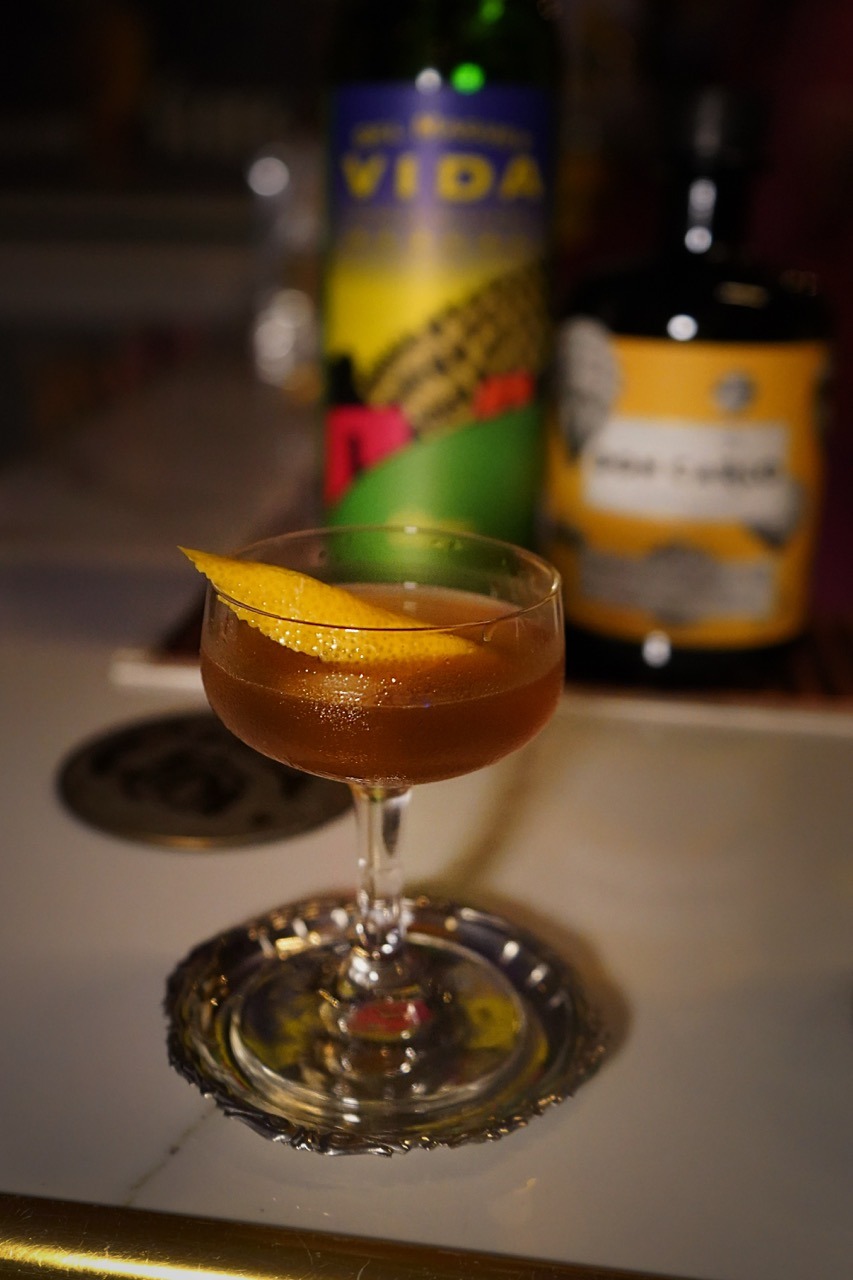
A twist on the Little Italy, also built on mezcal.
Here, the smokiness stands further forward. The center of gravity feels lower and calmer. The walnut character of Don Carlo slowly rises from behind the smoke, enhancing the soft wood flavour of the mezcal . The finish is long and deep, lingering in the mouth well after the glass has been set down.
45ml Mezcal Ilegal Reposado
20ml Amaro Don Carlo
20ml Kyma Amaro al Caffè
2 Dash Maraschino
Absinthe spray
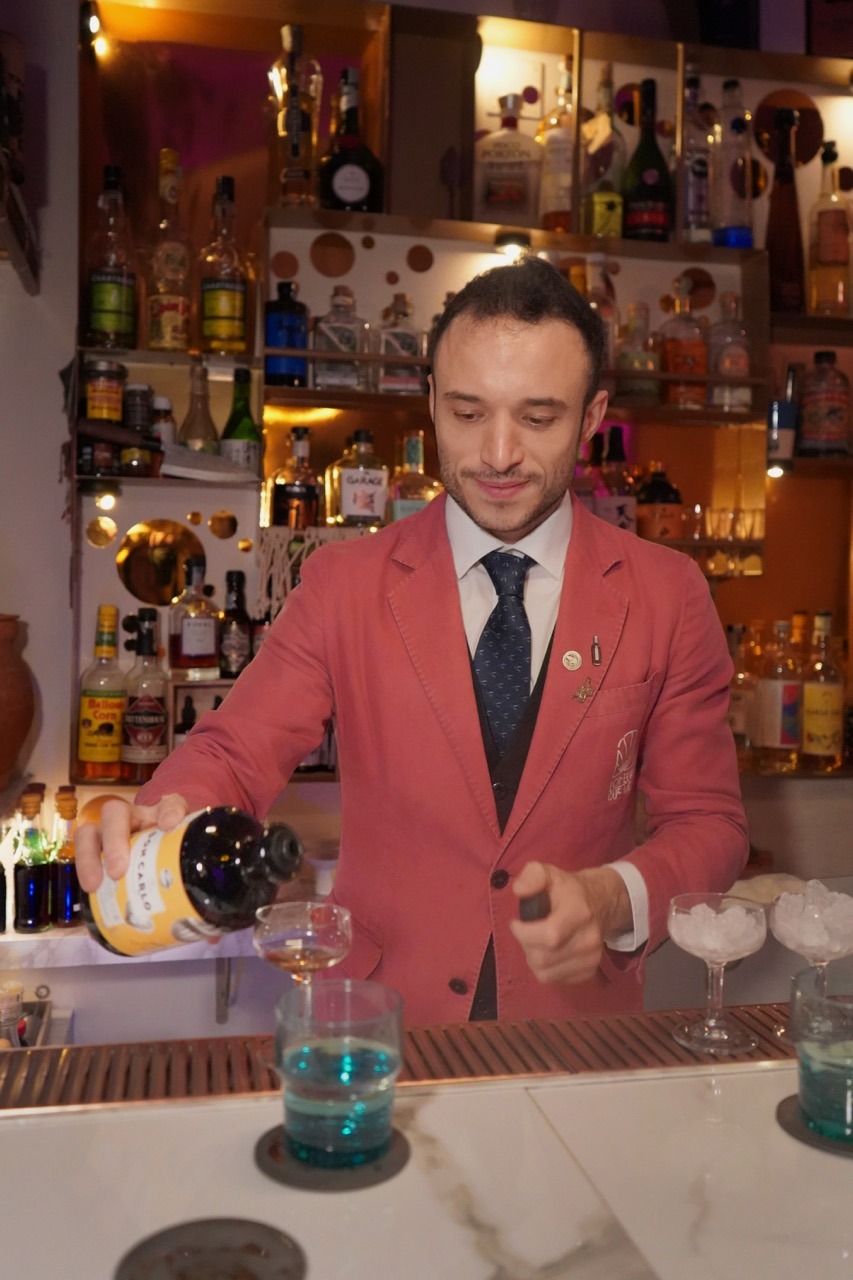
Cocktail supervision: Riccardo Pompei
Lonely Avenue
This small bar works with a carefully selected collection of spirits, and from that limited range creates more than 600 classic cocktails. The entire experience is built around conversation and custom cocktails. Guests simply describe their tastes and preferences, and the bartenders select spirits and build cocktails on the spot according to the customer’s mood and palate.
Amaro Don Carlo





square.jpg)