Club Derrière : A New Menu MATERIA

Club Derrière has unveiled its new cocktail menu.
To be honest, I had mixed feelings even before the presentation began. Their previous menu had been so good. It was full of hidden tricks and stories, with a perfect balance of artistic sensibility and playfulness. It was enjoyable even for cocktail beginners, while still offering plenty of discoveries for people in the industry. It was a menu of remarkable quality.
“Could they really create something that goes beyond that?”
With that mix of anticipation and slight anxiety, I attended the new presentation. But the moment I was handed the new menu, I became even more confused.
It was completely different from the previous one.
The sense of spectacle and theatricality had been toned down. The whole thing was surprisingly simple, almost inorganic.
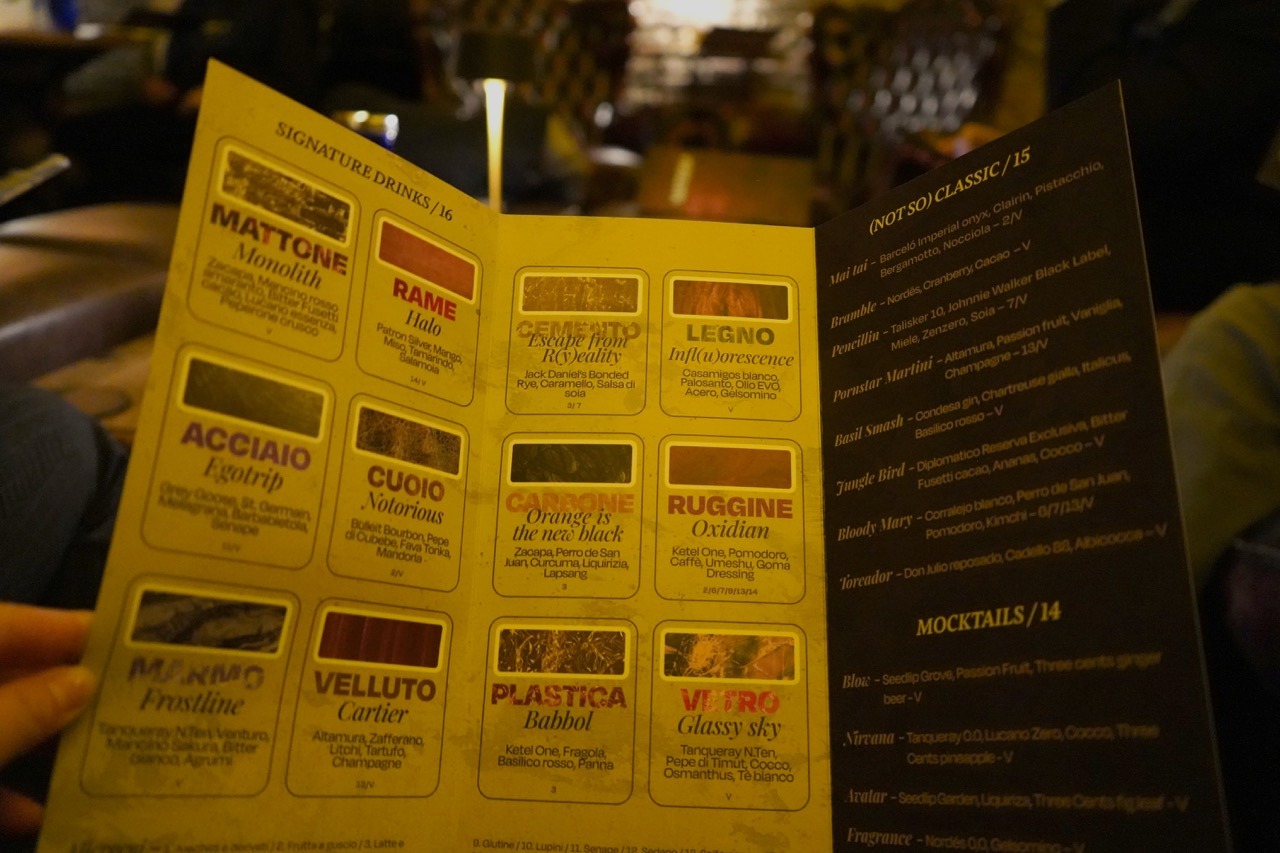
When I opened the menu, what I saw were not cocktail names, but words like CEMENTO - cement, RUGGINE - rust, MATTONE - brick, and VETRO - glass.
They looked almost like words from a sample book of architectural materials. The stripped-down design, almost like a color chart, felt more like a material archive.
Honestly, at that moment, I still did not understand what made it good. But that first impression would soon be completely overturned.
In fact, that very sense of discomfort was the entrance to the new cocktail menu, MATERIA. A Drink List Inspired by Victor Papanek and Human-Centered Design. The theme is Materia - matter, material, substance.
But this is not simply a story about industrial materials or industrial design. What the Club Derrière team focused on was the philosophy of Victor Papanek, a thinker known for social design.
In his 1971 book Design for the Real World, Papanek posed a major question to the design industry. At the time, design was moving toward creating things that were beautiful or commercially successful.
But Papanek challenged that direction. For him, design was not just about making things look good. Design should solve people’s problems and function for human beings. That was his belief.
It is an idea that connects closely to what we now call UX design or human-centered design. And that same philosophy runs through the background of MATERIA. Looking back over the past few years, the Club Derrière team realized something.
In recent cocktail culture, technical expression from bartenders has become increasingly advanced: fermentation, special extractions, unusual ingredients, and highly experimental techniques. But at the same time, the distance between the bartender and the guest had started to grow.
So what they wanted to create this time was a point of connection between the world of the club and the guest. Their answer was a Papanek-like approach: not beauty for its own sake, but design that functions for people.
After asking how guests could naturally enter into the experience, they created a three-layered storytelling structure, allowing drinkers to enjoy the menu from any level. The way the menu appears changes depending on the drinker’s level of knowledge.
Reading the Menu in Three Layers
Layer One: An Intuitive Entrance
The first thing that welcomes the drinker is not philosophy or technical terminology. It is intuition.
What immediately catches the eye are striking titles such as Orange is the New Black, Escape from R(e)ality, and Glassy Sky, names that evoke films and cultural references. At first glance, you may even forget that this is a menu themed around materials and architecture.
That is intentional. The menu deliberately avoids showing its difficulty at the beginning.
At first, it is enough to think, “What is this?” ,“That name sounds interesting” ,“I kind of want to try it” Rather than forcing the creator’s message onto the guest, it first creates an entrance that feels easy to step into.
This is exactly the kind of design Papanek spoke about: design that functions for people. The first experience is not choosing a cocktail. It is becoming interested. And this is where it becomes fascinating.
With each step forward, the world gradually opens up into materials, philosophy, and technique.

Layer Two: The Philosophy Hidden in Materials
As you continue reading MATERIA, what comes into view next is the meaning of the materials themselves. Words like CEMENTO and MATTONE do not directly describe the flavor. Instead, they express emotions and philosophical ideas. Take brick, for example.
Normally, when we think of brick, we might imagine buildings, walls, or a rough, solid texture. But in this menu, the meaning of brick is stability. Each brick may be small on its own, but when identical forms are stacked and support one another, they become a larger structure. There is harmony, order, and relationship within that process. The team translated this idea into the actual construction of the cocktail.
The same ingredient is prepared through different approaches and then assembled into a single flavor. Similar elements overlap and create harmony as a whole. The structure itself becomes like a brick wall.
Layer Three: Technique, Sensation, and Color Psychology
As you go even deeper, you enter the world of technique. Up to this point, the menu has slowly opened its world through intuition and philosophy.
But in the final layer, techniques such as infusion, osmosis extraction, special bitters, and flavor design begin to appear. Only here do we start to see what kind of extraction was used, what unusual ingredients were selected, and what experiments were carried out.
The advanced techniques are kept behind the scenes until the very end. They appear only when the drinker becomes curious and decides to go deeper on their own. The colors are also worth paying attention to.
For example, MATTONE has a deep burgundy color created by the layering of red and black. According to the color psychology referenced by the team, red evokes sweetness, while black evokes bitterness.
In other words, before we even bring the glass to our lips, we have already recognized the color and unconsciously received an impression of the flavor.
The experience has already begun at that point. Only then does the meaning of that first minimalist design finally connect. It was a design created to hide the philosophy, guide the emotions, and eventually lead the drinker toward the technique.
MATERIA is not a list of cocktails. It is a design book that gradually reveals an experience.
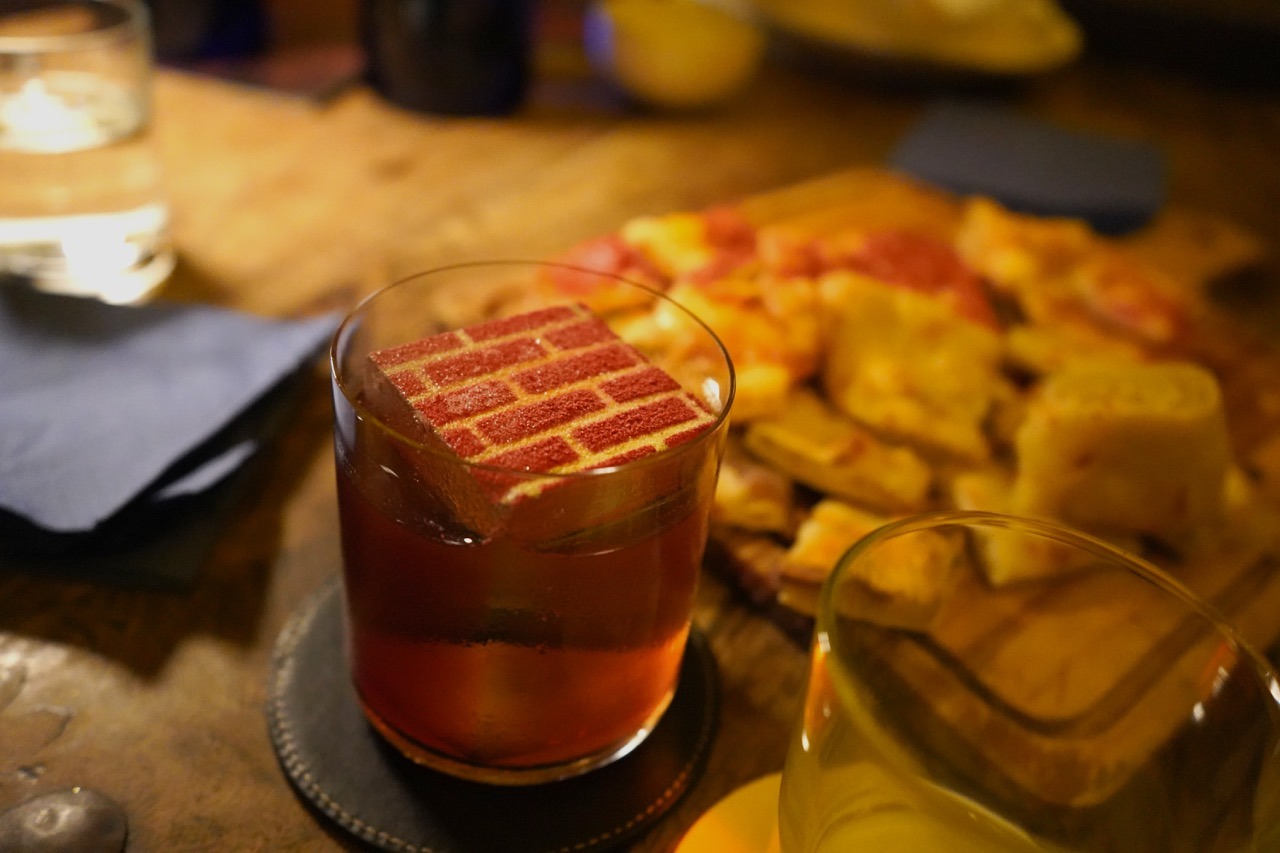
MATTONE – Monolith
A Reconstruction of the Negroni That Liquefies “Stability”
The clearest expression of this philosophy appears in MATTONE - brick. As mentioned earlier, in MATERIA, brick is not treated as an architectural material, but as a symbol of stability and harmony.
A single brick does not become a structure on its own. Only when identical forms are stacked, supported, and built upon one another do they become something larger. This idea is directly translated into the flavor design.
The base is infused with smoked paprika. Red pepper is treated separately through osmosis extraction, then combined with Fusetti bitter, Mancino vermouth using crusco pepper, and a small amount of pomegranate vinegar.
Ingredients that move in the same direction are layered using different techniques. Similar elements are expressed in different ways and assembled into one flavor. Just like stacking bricks.
The visual expression is also carefully considered. The upper part of the ice is finished with a cocoa butter spray, creating a texture that feels almost like a material sample. It is industrial, but not excessive. It leaves only the feeling of materiality behind. That balance feels very true to this menu.
The direction is based on a Negroni, but here again, the idea of human-centered design appears.
The team explained, “Negroni has a strong bitterness, and many people are not comfortable with that. So this time, we made it a little softer and easier to drink.”
This is not simply a Negroni twist. It keeps the structure of a Negroni, while widening the entrance.
And then there is the color, which I mentioned earlier. From the deep burgundy color made of red and black, we unconsciously receive the outline of sweetness and bitterness. Contrasting elements overlap, becoming rounder and more harmonious.
That is exactly the stability this cocktail is trying to express. The flavor, the color, and the philosophy are all pointing in the same direction.
CEMENTO – Escape from R(e)ality
The Most Realistic Material Depicting an Escape from Reality
Heavy, hard, inorganic. CEMENTO - cement is one of the most realistic materials, evoking construction sites and the city itself. Yet the title given to it is Escape from R(e)ality.
Why would cement represent an escape from reality?
The base is Jack Daniel’s Bonded Rye. The spice of rye whiskey is layered with the sweetness of caramel and the umami of soy sauce. Sweetness and saltiness, roasted notes and richness, come together to create a comforting outline.
Because flashy techniques are not pushed to the front, the relationship between the ingredients becomes easier to see. Soy sauce might normally be used as a surprising ingredient, but in this cocktail, it is not there simply to shock the palate. It is there to create depth.
As a result, the cocktail has a certain calm temperature to it. Cement is a material that supports buildings. It creates cities, fixes spaces in place, and anchors people to reality. But at the same time, people sometimes want to forget that reality for a moment and go somewhere else.
Perhaps that is what this cocktail is depicting. A small escape inside an inorganic world. A sense of warmth hidden inside a hard material. So CEMENTO is not a drink that tastes like cement.
It is a cocktail that lets you drink reality and the emotions that exist just outside it.
LEGNO – Infl(u)orescence
A Cocktail Where Wood Changes from Matter into Sensation
LEGNO - wood is not dealing with wood as a physical material itself. It is dealing with something more ambiguous and sensory. The base is Casamigos Blanco, layered with Palo Santo, EVO oil, maple notes and jasmine.
At first, it feels like a curious combination. Wood and flowers. Softness and hardness. Nature and industry.
Opposing elements coexist in the same glass. What stands out most is the presence of Palo Santo. Meaning “holy wood” in Spanish, Palo Santo has long been used in South America for purification and ritual. When burned, it is known for releasing a sweet, mystical aroma.
That meditative atmosphere sits at the center of the drink. Then jasmine enters, bringing softness to something deep, heavy, and mystical, and the woody aroma transforms into a quiet aftertaste.
EVO oil adds texture and thickness, while the steel aroma leaves behind a slight tension.
This cocktail is not trying to express “a forest,” nor is it recreating “wood.” It is something more abstract.
The feeling of touching wood. Light filtering through trees. Stillness. A sacred atmosphere.
In MATERIA, wood is treated as a medium that awakens emotion and memory. It feels like a cocktail that has transformed the spirituality of wood itself into liquid form.
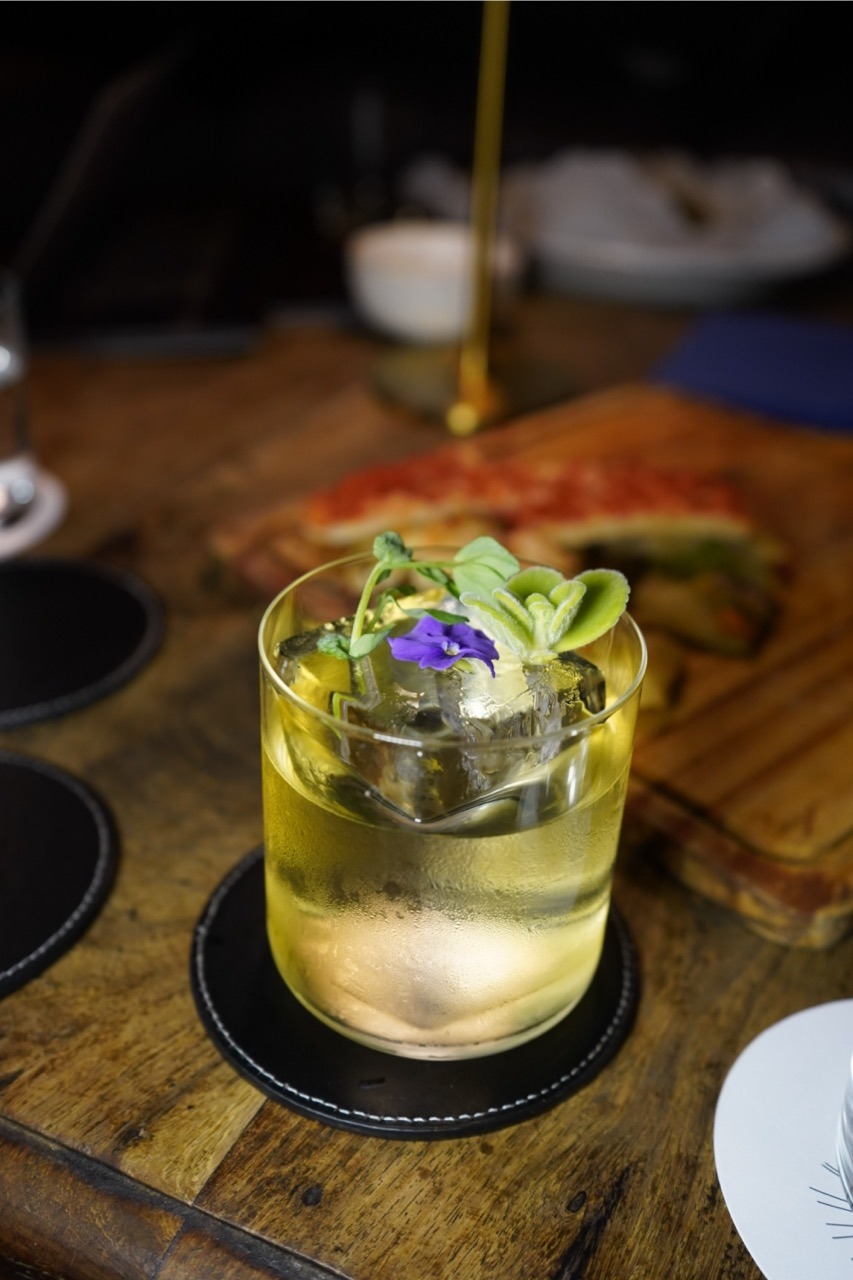
RUGGINE– Oxidian
Time Does Not Become Decay, but Value
Among all the drinks in MATERIA, the one that confused me most at first was RUGGINE - rust.
Brick and wood still make sense. But rust?
Decay, corrosion, age. These are not necessarily positive images. Why did they choose rust?
The answer gradually appears when you look at the composition. The base is Ketel One, combined with tomato, coffee, ume, and gum dressing. Even just seeing them lined up feels unusual.
The umami and acidity of tomato, the roasted aroma of coffee, the fermented nuance of ume. Then a dressing-like element is added, preventing the flavor from moving in a simple direction.
Acidity, umami, fermentation, and roasting, elements with different timelines intersect in the same glass.
At this point, I found myself thinking about rust itself. Rust does not appear in an instant. It forms slowly as a material is exposed to air, humidity, and time. In other words, rust can be seen as a trace that time has carved into matter.
With that in mind, the meaning of this cocktail begins to emerge. This is not the taste of rust. It is the taste of time.
In MATERIA, rust is not interpreted as decay, but as a beauty left behind by time. It is a way of finding value in something that has changed.
And that idea is expressed through tomato, coffee, and ume, ingredients that, at first glance, seem almost impossible to connect.
VETRO – Glassy Sky
When Glass Becomes Air
If RUGGINE depicts time and change, VETRO - glass suddenly becomes light.
From the name alone, you might first imagine coldness or hardness. Transparent, inorganic, urban.
But this cocktail is not heading toward glass itself. It is moving toward the transparency that lies beyond it.
As the title Glassy Sky suggests, this cocktail shifts its focus away from the physicality of glass and toward the sensation of light passing through and a feeling of lightness.
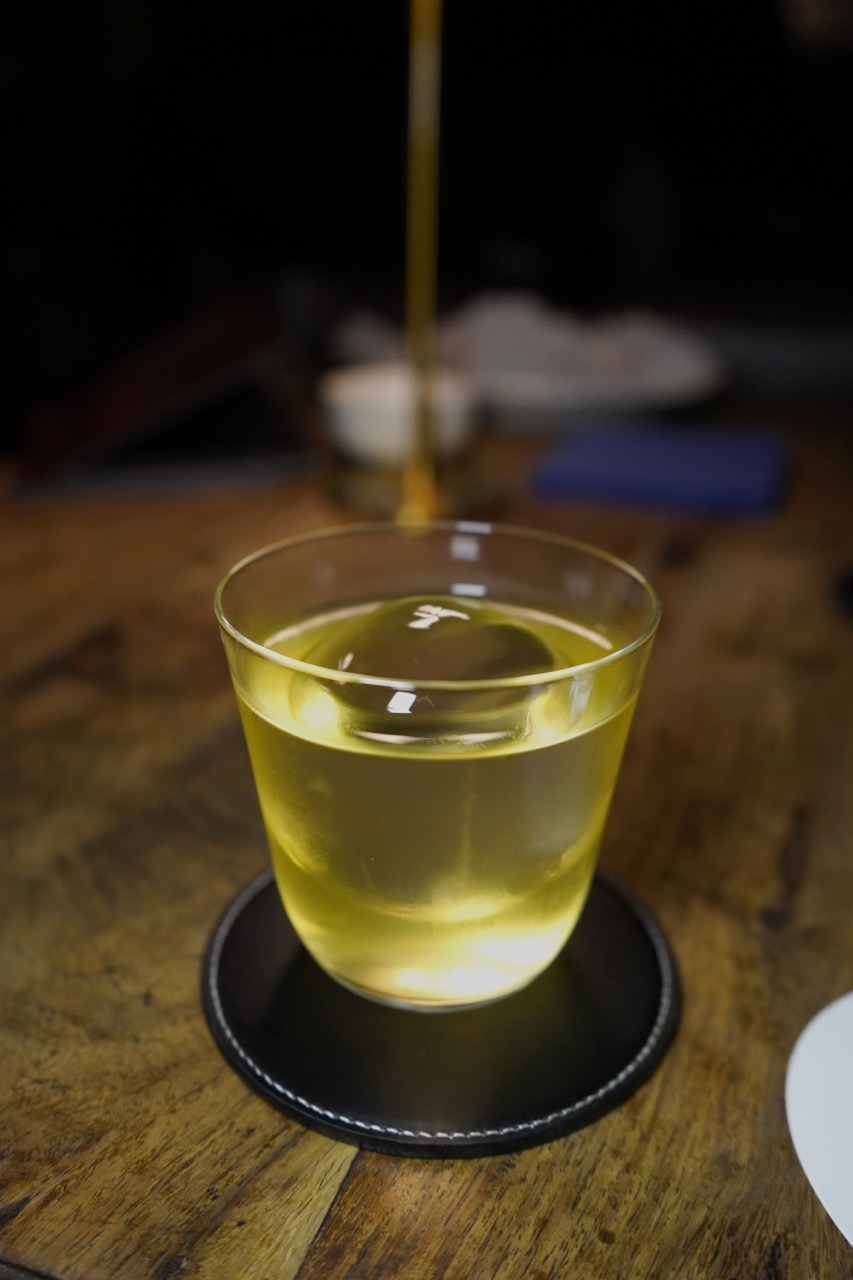
The base is Tanqueray No. Ten, layered with Timut Pepper, coconut, osmanthus, and white tea.
Timut Pepper, from Nepal, has a citrus aroma reminiscent of grapefruit. That light fragrance rises first, followed by the soft floral aroma of osmanthus. White tea shapes the outline, while coconut adds body.
None of the aromas assert themselves too strongly. Rather, they feel translucent.
Like looking up at the sky, the boundaries are blurred and everything seems to open endlessly.
It feels like drinking transparency itself, light entering, wind passing through.
CARBONE – Orange is the New Black
A Cocktail That Depicts Black While Making Orange Stand Out
Why does orange come to the foreground in a cocktail themed around charcoal? When you look at the composition, you begin to see that the paradox itself is the theme.
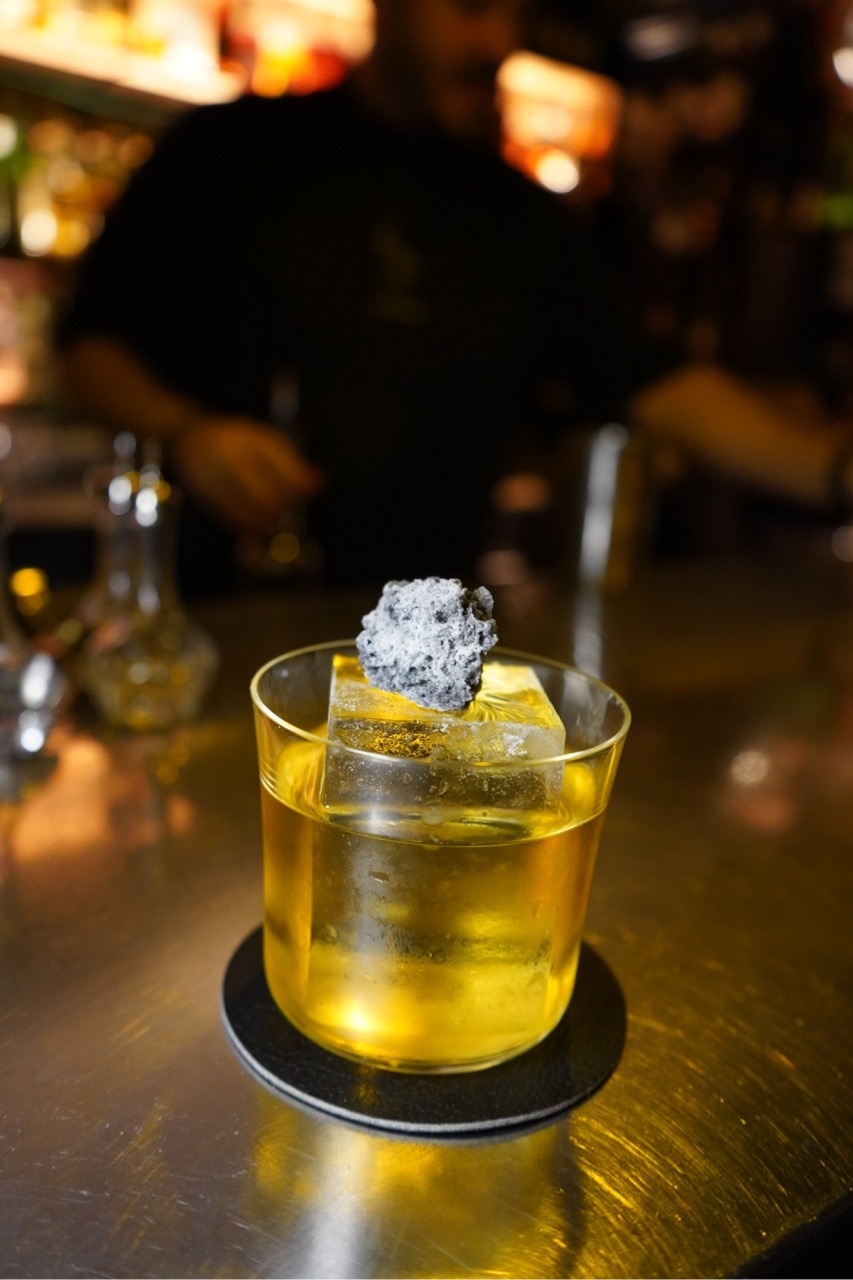
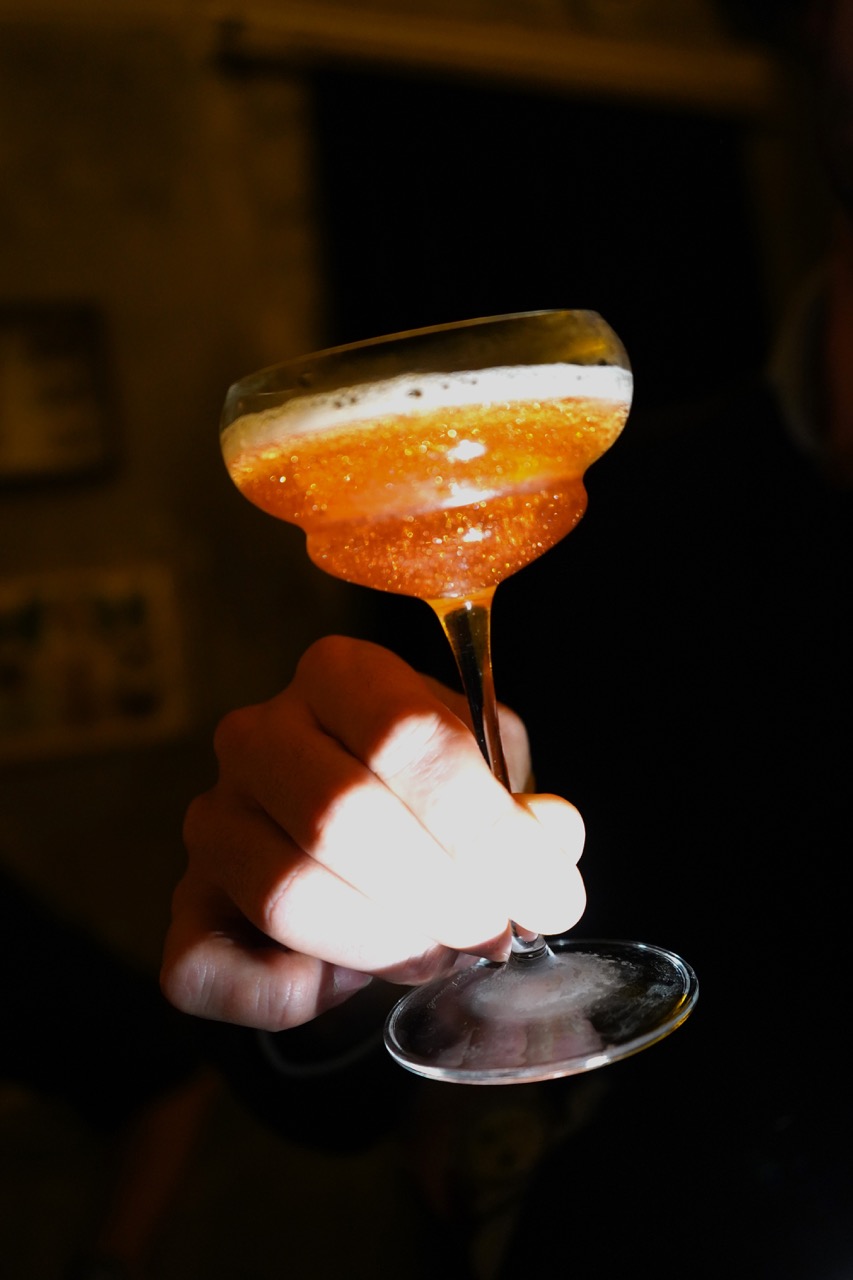
The base is Zacapa, layered with Perro de San Juan, turmeric, licorice, and Lapsang Souchong. apsang Souchong, a Chinese black tea smoked over pinewood, has a distinctive smokiness that immediately evokes charcoal and smoke. That deep smoked nuance is joined by the bittersweetness of licorice. Smoke, roasting, earthiness, layers that would normally feel heavy overlap one after another.
And yet, somewhere within them, a certain vividness remains. Just as light becomes visible because there is shadow, orange emerges because black is emphasized.
This cocktail is not simply expressing charcoal itself. It is drawing the color that exists within black. Just as color becomes more vivid because darkness surrounds it.
PLASTICA – Babbol
A Cocktail That Turns an Artificial Material into Playfulness
Up to this point, MATERIA has felt quiet and introspective. Brick was structure and harmony. Wood was spirituality. Rust was time. Charcoal was shadow. Each material was deeply explored and transformed into human sensation or philosophy.
Within that flow, PLASTICA - plastic feels slightly different. The title is Babbol, a word with a slightly mischievous sound.
The drink uses Ketel One as its base, with strawberry, red basil, and cream. Compared to the other cocktails, it is clearly softer and more approachable.
The word plastic often carries an artificial and inorganic impression. Convenient, but cold. Mass-produced. Uniform. Many people may associate it with those images.
But this cocktail lightly overturns that impression.
The sweetness of strawberry, the softness of cream, and the addition of red basil create a slightly more adult aftertaste.mIt feels nostalgic, yet modern. Plastic is an artificial material, but it is also one that has shaped our everyday lives. Children’s toys, colorful daily objects, familiar things around us.
That everyday world seems to overlap with this cocktail.
The Experiment of “Not So Classic”
Not Breaking the Classics, but Rebuilding Them from the Future
The menu also includes a section of classic cocktails. But instead of the usual Classic Cocktail, what appears there is the playful title (NOT SO) CLASSIC.
This is not quite the same as the familiar idea of giving classic cocktails a modern twist. What they were imagining was this, “What if classic cocktails had been invented in 2026?”
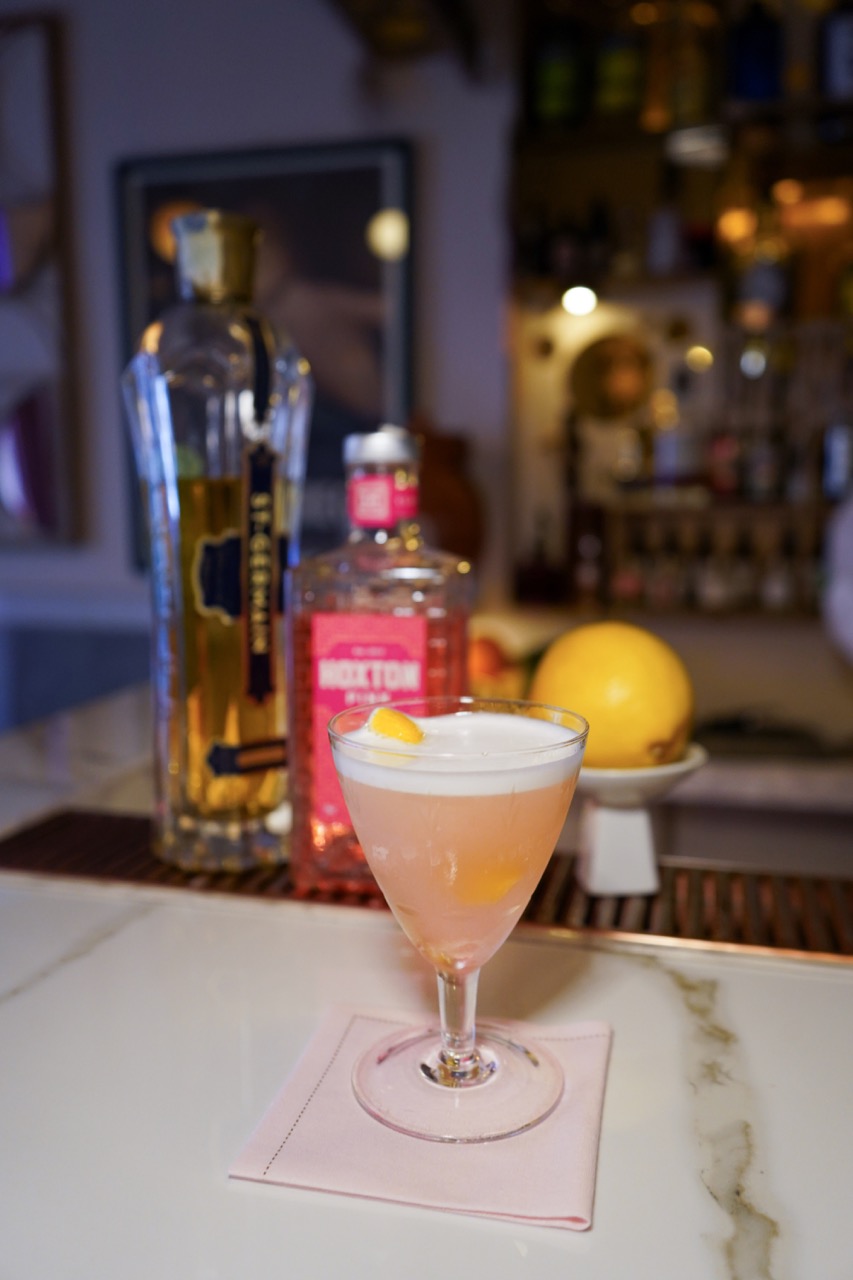
For example, Pornstar Martini or Bloody Mary. They do not erase the elements that make those cocktails recognizable, such as passion fruit or tomato. Instead, they bring the supporting techniques into the present day.
Using techniques that bartending has developed over the years, extraction, temperature control, flavor design, they reconstruct the drinks from the perspective of what they might become if they were born now.
So this is not reproduction. It is not revival. It is a more future-oriented experiment.
The classics are not treated as something that belongs only to the past. “What if they had been born in this era?” “What if newer techniques had been available?” “Would they still taste the same?”
That is the experiment. Without denying the past, they preserve the materials, the philosophy, and the classics, while giving them a new perspective.
This also feels close to Victor Papanek’s way of thinking. The goal is not simply to change the form.
It is to redesign the relationship between people and the object for the present era.
(NOT SO) CLASSIC seems to reflect the philosophy of MATERIA right until the very end.
Club Derrière




square.jpg)